
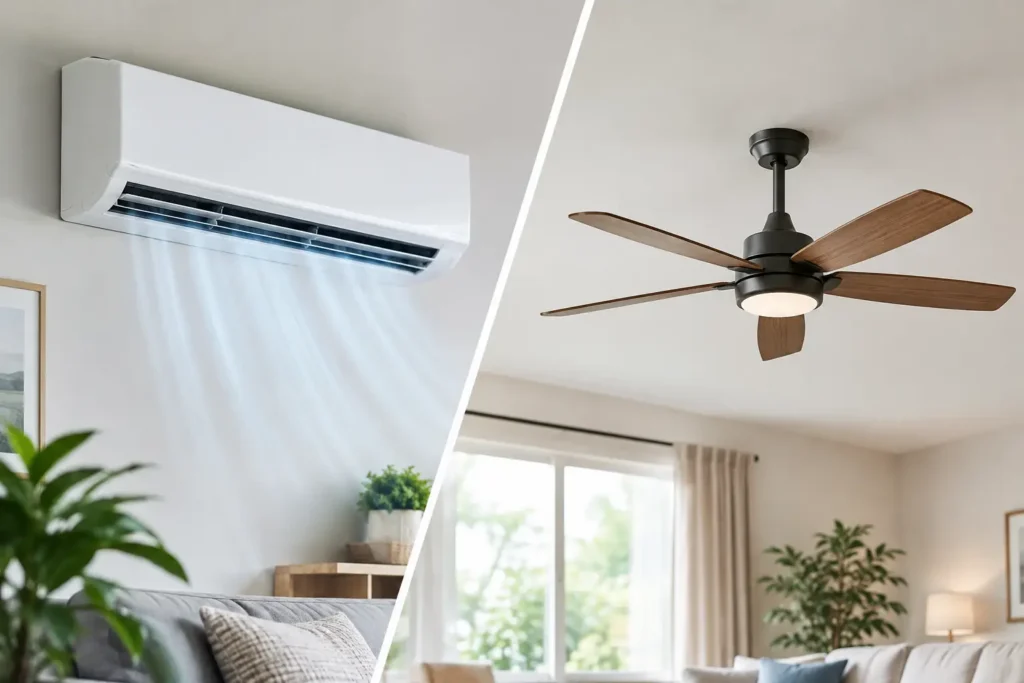
A south-facing bedroom that is still 28°C at bedtime needs more than moving air around. That is the central difference in air conditioning versus ceiling fans: one actively removes heat from the room, while the other changes how cool your skin feels. Both have a place in an energy-conscious property, but they solve different problems.
For UK homeowners, landlords and businesses, the best choice depends on the building, the room’s use, the severity of overheating and how the system will be powered. A well-chosen cooling solution can make hot spells manageable without creating unnecessary running costs.
Air conditioning versus ceiling fans: the main difference
A ceiling fan circulates air. As air passes over the skin, it speeds up evaporation of perspiration and creates a cooling effect. This can make occupants feel several degrees more comfortable, particularly when the room is warm but not excessively hot. However, the actual air temperature remains largely unchanged.
Air conditioning uses a refrigeration cycle to extract heat from indoor air and release it outside. A properly sized split air conditioning system lowers the room temperature and, just as importantly, removes humidity. That combination provides much more dependable comfort during humid UK heatwaves, in loft rooms, glazed extensions, busy offices and bedrooms exposed to afternoon sun.
The distinction matters when choosing a system. If the problem is occasional stuffiness, a fan may be enough. If rooms regularly become too hot to sleep, work or serve customers comfortably, air conditioning offers a measurable solution rather than temporary relief.
Running costs: low wattage versus lower temperatures
Ceiling fans are usually the cheaper option to run. Many models use roughly 15 to 70 watts depending on size and speed, so they can operate for long periods with modest electricity use. They are a sensible way to improve comfort when temperatures are moderate and the room has reasonable shading and ventilation.
Air conditioning uses more electricity because it is doing more work. A modern inverter-driven split unit adjusts its output to maintain the selected temperature rather than continually switching between full power and off. Its real consumption depends on the unit’s efficiency, outdoor temperature, insulation levels, desired set point and hours of use.
It is misleading to compare the two on electricity use alone. A fan is less expensive because it does not cool the room. An efficient air conditioning system may represent good value where it prevents lost sleep, protects equipment, improves staff comfort or makes a top-floor flat usable through the summer.
Solar panels can strengthen the case for air conditioning. Cooling demand often peaks on bright days, when solar generation is also high. Using self-generated electricity to run an efficient system can reduce grid import and help a property gain more value from its solar installation. Battery storage may also help extend the use of low-cost or solar-generated electricity into the evening, although the right design depends on usage patterns.
Do not set the thermostat too low
A setting of 18°C on a 30°C day will increase energy use and can feel uncomfortably cold when coming in from outside. For most homes and workplaces, a sensible summer target is around 22°C to 24°C. Pairing air conditioning with blinds, curtains or external shading reduces the heat entering the building in the first place, allowing the system to work more efficiently.
Comfort during real UK summers
Ceiling fans work best when the room is occupied. There is little reason to leave one running in an empty room, as it does not reduce the air temperature. Their gentle airflow can be particularly useful in bedrooms, living rooms and covered commercial spaces where people want a cooler sensation without chilled air.
Air conditioning is more effective where comfort must be consistent. Bedrooms benefit from quieter wall-mounted units with night settings. Home offices need stable temperatures to support concentration and protect computers. Shops, salons, gyms and offices may need cooling that copes with people, lighting, equipment and solar gain all adding heat at once.
Humidity is another deciding factor. A muggy 25°C can feel far more uncomfortable than a dry 25°C. Fans can make humid conditions feel better, but they cannot remove moisture. Air conditioning dehumidifies as it cools, creating a fresher indoor environment and reducing the clammy feeling that often disrupts sleep.
Installation and property suitability
A ceiling fan is generally simpler and less costly to buy, but installation still needs care. The ceiling structure must safely support the fan, and the electrical connection should be completed correctly. In rooms with low ceilings, a conventional fan may be impractical or create a head-height hazard. Noise, blade clearance and the location of light fittings also need consideration.
Fixed split air conditioning requires more planning, but it delivers a better result. An indoor unit is mounted in the room, with discreet pipework connecting it to an outdoor condenser. Correct sizing is essential. An oversized unit can cycle inefficiently and cause temperature swings, while an undersized unit may struggle on the hottest days.
For flats, listed buildings, leasehold properties or commercial premises, permissions and outdoor-unit positioning should be checked before installation. Good design also considers condensate drainage, visual impact, outdoor noise and easy access for servicing. Portable air conditioners can offer a short-term option, but they are usually louder, less efficient and less effective than a properly installed split system.
Noise matters in bedrooms and offices
Both systems should be selected with noise in mind. Ceiling fans create blade and motor noise, particularly at higher speeds. Quality models are noticeably quieter, but even a quiet fan may not suit every light sleeper.
Modern split air conditioning units can run very quietly indoors at low fan speed. Outdoor-unit sound levels and placement still matter, especially near neighbouring boundaries or bedroom windows. A professional survey helps avoid installing a technically capable system in a location that creates an avoidable nuisance.
Can ceiling fans and air conditioning work together?
Yes. In many properties, using both is the most efficient approach. A ceiling fan helps distribute cooled air and allows the air conditioning temperature to be set slightly higher while retaining the same comfort level. Even raising the set point by a small amount can reduce cooling demand over a long summer.
This combination is useful in larger open-plan rooms, conservatory-style extensions and commercial spaces with uneven temperatures. The fan should be set to create a downward breeze in summer. During winter, some fans can run in reverse at a low speed to circulate warm air that gathers near the ceiling, although this feature should complement rather than replace an efficient heating system.
The key is control. Run the fan when people are in the room, use the air conditioner only where and when cooling is needed, and avoid cooling unused spaces. Timers, schedules and smart controls make this easier without adding complication.
Which option is right for your property?
Choose a ceiling fan if your rooms only become mildly warm, you want an affordable comfort upgrade and natural ventilation is already effective. It is also a practical choice for people who prefer moving air and do not need the room temperature reduced.
Choose air conditioning if overheating is frequent, humidity is a problem, the room has large areas of glazing, or the space must remain comfortable for sleeping, working or welcoming customers. It is particularly valuable in converted lofts, south-facing bedrooms, top-floor flats and commercial premises with high internal heat gains.
Choose both where long-term comfort and energy control are priorities. Fans can reduce reliance on active cooling during moderate weather, while efficient air conditioning takes over when the temperature and humidity genuinely demand it.
The most effective cooling plan starts before equipment is selected. Insulation, draught control, shading and ventilation all affect how much cooling a property needs. Airtech Renewables can help property owners consider air conditioning as part of a wider low-carbon energy strategy, alongside solar generation, battery storage and ventilation improvements.
A cooler building should not mean higher energy waste. With the right system, sensible controls and a design matched to the room, you can stay comfortable through summer while keeping a close eye on running costs.