
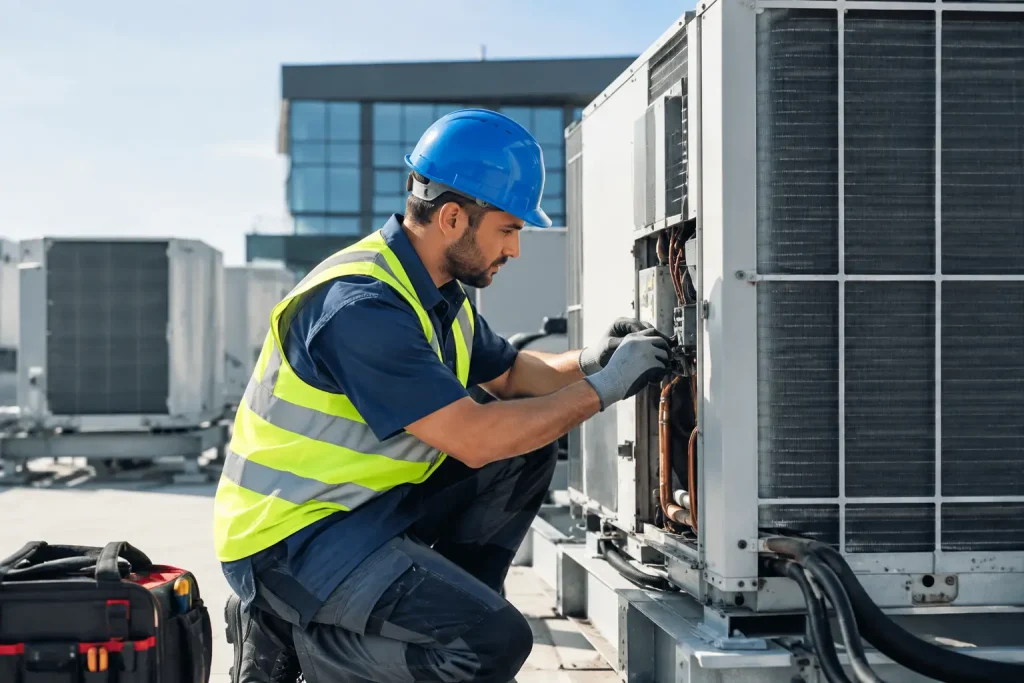
A meeting room that becomes stifling by mid-morning, a retail floor that is too warm for customers, or an overheated server area can all affect how a business performs. Commercial air conditioning installation gives you reliable control over indoor temperatures, helping staff stay comfortable, customers stay longer and equipment operate within safe limits.
For UK businesses, cooling is no longer a nice-to-have reserved for large offices. Modern systems can provide efficient cooling in summer and, with the right specification, economical heating through the colder months too. The value comes from choosing a system that suits the building, its daily use and its long-term energy plan – not simply selecting the largest unit available.
Why commercial air conditioning installation needs planning
Every commercial premises has different demands. A small office with a handful of people, a busy salon, a warehouse office and a restaurant kitchen produce and retain heat in very different ways. Sun-facing glazing, ceiling height, insulation, IT equipment, opening hours and how often doors open all change the cooling load.
A professional site survey identifies these factors before equipment is chosen. This prevents two costly outcomes: an undersized system that struggles during hot weather, and an oversized system that cycles on and off too often, wastes electricity and creates uneven temperatures. Correct sizing is central to comfort, reliability and running costs.
The layout matters just as much. Indoor units need to distribute air where people work, shop or wait without blowing directly onto desks, tables or seating. Outdoor units need clear airflow, practical access for maintenance and a position that respects neighbouring properties and noise considerations. Pipe routes, condensate drainage and electrical capacity should also be assessed early, particularly in older buildings or refurbishment projects.
Choosing the right system for your premises
Most commercial air conditioning systems use inverter technology, which adjusts output to match demand rather than operating at full power continuously. That makes them far more efficient than older fixed-speed equipment and helps maintain a steadier indoor temperature.
Single-split systems for smaller spaces
A single-split system connects one indoor unit to one outdoor unit. It can be a practical, affordable choice for a single office, shop floor, consultation room or small studio. Wall-mounted units are common, while ceiling cassettes may be better where wall space is limited and a more discreet finish is required.
This option works well when each room has straightforward requirements. It becomes less suitable when several rooms need independent control, as multiple outdoor units can take up valuable external space.
Multi-split systems for several rooms
Multi-split air conditioning connects several indoor units to one outdoor unit. Each room can usually be controlled separately, allowing occupants to set temperatures around how that space is used. This is useful for offices with meeting rooms, clinics, salons and mixed-use commercial properties.
The main benefit is flexibility with a cleaner external appearance. However, a multi-split system should be designed carefully, as all connected rooms share the capacity of the outdoor unit. Future extensions are possible in some cases, but should never be assumed without checking the original design.
VRF systems for larger or more complex buildings
For larger offices, hotels, education settings and multi-zone commercial premises, a variable refrigerant flow, or VRF, system may be the right fit. These systems serve many indoor units and offer precise zone-by-zone control. Depending on the system design, some areas may be heated while others are cooled, which can be valuable in buildings with very different heat loads.
VRF offers strong performance and flexibility, but it has a higher upfront cost and requires detailed design. It is most effective where the scale of the property and the expected hours of use justify the investment.
Heating and cooling from one efficient system
Many business owners still think of air conditioning as cooling only. Modern air-to-air heat pump systems can reverse their cycle and provide heat as well. Rather than generating warmth by burning fuel, they move heat from outside air into the building.
This can be an attractive alternative to direct electric heaters and, in the right building, can reduce reliance on gas heating during milder weather. It is particularly useful for spaces that need quick warm-up times, such as offices, retail units and converted commercial premises.
It does depend on the wider heating arrangement. Air conditioning may be the primary heating solution for a well-insulated small business unit, while a larger building may use it alongside existing heating, underfloor heating or an air source heat pump. A survey should consider the whole property rather than treating cooling as an isolated purchase.
Energy costs, solar power and smarter controls
A well-designed system gives businesses greater control over consumption. Programmable controllers, occupancy settings and timed schedules prevent cooling or heating empty rooms for hours at a time. Individual zone control also avoids the familiar problem of one thermostat setting being used for an entire building.
For businesses with solar panels, daytime air conditioning demand can align well with electricity generation, especially during sunny summer periods when cooling is needed most. Solar battery storage can add further flexibility by retaining surplus generation for use later in the day. The exact savings depend on your operating hours, tariff, building fabric and the size of the solar installation, but integrating technologies can improve the overall return.
At Airtech Renewables, we look at practical ways to combine efficient heating, cooling, ventilation and renewable generation, so a property works as one energy system rather than a collection of separate upgrades.
What a professional installation should include
Commercial air conditioning installation is not just a matter of fitting indoor and outdoor units. The installation quality affects efficiency, longevity, noise levels and manufacturer warranty requirements.
A competent installation starts with a clear proposal explaining the chosen system, capacity, unit locations and expected controls. Refrigerant pipework must be installed, pressure tested and commissioned correctly. Electrical work should be safe and suitable for the system load, while condensate drainage must be routed properly to avoid leaks, odours or water damage.
The installer should also explain how to use the controls. This sounds simple, but a system can waste energy quickly if staff do not know how to set schedules, use zones or switch efficiently between heating and cooling. Clear handover makes a measurable difference from day one.
For systems containing F-gas refrigerants, businesses should also ensure the work is carried out by appropriately qualified professionals. Proper records, commissioning and maintenance support help protect compliance and performance over the system’s life.
Maintenance protects comfort and investment
Even high-quality air conditioning needs regular care. Filters collect dust, outdoor coils can become blocked with debris and condensate drains need checking. Left untreated, these issues reduce airflow, increase electricity use and can lead to unpleasant smells or unexpected breakdowns.
The right maintenance frequency depends on use. A lightly used office may need a different schedule from a restaurant, gym or premises with long daily opening hours. Routine servicing should include cleaning, operational checks and an assessment of refrigerant performance where required.
There is also a comfort benefit. Clean filters and correctly functioning equipment help maintain better indoor air quality, which matters in busy workplaces where windows may stay closed for much of the day.
Questions to ask before approving a quote
Price matters, but the cheapest quote can become expensive if it leaves out essential design, drainage, electrical work or commissioning. Ask whether the proposed capacity is based on a survey, where the indoor and outdoor units will sit, how the system will be controlled and what is included after installation.
It is also worth asking about noise levels, warranty terms and maintenance options. If your business is likely to expand, discuss whether the design can accommodate extra rooms or changed layouts. Planning for likely growth is often more cost-effective than replacing a system prematurely.
A commercial cooling system should support the way your business actually operates: comfortable during busy periods, economical when spaces are empty and straightforward for staff to manage. Start with a proper assessment of your premises, and you can turn a necessary upgrade into a long-term improvement in comfort, efficiency and day-to-day running costs.