
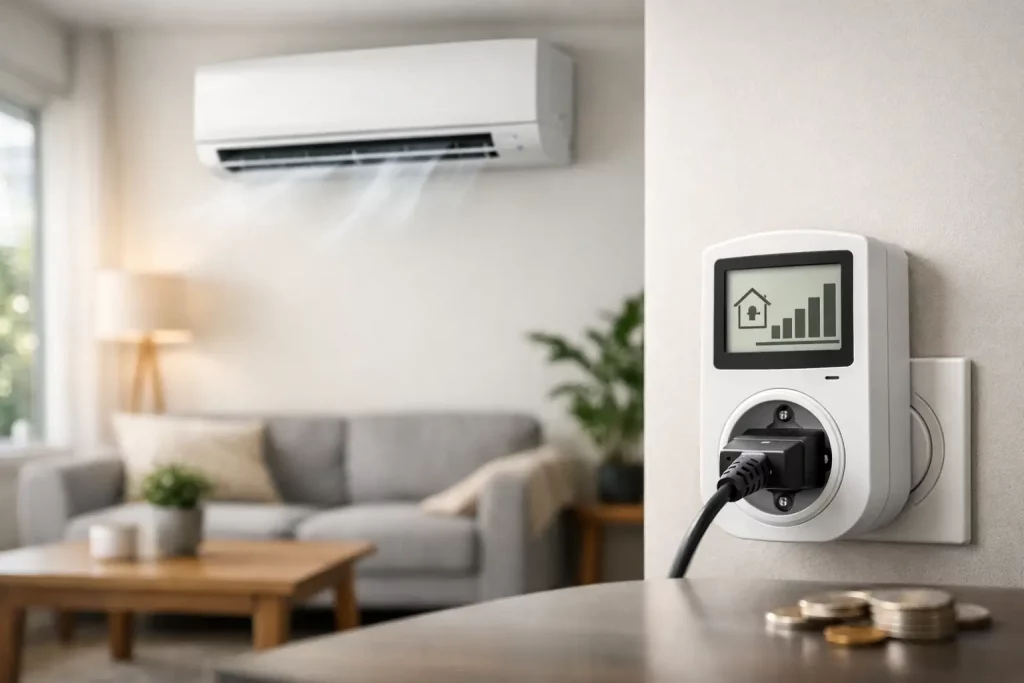
A hot upstairs bedroom can make the question feel urgent: do air conditioners use much electricity, and will keeping one on through a warm UK night create an unwelcome bill? The honest answer is that it depends on the unit, the room and how it is used. Modern fixed air conditioning is often far more efficient than people expect, particularly when compared with older portable units or trying to cool an entire property with windows open.
For most homes and small businesses, air conditioning is a controllable electricity cost rather than an automatic budget problem. Choosing the right system, setting a sensible temperature and pairing cooling with solar generation can make a substantial difference to the amount you pay.
How much electricity does an air conditioner use?
Air conditioner electricity use is measured in kilowatts (kW) and kilowatt-hours (kWh). A unit’s cooling output is not the same as the electricity it consumes. For example, a 2.5kW air conditioner may provide 2.5kW of cooling but draw considerably less than 2.5kW of electrical power while running.
A modern wall-mounted split system for a bedroom or home office commonly uses around 0.5kW to 1kW when actively cooling, although consumption rises in very hot weather or when the system is working hard to bring down a high indoor temperature. Once the target temperature is reached, an inverter unit can reduce its output and use less energy to maintain comfort.
At an electricity price of 28p per kWh, a system drawing 0.7kW costs roughly 20p per hour to run. Used for four hours in the evening, that is around 80p. Actual costs can be lower or higher, but this gives a more useful starting point than judging a system only by its cooling capacity.
Portable air conditioners are often less economical. They may use 1kW to 1.5kW or more, while their hose arrangement can allow warm outside air back into the room. They can be a practical short-term option, but a professionally installed split system usually delivers quieter, more effective and more efficient cooling.
Why air conditioning costs vary so much
Two households can own similar air conditioners and see very different electricity use. The building itself is a major factor. A south-facing loft bedroom with poor insulation, large areas of unshaded glazing and no ventilation strategy will gain heat quickly. A well-insulated room with blinds, sensible shading and closed windows during the hottest part of the day needs less cooling.
The desired indoor temperature also matters. Setting the unit to 16°C on a 28°C day makes it work much harder than choosing a realistic 21°C to 23°C. In the UK, a modest temperature reduction is usually enough to improve sleep, concentration and comfort without excessive energy use.
Room size, ceiling height, occupancy and heat-producing equipment all affect demand. A small bedroom requires a different solution from an open-plan living area, busy office or server room. An undersized unit may run continuously without reaching the set temperature. An oversized unit can cool too quickly, cycle inefficiently and leave humidity poorly controlled. Correct system design is as important as the model you choose.
Do air conditioners use much electricity compared with other appliances?
Air conditioning can be one of the larger electrical loads in a property while it is operating, but it is not necessarily used all year. That distinction matters. A kettle has a high power rating but runs for only a few minutes. An air conditioner has a lower continuous draw than many people assume, yet may run for several hours during a heatwave.
A typical portable air conditioner can use similar power to a fan heater. A modern split air conditioner often uses less power than a kettle when maintaining a room, although it operates for longer. The relevant question is not simply whether an appliance is powerful. It is how many kWh it uses across the day, month and season.
Cooling demand in the UK is also usually concentrated around warmer days and nights. For households with solar panels, those sunny periods can align well with daytime generation. Solar electricity can help reduce the cost of cooling living spaces, home offices and commercial premises when demand is highest.
The efficiency rating to look for
When comparing systems, look beyond the headline price and cooling output. Seasonal Energy Efficiency Ratio, usually shown as SEER, indicates how efficiently an air conditioner cools over a typical season. A higher rating generally means less electricity is needed for the same cooling effect.
Inverter technology is another valuable feature. Instead of repeatedly switching fully on and off, an inverter compressor adjusts its speed to match the room’s needs. This reduces energy waste, helps maintain steadier temperatures and can make the system quieter.
For year-round value, consider an air-to-air heat pump system that can cool in summer and provide efficient heating in milder weather. It will still use electricity, but it moves heat rather than generating it directly in the way an electric heater does. The right choice depends on the property, existing heating arrangement and which rooms need comfort control.
Practical ways to reduce air conditioning running costs
You do not need to avoid using air conditioning to keep bills under control. Small operating changes can make a meaningful difference, especially during prolonged warm spells.
Keep windows and external doors closed while the system is cooling, then use natural ventilation when outdoor temperatures fall. Close blinds or curtains before direct sunlight heats the room, and avoid placing heat-producing appliances close to the indoor unit. Clean filters regularly, as blocked filters restrict airflow and make a system work harder.
Use a sensible set temperature rather than selecting the lowest possible setting. A timer or scheduling function can cool a bedroom before bedtime instead of running at full output all night. In a workplace, zone control means cooling occupied areas rather than empty meeting rooms, corridors or storage spaces.
Professional installation also protects efficiency. The indoor and outdoor units need correct positioning, refrigerant pipework must be installed properly, and the system should be matched to the space. A low-cost unit installed without proper assessment can cost more over time through poor performance, noise and unnecessary electricity use.
Solar panels, batteries and lower-cost cooling
Solar panels and air conditioning can be a sensible combination for UK properties. Air conditioning demand is often greatest when daylight and solar generation are strongest. Rather than buying all of that electricity from the grid, a solar system can supply part of the cooling load directly.
A solar battery can add flexibility by storing surplus generation for use later in the evening, such as when cooling bedrooms before sleep. It will not remove the need for grid electricity in every situation, particularly during cloudy weather or overnight use, but it can improve how much of your own generated power you use.
For businesses, this can be particularly attractive. Offices, salons, retail spaces and workshops often need cooling during daytime opening hours, which can closely match solar output. The best return comes from considering generation, storage, heating, ventilation and cooling together rather than treating each as a separate decision.
Choosing the right system for your property
A single-room split system may be ideal for a warm bedroom, garden office or loft conversion. Multi-split systems can serve several rooms from one outdoor unit, while larger commercial installations need a more detailed assessment of occupancy, heat gains and operating hours.
Do not choose purely on the basis of the lowest purchase price. Consider seasonal efficiency, noise levels, warranty, maintenance requirements and whether the system has the capacity to manage the space comfortably. The right unit should deliver reliable cooling without running flat out for long periods.
Airtech Renewables helps homeowners and businesses assess practical, efficient cooling options alongside solar panels, battery storage and other low-carbon upgrades. A properly designed installation gives you clearer control over comfort and energy costs, rather than leaving you to rely on an inefficient temporary solution.
If a room is regularly too hot to sleep, work or relax in, efficient air conditioning is worth assessing on its actual running cost, not its reputation. With the right size, settings and energy setup, comfortable indoor temperatures can be a realistic part of a lower-cost, future-ready property.