
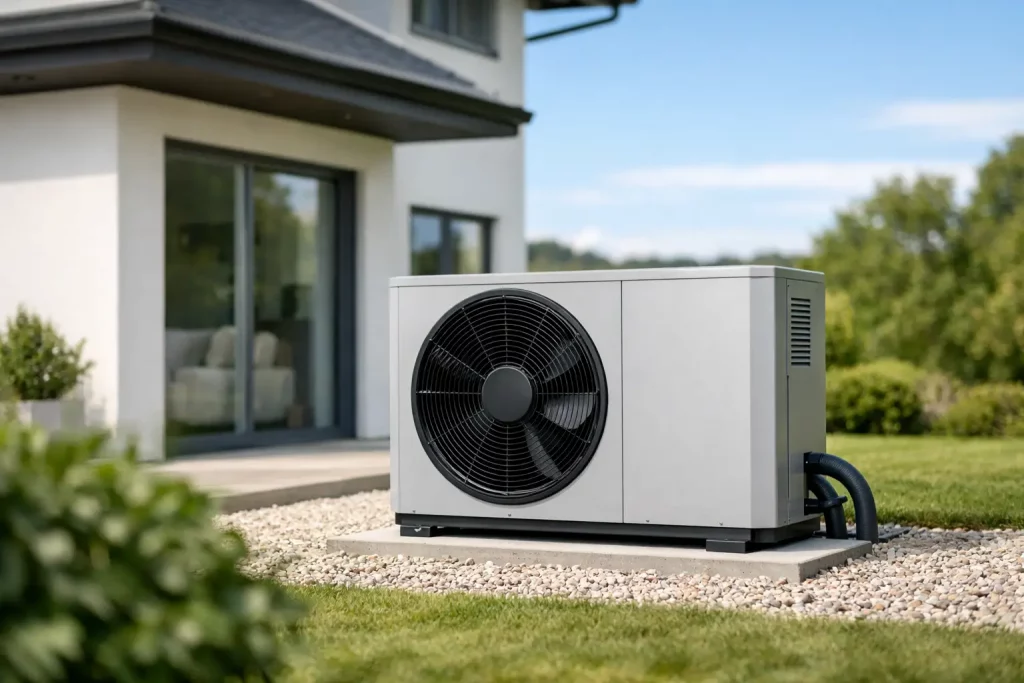
When you switch from a boiler to a heat pump, the biggest question is usually simple: how air source heat pumps work, and whether they can genuinely keep a UK property warm through winter. The short answer is yes. Rather than burning fuel to create heat, an air source heat pump takes heat energy from the outside air and moves it indoors, where it can warm your radiators, underfloor heating and hot water.
That difference matters. A boiler creates heat by combustion. A heat pump transfers existing heat, which is why it can deliver far more heat energy than the electrical energy it uses to run. For homeowners, landlords and businesses looking to reduce running costs and move away from fossil fuels, that makes air source heat pumps one of the most practical low-carbon upgrades available.
How air source heat pumps work in simple terms
Even on a cold day, outside air still contains heat. An air source heat pump captures that low-level heat and upgrades it to a usable temperature for your building. The process is similar in principle to a fridge working in reverse.
The outdoor unit draws air across a heat exchanger. Inside the system is a refrigerant, a special fluid that can absorb heat at very low temperatures. As the refrigerant takes in heat from the air, it turns into a gas. That gas is then compressed, which raises its temperature significantly. The warmed refrigerant passes through another heat exchanger, where its heat is transferred into your property’s heating system. It then cools, returns to a liquid state, and the cycle starts again.
This process runs continuously in the background, adjusting output to match demand. Modern systems are designed to operate efficiently in the British climate, including through colder months when reliable heating matters most.
The main parts of the system
Most air source heat pump systems include an outdoor unit, an indoor hydraulic setup, and a hot water cylinder if the system is providing domestic hot water as well as space heating. The outdoor unit contains the fan, evaporator coil, compressor and other key components that collect and upgrade heat from the air.
Inside the property, the heat is distributed through radiators, underfloor heating, or a combination of both. If hot water is included, the system also heats a cylinder for taps, showers and general daily use.
Why outside air still works in winter
This is where many people hesitate. If the air feels cold, how can a heat pump pull heat from it?
The answer is that cold air is not the same as air with no heat energy in it. As long as the temperature is above absolute zero, there is still heat available to extract. Heat pumps are specifically engineered to absorb that low-grade heat and raise it to a useful level. They do become less efficient as outdoor temperatures fall, but a well-specified system can still perform effectively in UK winter conditions.
What a heat pump actually heats
An air source heat pump can provide space heating and hot water. In many properties, it replaces a petrol, oil or LPG boiler entirely. In others, it may form part of a wider system upgrade, especially where insulation, emitters or controls also need improvement.
For space heating, the heat pump sends warm water through radiators or underfloor heating. Underfloor heating is an especially good match because it works well at lower flow temperatures. Larger modern radiators can also perform very effectively. The key point is that heat pumps usually heat homes more steadily and over longer periods, rather than delivering short bursts of very high temperature heat.
For hot water, the system heats a cylinder and stores hot water for later use. This is slightly different from combi boiler setups, so it is important that the system is designed around the property’s demand.
Why air source heat pumps can be so efficient
The headline efficiency of a heat pump often sounds surprising at first. That is because the system is not converting electricity directly into heat in a one-to-one way. It is using electricity to move heat from one place to another.
In practical terms, for every unit of electricity used, a well-installed air source heat pump can often deliver several units of heat. Actual performance depends on the property, insulation levels, system design, outside temperatures, and how the heating is controlled. A poorly matched setup will not perform like a well-designed one.
This is why installation quality matters as much as the equipment itself. Correct sizing, proper commissioning and suitable heat emitters all play a major role in achieving the savings and comfort people expect.
What affects performance in a real property
No two buildings behave in exactly the same way. A newer, well-insulated home with underfloor heating will often be a straightforward fit for a heat pump. An older property can still be suitable, but it may need a more careful assessment.
Insulation is a major factor. If too much heat is escaping through walls, roofs, windows or floors, the system has to work harder to maintain comfort. Radiator size also matters, because heat pumps generally run at lower temperatures than traditional boilers. In some cases, existing radiators are fine. In others, selected upgrades improve performance.
Controls make a difference too. Heat pumps tend to work best when they maintain a steady indoor temperature rather than being switched on and off aggressively. That often gives a different heating feel from a boiler, but many users find it more comfortable once the system is set up properly.
Sizing is critical
An undersized heat pump may struggle in colder weather. An oversized one can cycle inefficiently and raise costs unnecessarily. That is why a detailed heat loss calculation is so important before installation.
For landlords, developers and commercial clients, that design stage is not a box-ticking exercise. It directly affects running costs, occupant comfort and long-term return on investment.
Are air source heat pumps cheaper to run?
They can be, but it depends on the property and what system they are replacing. If a heat pump is installed in a well-suited building with the right design, it can reduce heating costs, especially where it replaces oil, LPG, direct electric heating or an ageing inefficient boiler. It can also cut carbon emissions significantly.
Electricity is more expensive per unit than petrol, so the efficiency of the heat pump is what makes the numbers work. That means performance matters. Good insulation, good controls and a correctly sized system all help protect savings.
There is also a bigger picture. Heat pumps support a move towards lower-carbon buildings and work particularly well alongside other technologies such as solar panels and battery storage. For property owners looking at future energy resilience rather than just the next quarter’s bill, that joined-up approach can be very attractive.
Common concerns about heat pumps
Noise is often raised early in the process. Modern air source heat pumps are much quieter than many people expect, especially when properly located and installed. They do make some sound because they have a fan and compressor, but in most domestic settings the noise level is manageable and well within normal expectations.
Another concern is whether a heat pump can replace a boiler in an older home. Sometimes the answer is straightforwardly yes. Sometimes the answer is yes, with upgrades to insulation, radiators or hot water storage. That is why a site-specific assessment matters more than assumptions.
There is also the idea that heat pumps only work in new builds. That is not the case. Many existing homes and commercial properties across the UK can benefit from them, provided the system is designed around the building rather than forced into a poor fit.
Is an air source heat pump right for every property?
Not always. Some properties will need fabric improvements first. Some sites have space constraints or existing heating layouts that make the project more complex. And if expectations are based on boiler-style operation, it helps to understand that a heat pump works differently.
That said, for many UK properties, air source heat pumps are now a strong option. They offer efficient heating, lower carbon impact and the chance to modernise a building with a system that is built for the long term. For customers who want practical savings without relying on fossil fuels, they are a serious solution rather than a niche technology.
A good installer will look at the building as a whole, not just the unit on the wall. That means assessing heat loss, emitter suitability, hot water demand and system controls before recommending anything. Companies such as Airtech Renewables focus on that practical, whole-system approach because it leads to better performance and better results for the customer.
If you are weighing up your next heating upgrade, the real question is not just how air source heat pumps work. It is how well a properly designed one could work for your property, your energy bills and the way you want to heat your space in the years ahead.