
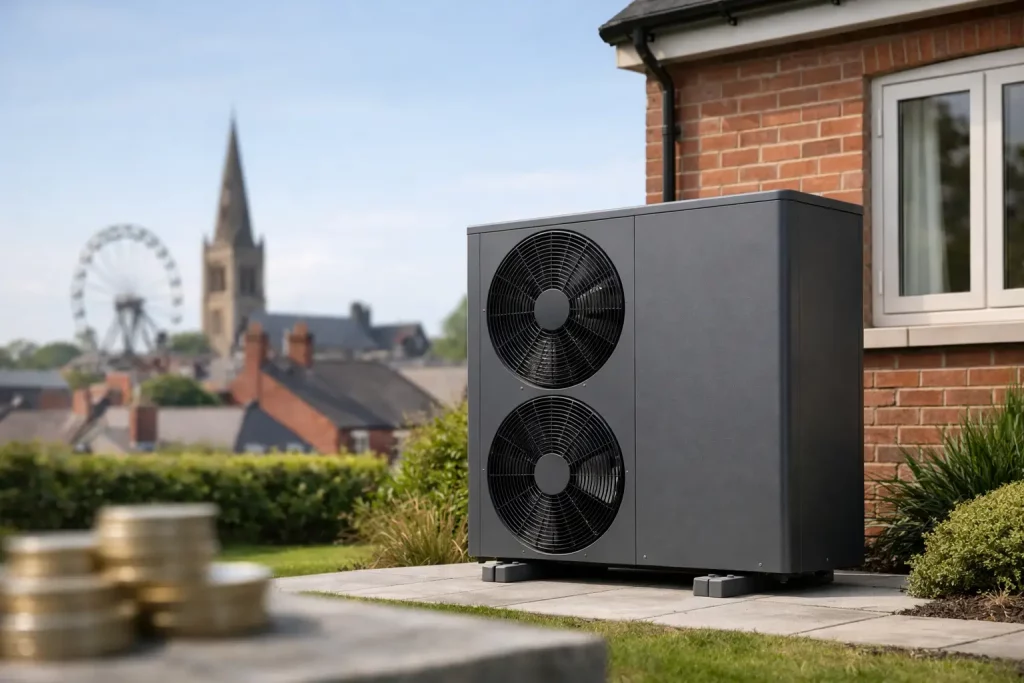
If you are looking into the £9,000 air source heat pump grant Leicester 2026, the main question is simple: can you really reduce the upfront cost of switching from petrol or oil heating? In many cases, yes – but only if your property, installer, and heating design all line up with the scheme rules in place at the time.
For Leicester homeowners, landlords, and developers, that matters. Heat pumps can deliver lower running costs, better efficiency, and a cleaner way to heat a property, but the upfront spend is still the barrier that stops many projects. A grant at this level can make the numbers far more attractive.
How the £9,000 air source heat pump grant in Leicester for 2026 could help
A £9,000 contribution towards an air source heat pump installation can significantly reduce the cost of upgrading an older heating system. For some homes, it may cover a large share of the heat pump itself. For others, it will take the sting out of the wider installation, especially where upgrades such as larger radiators, pipework changes, or a new hot water cylinder are needed.
That is the key point many people miss. The grant is not just about buying a unit. A good heat pump system depends on proper design. If the home loses too much heat, or the emitters are undersized, performance suffers. The best outcome is not the cheapest quote on paper. It is a system that heats the property properly and keeps bills under control over the long term.
Who is most likely to benefit?
In Leicester, the properties that often benefit most are homes with older boilers, off-petrol properties, renovated houses with improved insulation, and newer builds designed with efficiency in mind. Landlords can also see value where they want to future-proof their stock against changing energy standards.
That said, not every property is an instant fit. If your home has very poor insulation, single glazing throughout, or an ageing heat distribution system, extra works may be needed before a heat pump makes financial sense. That does not mean you should rule it out. It means the right survey comes first.
What you should check before applying
Before focusing only on grant availability, check whether the property is actually ready for an air source heat pump. A proper assessment should look at heat loss, insulation levels, radiator sizing, hot water demand, and the available outdoor space for the unit.
You should also confirm that the installer is appropriately certified and able to complete work to the standards required by grant-backed schemes. This is where many applications fall down. A grant can reduce cost, but it does not fix poor specification or rushed installation.
For commercial properties and larger residential projects, the picture can be slightly different. Usage patterns, building size, and heating demand all affect whether an air source heat pump is the right fit on its own or as part of a wider low-carbon system.
£9,000 air source heat pump grant Leicester 2026 – what affects eligibility?
Eligibility usually depends on the live scheme rules in 2026, but there are common factors worth keeping in mind. These often include the type of existing heating system, the installer’s certification, property suitability, and whether the installation meets technical and regulatory requirements.
Some homeowners assume any property can claim and move straight to installation. In reality, grant support is often tied to compliance, documentation, and approved processes. If you want a smooth route, start with a survey rather than the application form.
It is also worth remembering that grants can change. Funding levels, eligibility criteria, and administrative steps may be updated by the time 2026 arrives. That is why local advice is useful. A Leicester-based customer needs guidance that reflects real property types in the area, not generic national assumptions.
Is it still worth it if you need extra upgrades?
Often, yes. Even where a property needs radiator upgrades or a cylinder replacement, the combined savings from grant support and improved efficiency can still make the project worthwhile. The real value comes when the system is sized correctly and matched to the building.
There is a trade-off, though. If your home needs major insulation work first, it may be smarter to stage the project. Improve the fabric, then install the heat pump. That approach can lead to better performance and lower ongoing costs.
For customers looking at wider energy upgrades, an air source heat pump can also work well alongside solar panels and battery storage. Generating more of your own electricity can improve the economics further, especially as grid energy prices remain unpredictable.
Why Leicester property owners are looking at heat pumps now
Rising petrol costs, tighter efficiency expectations, and a stronger focus on low-carbon heating are pushing more Leicester property owners to act earlier rather than later. Waiting can mean higher installation demand, less installer availability, and uncertainty around future scheme changes.
A well-planned heat pump installation gives you more than a new heating system. It can lower dependence on fossil fuels, improve property appeal, and put you in a stronger position for the years ahead. For anyone considering the £9,000 air source heat pump grant Leicester 2026, the smart move is to start with a clear property assessment and a realistic view of the full installation, not just the headline funding figure.
That is where a practical installer makes the difference. Airtech Renewables helps customers look at the whole picture – system design, grant readiness, efficiency improvements, and long-term savings – so the investment works properly from day one.