
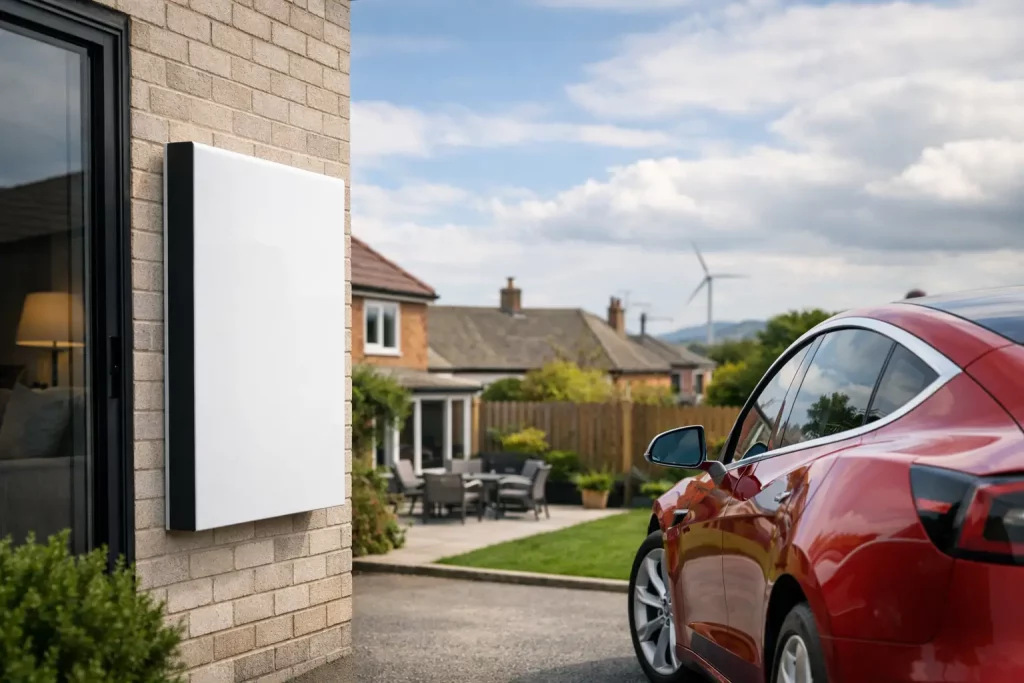
If you are looking up a Tesla Powerwall review UK, you are probably weighing up one simple question – will it actually lower your electricity bills enough to justify the cost? For many UK homeowners, that is the right place to start. A battery only makes sense if it helps you use more of your own solar power, avoid expensive peak-rate electricity, and gives you practical value during outages or high-price periods.
The Tesla Powerwall has a strong reputation, and for good reason. It is one of the best-known home battery systems on the market, with a clean design, a good app, and useful backup capability. But brand recognition alone is not enough. In the UK, whether it is worth buying depends on your property, your energy use, your solar setup, and what you expect the battery to do day to day.
Tesla Powerwall review UK – the short verdict
For the right property, the Tesla Powerwall is a high-quality battery that can deliver strong long-term value. It suits households that already have solar panels or plan to install them, particularly if they use a lot of electricity in the evening when solar generation has dropped off. It can also appeal to homeowners who want backup power and a well-developed monitoring app.
The main drawback is cost. Powerwall is not usually the cheapest battery option in the UK, so buyers need to look beyond the headline product name and compare it against actual savings. If your electricity demand is modest, or your solar array is small, there may be more cost-effective batteries available.
What the Tesla Powerwall does well
At its core, the Powerwall stores electricity for later use. In most homes, that means charging from solar panels during the day and discharging in the evening, overnight, or during more expensive tariff periods. That basic job is not unique, but Tesla has made the overall system easy to live with.
One of its biggest strengths is usable capacity. A single Tesla Powerwall offers a large enough storage volume for many family homes, which means it can cover a meaningful share of evening and overnight demand rather than just a few appliances. If paired with a well-sized solar PV system, it can significantly increase self-consumption and reduce how much electricity you buy from the grid.
The app is another strong point. Homeowners like being able to see solar generation, battery charge, home use, and grid import in one place. That visibility matters because it helps people understand where savings come from. A battery feels far more worthwhile when you can clearly see it working.
Backup power is also a genuine selling point. Not every household places high value on this, but for some homes and small businesses, keeping key circuits running during a power cut is a real benefit. In areas where supply interruptions are rare, it may not be the deciding factor. Still, it adds resilience that many lower-cost batteries do not match in quite the same way.
Costs and value in the UK
This is where any honest Tesla Powerwall review UK needs to be realistic. The Powerwall is a premium product, and installation costs reflect that. The final price depends on the installer, whether it is fitted with a new solar system or added to an existing one, and whether any extra electrical work is needed.
For most buyers, the question is not simply what it costs, but what return it can deliver over time. The best results tend to come when the battery is combined with solar panels and a suitable electricity tariff. If you are charging the battery with excess daytime generation and using that stored power when grid electricity is expensive, the savings can add up steadily year after year.
If you do not have solar, the calculation changes. It can still work with smart tariffs, charging at cheaper off-peak rates and discharging later, but the economics are usually less compelling than solar-plus-storage. That does not make it a bad choice, but it does mean the payback period may be longer.
Is Powerwall right for every UK home?
No, and that is the part some reviews skip over. A battery needs enough excess solar generation or tariff flexibility to earn its keep. If your household is out all day, uses very little electricity in the evening, or has limited roof space for solar, a large premium battery may not be the most efficient use of your budget.
On the other hand, homes with higher demand often benefit more. Families running appliances in the evening, charging an EV, using electric heating support, or simply wanting greater control over energy bills can get much more value from a battery with decent capacity. Larger properties and homes moving further towards electrification often make better candidates.
Landlords and developers should also look at the bigger picture. A Powerwall can support a stronger low-carbon specification for new-build or upgraded properties, but buyers and tenants will still judge value by running costs. The battery works best as part of a joined-up energy design rather than as a standalone badge product.
Tesla Powerwall with solar panels
This is where the system usually performs best. Solar panels generate most strongly during daylight hours, but many households use the most electricity in the morning and evening. Without a battery, a fair amount of midday generation may be exported to the grid. With a Powerwall, more of that energy can be stored and used later.
That shift matters because it improves the value of your solar installation. Instead of sending low-cost exported electricity away and buying back more expensive electricity after sunset, you use more of what your roof produces. For homes trying to cut bills and lower grid dependence, that is the main attraction.
The fit is particularly strong if you are already planning a solar installation. Designing solar and battery storage together usually gives a better result than adding storage as an afterthought. System sizing, inverter compatibility, and household demand can all be considered upfront, which tends to improve performance and value.
Day-to-day performance and user experience
A good battery should not require constant attention, and the Powerwall scores well here. Once installed and configured properly, it is largely hands-off. The software handles charging and discharging decisions, and the app gives homeowners an easy way to monitor performance without needing technical knowledge.
That said, expectations need to be sensible. A battery does not eliminate your electricity bill, and it does not create power out of nowhere. In winter, when solar generation is lower across the UK, the benefit of any battery can drop simply because there is less surplus electricity available to store. Savings are usually strongest in brighter months, then more modest during darker periods.
This does not make storage less useful. It just means annual performance should be judged over the whole year, not on a few sunny weeks. A good installer will explain that clearly rather than overselling the result.
Tesla Powerwall vs other battery options
Tesla is not the only serious battery choice in the UK market. There are strong alternatives from other manufacturers, some of which can be more affordable or more flexible depending on the property. That is why product comparison matters.
Powerwall tends to stand out for brand confidence, app quality, and backup functionality. Some competing batteries may offer a lower entry price or easier integration in certain setups. Others may suit homes that want modular expansion in smaller steps.
The best option depends on the system around it. A premium battery in a poorly matched design will not outperform a better-suited alternative. That is why installation quality, correct sizing, and honest advice matter just as much as the battery brand itself.
Should you buy one?
If you have a suitable solar setup, meaningful evening electricity use, and want a well-proven battery with strong smart controls, the Tesla Powerwall is a solid choice. It is especially attractive for households that value backup power, clear monitoring, and a tidy all-in-one system.
If your main goal is the cheapest route into storage, it may not be the first product to look at. There are cases where a different battery delivers a better payback. But for many homeowners, paying more upfront for a reliable, high-capacity system can still make sense if the numbers stack up over the long term.
The smartest approach is to look at your actual usage, roof generation potential, and tariff options before making a decision. A well-designed battery system should fit the way your property uses energy, not just the strength of the brand on the front. That is why many customers choose a specialist installer such as Airtech Renewables to assess the full picture and recommend what will genuinely reduce bills.
If you are considering a Powerwall, focus less on the name and more on the result – how much of your own energy you can keep, how much grid electricity you can avoid, and whether the system fits your home for the next ten to fifteen years.