
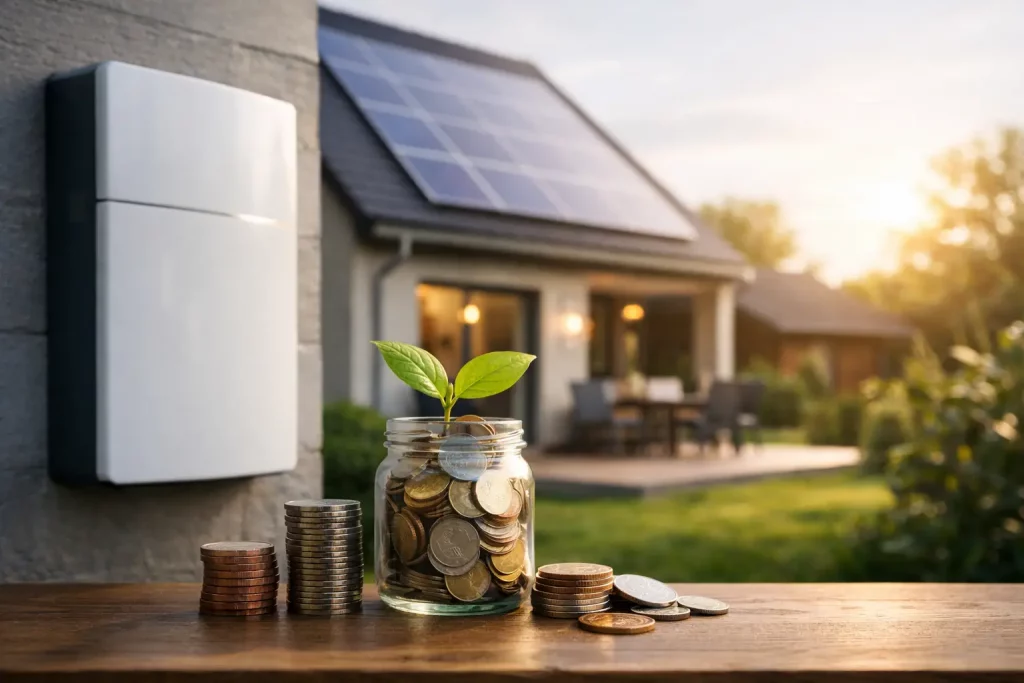
A home can generate plenty of solar power at midday and still buy electricity from the grid at 6pm. That gap is exactly how battery storage saves money. Instead of exporting usable electricity during the day and paying higher rates later on, you store more of what you generate and use it when your property actually needs it.
For many UK households and businesses, that simple shift changes the maths of solar. A battery does not create electricity on its own, but it helps you use your own energy far more effectively. With energy prices still a concern and demand often highest in the morning and evening, storage gives you more control over when you buy electricity and how much of it you need.
How battery storage saves money in practice
The biggest saving usually comes from reducing grid import. Without a battery, any spare solar generation often goes back to the grid once your daytime demand is covered. Later, when the sun drops and lights, appliances or business equipment are still running, you buy electricity back at the standard unit rate.
Battery storage helps by keeping that surplus on site. You generate power during brighter hours, store it, and then use it after sunset or during busier periods. The result is less purchased electricity and better use of the solar system you have already paid for.
This is particularly useful in homes where people are out during the day. Solar panels may be working well, but if no one is using much electricity at that time, a lot of that generation can be exported. A battery captures more of that value instead of letting it slip away.
For businesses, the principle is similar. If your building has variable demand through the day, battery storage can smooth out your electricity usage and reduce reliance on imported power during more expensive periods.
Better self-consumption means better value from solar
One of the clearest answers to how battery storage saves money is improved self-consumption. In simple terms, that means using more of your own electricity rather than sending it away and buying energy back later.
This matters because the price you pay to import electricity is typically higher than the value of exporting it. Even with export payments available, the financial return from using your own generated electricity is often stronger than selling it and then importing later at a higher rate.
That difference is where a battery earns its place. It helps turn a solar installation from a daytime generator into a more flexible energy system that supports your property for longer. Instead of relying on sunlight at the exact moment you need power, you have stored electricity ready to use.
Protection against peak electricity costs
Electricity is not just expensive in general. It is often more expensive at certain times. If you are on a time-of-use tariff, battery storage can make a noticeable difference by helping you avoid peak-rate electricity.
A battery can be charged when electricity is cheaper and discharged when rates are higher. If paired with solar, this becomes even more effective. You may be able to rely on stored solar power during expensive evening periods, reducing the amount you buy from the grid when unit prices are least favourable.
This approach can be useful for homeowners with predictable evening demand, but it can be especially valuable for commercial sites where peak usage hits operating costs harder. It depends on your tariff, your battery size and your usage pattern, but the saving potential is real when the system is set up properly.
More control over rising energy prices
Energy bills are harder to manage when you depend fully on imported electricity. Battery storage gives you more control because it reduces how much power you need to buy and when you need to buy it.
That does not mean complete independence from the grid in most cases. Most properties will still import some electricity, especially in winter. But even partial reduction matters. If you can cover more of your evening use with stored energy and make better use of your solar generation, you are less exposed to future price rises.
For property owners thinking long term, that control is part of the value. Savings are not only about this month’s bill. They are also about building a system that performs better over years of changing energy costs.
Why battery storage works well with other technologies
Battery storage is at its strongest when it forms part of a wider low-carbon setup. Solar panels are the obvious match, but storage can also support systems such as EV chargers and heat pumps by helping you manage when energy is used.
If you charge an electric vehicle at home, a battery may reduce the amount of grid electricity needed for part of that charging, depending on timing and system design. If you run a heat pump, storage may help you use more of your own electricity to support heating demand rather than importing all of it from the grid.
That joined-up approach is often where the best savings are found. A property with solar, battery storage and other efficient technologies can operate far more intelligently than one relying on separate systems with no coordination.
The trade-offs to understand before you buy
Battery storage can save money, but it is not a one-size-fits-all answer. The level of savings depends on how much electricity you use, when you use it, whether you already have solar, what tariff you are on and how the system is sized.
A household that uses most of its electricity during the day may see less benefit from storage than one with strong evening demand. Likewise, a very small battery may fill quickly and offer limited support later on, while an oversized battery can add cost without delivering proportionate value.
Upfront investment matters too. The right question is not simply whether a battery saves money, but whether the expected savings justify the installation cost over time. A good installer will look at your usage profile, property type and existing equipment before recommending a solution.
There is also the issue of product quality and installation standards. Cheaper equipment may look attractive at first, but long-term performance, warranty support and correct integration make a major difference. In energy systems, poor specification usually costs more later.
How to tell if a battery is likely to save you money
The strongest candidates for battery storage usually share a few characteristics. They have solar panels already installed or plan to install them. They use a meaningful amount of electricity outside daylight hours. They want more control over bills rather than simply exporting spare generation.
Landlords and developers may also see value where battery storage improves the overall efficiency and appeal of a property. For businesses, savings can be attractive where there is steady electricity demand and pressure to reduce operating costs and carbon impact at the same time.
The best way to assess likely savings is through a proper review of your usage and system design. Real figures matter more than general promises. A well-matched battery can reduce waste, improve solar performance and lower bills. A poorly matched one may still help, but not enough to justify the spend.
How battery storage saves money over the long term
Short-term bill reduction is only part of the story. Over the long term, battery storage can improve the return on your wider energy investment. It helps your solar system do more work for your property, increases the value of self-generated electricity and supports a future-ready setup that is less dependent on unpredictable grid costs.
For many property owners, that combination is the real benefit. You are not just adding a battery. You are making your energy system more useful, more flexible and more cost-effective.
At Airtech Renewables, that is the practical view we take. The right system should not be complicated for the sake of it. It should help your property use energy better, reduce avoidable costs and deliver savings you can see in day-to-day operation.
If you are weighing up battery storage, focus on the numbers that apply to your building, your usage and your plans for the next few years. The best investment is rarely the biggest one. It is the one that fits properly and keeps paying you back every time the grid would otherwise have been doing the expensive work.