
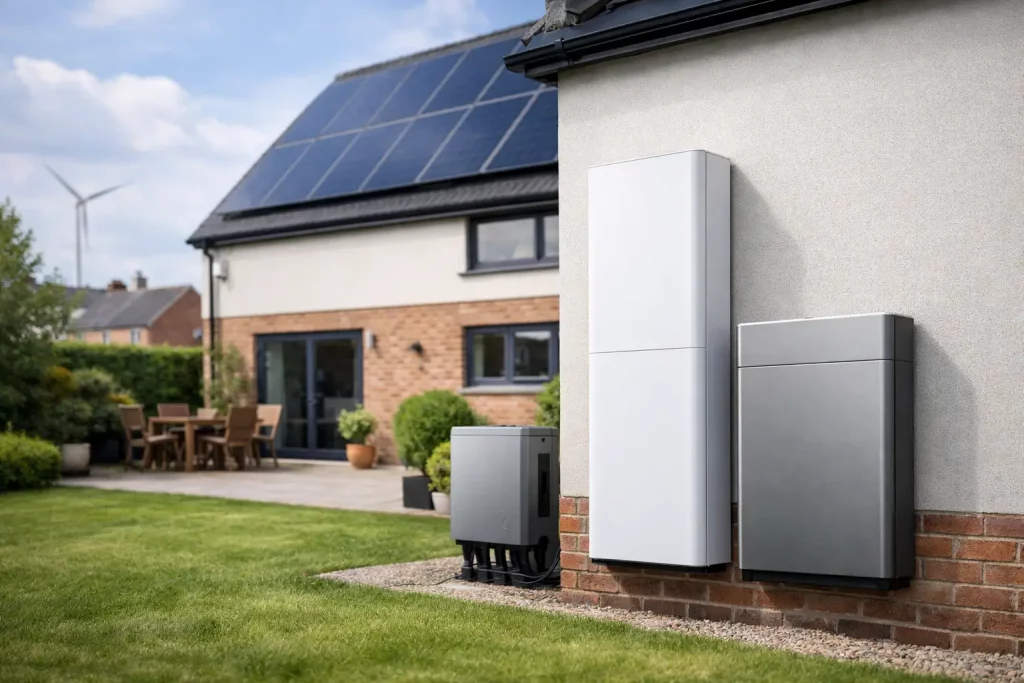
A home with solar panels but no battery often exports its cheapest electricity and buys it back later at the highest rate. That is why more households are now looking closely at the best home battery storage systems. The right setup can help you use more of your own power, cut reliance on the grid and make rising electricity costs easier to manage.
What makes the best home battery storage systems?
The best system is not simply the one with the biggest battery or the lowest headline price. It is the one that matches how your property uses electricity, when you use it and what you want the battery to achieve.
For some households, the priority is storing excess solar generation for use in the evening. For others, it is charging on a cheaper overnight tariff and using that energy during expensive peak periods. Some buyers also want backup capability in case of power cuts, although not every battery system offers this as standard.
A good battery system should deliver strong daily performance, a sensible warranty and capacity that suits your real usage rather than an idealised estimate. It should also work properly with your inverter, solar array and wider electrical setup. This is where professional design and installation matter just as much as the battery brand itself.
The key features to compare
Usable capacity
Capacity is usually measured in kilowatt-hours, or kWh. This tells you how much electricity the battery can store. In practice, usable capacity matters more than total capacity, because some systems hold a small reserve to protect battery health.
For many UK homes, a battery in the region of 5kWh to 10kWh is a sensible starting point. Smaller households may need less, while larger homes with higher evening demand, electric heating or EV charging may benefit from a bigger or expandable setup.
Power output
Capacity tells you how much energy is stored. Power output tells you how much electricity the battery can deliver at one time. This affects whether the system can comfortably run several appliances together.
A battery with decent capacity but limited output may still struggle if you want to use the kettle, oven and washing machine at the same time. That does not make it a poor product, but it does mean it may not suit every property.
Battery chemistry
Most modern home systems use lithium iron phosphate or similar lithium-based chemistries. These are popular because they offer good safety, long life and strong efficiency. Older technologies still exist, but most homeowners now focus on lithium systems because they are more practical for everyday domestic use.
Warranty and lifespan
Battery warranties are often expressed in years, number of cycles or retained capacity after a set period. Ten-year warranties are common in the market, but the detail matters. One system may promise a certain percentage of retained capacity after ten years, while another may cap the total energy throughput.
This is one of the main reasons it is worth comparing products carefully rather than just looking at purchase price.
Backup capability
Some batteries can provide backup power during a grid outage, but not all do, and some require additional equipment. If backup is important, it should be part of the design conversation from the start.
Expandability
A modular system can be useful if you want to start with a smaller battery and increase storage later. That can be a practical option for growing households, landlords upgrading properties over time or anyone balancing upfront cost with future flexibility.
Which type of battery system suits your property?
There is no single answer for every home, because usage patterns vary so much. A household that is empty all day but active in the evening will usually gain more from storing daytime solar for later use. A home with occupants working remotely may consume more power through the day and need a different balance between solar generation and battery size.
If you already have solar panels, a retrofit battery can be an excellent upgrade. It allows you to keep more of the electricity you generate rather than exporting it to the grid. If you are installing solar from scratch, it often makes sense to consider battery storage at the same time so the whole system is designed to work together.
Homes with heat pumps, electric vehicles or high electricity demand should take an even closer look at battery sizing. In these cases, under-sizing the battery can limit the benefit, while over-sizing it may extend payback further than you would like. The best result usually comes from matching the battery to actual usage data rather than guesswork.
Best home battery storage systems for different priorities
If your priority is maximum savings, look for a battery system that works well with solar self-consumption and time-of-use tariffs. The aim here is simple: charge when electricity is cheap or free from your panels, then use that stored power when grid prices are higher.
If your priority is resilience, focus on systems with genuine backup options and enough power output to run key circuits. Not every battery marketed for home use is designed for meaningful backup.
If your priority is value, a mid-sized battery from a proven manufacturer can often outperform a larger but poorly matched system. Bigger is not always better if you rarely fill or discharge the battery fully.
If your priority is future-proofing, an expandable setup may be the best route. This gives you room to add capacity if your property later includes an EV charger, electric heating upgrade or increased occupancy.
Common mistakes when choosing a battery
One of the most common mistakes is buying based on price alone. A cheap battery that does not integrate properly with your solar inverter, or one that lacks the features you need, can be poor value in the long run.
Another mistake is focusing only on battery size and ignoring household demand. A large battery may sound appealing, but if your solar array is too small to charge it properly, or your usage pattern does not support it, much of that capacity may go underused.
Installation quality is another major factor. Even the best equipment needs correct system design, safe electrical work and proper commissioning. That is especially important where solar panels, battery storage, EV charging and heating systems all interact.
Why installation matters as much as the battery brand
Battery storage is not a plug-and-play purchase. It is part of a wider energy system in your property. The installer needs to assess your current consumption, tariff structure, available space, inverter compatibility and future plans.
A properly specified battery should feel straightforward in daily use. It should charge and discharge at the right times, integrate with your generation where relevant and deliver clear value on your electricity bills. Poorly designed systems can still work, but they often fall short of their potential.
That is why many property owners prefer working with a specialist that understands renewable technologies as a whole rather than treating battery storage as a standalone add-on. For customers considering solar, battery storage and other low-carbon upgrades together, Airtech Renewables takes a joined-up approach that helps avoid mismatched systems and missed savings.
Is home battery storage worth it in the UK?
For many households, yes, but it depends on the setup. Battery storage tends to make the most sense when you already have solar panels or plan to install them, especially if a lot of your generation would otherwise be exported during the day.
It can also be worthwhile without solar in some cases, particularly where a home can benefit from off-peak charging tariffs. That said, the financial case is usually strongest when battery storage is part of a wider strategy to reduce grid reliance and use more low-cost electricity on site.
The best home battery storage systems are not about chasing a trend. They are about improving control. With the right design, you can use more of the power you generate, reduce wasted export, protect yourself from volatile tariffs and make your property more efficient overall.
If you are comparing options, focus on real household usage, not just brochure claims. A battery should fit the way your property actually runs. Get that right, and storage becomes more than an extra feature – it becomes a practical tool for lower bills and a smarter energy setup.