
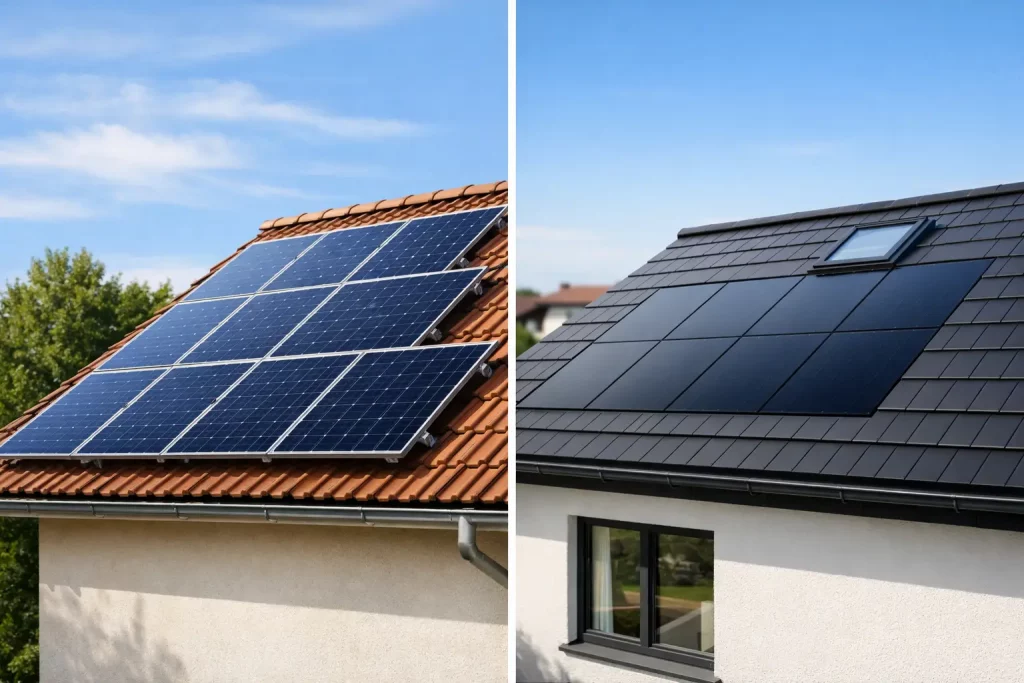
A solar installation should suit the property as well as the household’s electricity use. When comparing roof mounted vs in roof solar, the main difference is not whether the panels generate clean electricity – both can reduce reliance on grid power – but how the system is built into the roof, what it costs and how it looks once complete.
For many UK homeowners, roof-mounted panels are the straightforward, cost-effective choice. In-roof solar appeals where appearance matters most or where a new roof is already being planned. The right answer depends on the condition of your roof, your budget, the available space and the wider improvements you want to make to the property.
Roof mounted vs in roof solar: the key difference
Roof-mounted solar panels sit above the existing roof covering. Installers secure a mounting framework to the roof structure, then fit the panels on top of the tiles or slates. The panels have a small gap beneath them, allowing air to circulate.
In-roof solar panels replace a section of the roof covering. Rather than sitting on rails above the tiles, the panels are fitted flush within the roof plane using a specialist flashing system to weatherproof the edges. The result is a lower-profile, more integrated finish.
Both systems use photovoltaic panels to turn daylight into electricity for your home or business. Both can work with a solar battery to store surplus generation and an EV charger to make better use of lower-cost, self-generated power. The decision is largely about installation approach, visual impact and project cost.
Roof-mounted solar panels: practical and efficient
Roof-mounted solar is the most common type of domestic installation in the UK, and for good reason. It can usually be installed onto a sound, existing roof without removing tiles across the panel area. This keeps labour, materials and disruption lower than an in-roof installation.
The gap behind roof-mounted panels also helps ventilation. Solar panels lose a small amount of efficiency as they get hotter, so airflow can support performance during warmer weather. In the UK, this is not usually a dramatic difference, but it is a useful practical advantage.
Maintenance and future changes can be more straightforward too. If a panel, cable or roof tile needs attention, access is generally less involved because the solar system sits separately from the roof covering. This can be reassuring for homeowners who want proven technology and a clear route for servicing over the lifetime of the system.
The trade-off is appearance. Roof-mounted panels are visible above the line of the roof and may look more prominent on some properties, especially where the roof has a low pitch or is visible from the road. A well-planned layout using all-black panels can still look neat and modern, but it will not have the flush finish of in-roof solar.
In-roof solar: a cleaner architectural finish
In-roof solar is designed for customers who want their renewable energy system to blend into the building. The panels sit closer to the roof surface, creating a smart, fitted appearance that can work particularly well on contemporary homes, extensions and high-specification developments.
It is often an excellent option when a roof is being replaced. Because the existing tiles or slates are removed where the solar array will sit, combining the two jobs can reduce duplicated labour and make the installation feel like part of the building project rather than an add-on.
For property developers and homeowners undertaking major refurbishment, that integrated design can be worth the higher upfront cost. It may also be a sensible way to keep the roofline clean where visual considerations carry extra weight, subject to planning requirements and any restrictions affecting the property.
However, in-roof systems need careful design and expert fitting. The solar array becomes part of the weatherproof roof structure, so correct flashing, drainage and ventilation are essential. This is not an area to cut corners: the installer should assess the roof construction, specify a compatible system and provide clear workmanship and product warranties.
Is in-roof solar less efficient?
It can be, but the difference should be put into context. In-roof panels have less air movement behind them than roof-mounted panels, which can lead to higher operating temperatures and a modest reduction in output in hot conditions.
In real UK conditions, roof orientation, shading, panel capacity and household electricity use often have a greater effect on the financial return than this temperature difference. A south-, east- or west-facing roof with minimal shade can still deliver excellent results with either installation type.
This is why solar should not be selected on appearance alone. A proper survey should consider roof pitch, compass direction, chimney shadows, nearby trees, usable roof area and your likely daytime demand. The aim is to install the right number of panels in the most productive positions, then match the system to how the property uses energy.
Comparing cost, disruption and long-term value
Roof-mounted solar is normally less expensive to install because it requires fewer roofing materials and less work to alter the roof covering. It is also usually quicker to fit on an existing roof, making it a strong choice for homeowners who want to begin reducing electricity bills without taking on a wider renovation project.
In-roof solar generally costs more at the outset. The price reflects the specialist mounting system, flashing components and additional roofing labour. If your roof is due for replacement, though, the cost gap can narrow because you are already paying for roof work and the solar panels replace part of the tiles or slates.
Neither option should be judged purely on initial price. A correctly designed system can generate electricity for decades, helping to reduce imported power from the grid. Adding battery storage may increase the proportion of solar energy used on site, particularly for households that are out during the day and use more electricity in the evening.
The best value comes from a system sized around the building, not from simply fitting the largest array possible. Consider future electricity demand too. An air source heat pump, electric vehicle or planned home extension could make a larger solar system more worthwhile if your roof and budget allow.
Which system is right for your property?
Roof-mounted solar is likely to be the better fit if your roof is in good condition, you want the most cost-effective route into solar and you prefer a faster installation. It is also a practical option where easy access for future maintenance is a priority.
In-roof solar is likely to suit you if you are building, extending or re-roofing, or if a discreet finish is central to the project. It can give a premium, integrated look that complements a carefully designed property. The additional cost is often easier to justify when it forms part of planned roofing work.
Listed buildings, conservation areas and properties with unusual roof materials need an individual assessment. Planning rules and permitted development rights can vary, while roof structure, shading and electrical capacity may limit what is practical. A site survey removes guesswork before any commitment is made.
Choose the installer as carefully as the panel type
A good solar installation is not just a set of panels on a roof. It needs accurate generation estimates, suitable electrical protection, tidy cable routes, safe roof work and paperwork that supports warranties and export payments. Choosing an MCS-certified installer is particularly important for confidence in design and installation standards.
Ask how the installer will assess your roof condition, whether the proposed system leaves room for future battery storage, and what support is available after installation. For in-roof solar, ask specifically how the roof will be weatherproofed and who is responsible if roofing work is needed later.
Airtech Renewables can assess whether roof-mounted or in-roof solar will deliver the strongest balance of appearance, performance and affordability for your property. The most useful next step is a tailored survey that looks beyond the panels and considers how solar can support your wider energy plans – from battery storage and EV charging to lower-cost electric heating.