
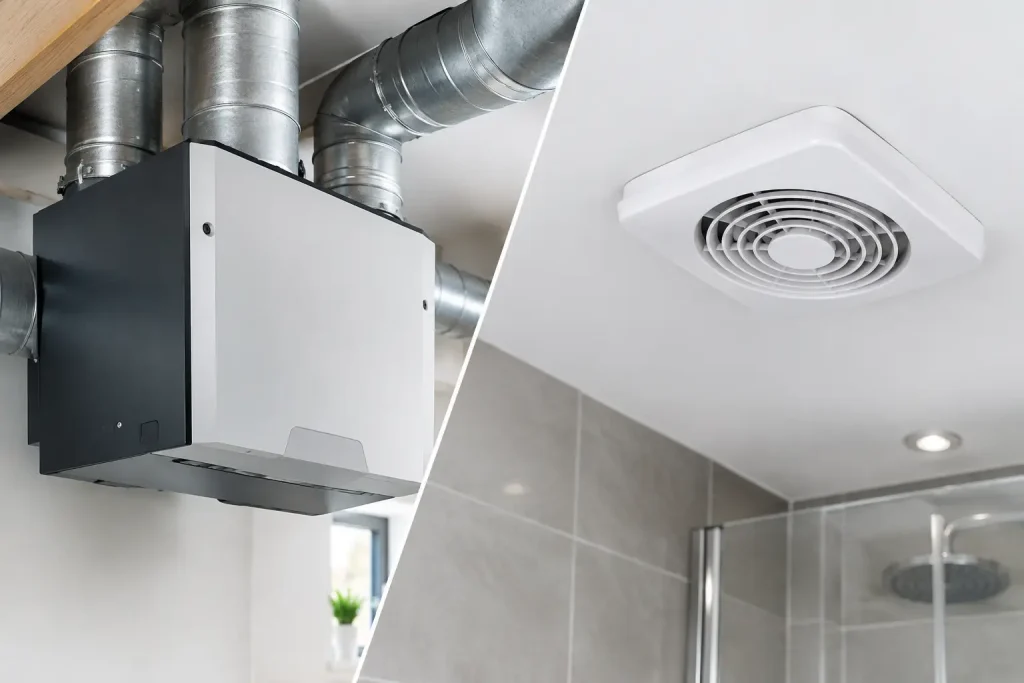
A steaming bathroom mirror, condensation on bedroom windows and stubborn mould are not just cosmetic problems. They are signs that moist, stale air is not leaving the property quickly enough. When comparing mvhr vs extractor fans, the right answer depends on how airtight the building is, how it is used and whether you want a targeted fix or whole-home ventilation with heat recovery.
Extractor fans remain a practical, affordable choice for many existing homes. Mechanical ventilation with heat recovery, usually shortened to MVHR, is a more comprehensive system designed for efficient, well-sealed properties. Both can improve indoor air quality, but they work in very different ways.
MVHR vs extractor fans at a glance
An extractor fan removes humid or polluted air from a specific room, usually a bathroom, shower room, kitchen or utility. Replacement air enters the home through gaps in the building fabric, trickle vents, open windows or air vents. This is known as extract ventilation.
An MVHR system continuously extracts stale air from wet rooms while supplying filtered fresh air to bedrooms and living areas through a network of ductwork. Before the extracted air leaves the property, it passes through a heat exchanger. Much of its heat is transferred to the incoming fresh air without mixing the two air streams.
The difference matters most in winter. A standard extractor fan removes warm indoor air and relies on colder outside air to replace it. MVHR still removes moisture and pollutants, but recovers a significant proportion of the heat that would otherwise be lost.
| Feature | Extractor fans | MVHR system | |—|—|—| | Coverage | Individual wet rooms | Whole property | | Fresh air supply | Through vents, gaps and windows | Controlled, filtered supply ducts | | Heat recovery | No | Yes | | Upfront cost | Lower | Higher | | Best suited to | Existing homes and focused upgrades | New builds, major renovations and airtight homes | | Maintenance | Clean grille and check performance | Replace filters and service system regularly |
When extractor fans are the sensible choice
For a typical existing house, replacing an old, noisy or ineffective bathroom fan can make an immediate difference. A modern humidistat fan switches on automatically when moisture levels rise, then continues running for a set period after a shower. This helps clear steam before it settles on cold surfaces.
Extractor fans are also effective where the problem is localised. A landlord dealing with condensation in one ensuite, for example, may not need the cost and disruption of whole-house ductwork. A properly specified fan, correctly sized ducting and a clear route to an external wall or roof outlet can provide a straightforward solution.
Installation quality is crucial. Long flexible duct runs, sharp bends, undersized ducts and poorly positioned external grilles all reduce airflow. It is common to find a fan that sounds busy but extracts very little moisture. The fan should vent outdoors, not into a loft space, where warm damp air can lead to timber damage and mould.
Kitchen extraction needs separate consideration. A cooker hood that discharges outside removes cooking moisture, grease and odours at source. Recirculating hoods can help reduce smells, but they do not remove water vapour from the home. Even in a property with MVHR, dedicated kitchen extraction may still be needed for intensive cooking.
The limitation of extractor fans is that they are reactive and room-specific. They cannot deliver filtered fresh air to bedrooms, and they do not prevent heat loss when warm air is expelled. In a draughty older property, this may be acceptable because outside air already enters through natural leakage. In an upgraded, airtight home, it can leave ventilation uneven.
Why MVHR suits efficient homes
MVHR is designed to provide measured, continuous ventilation throughout the building. Fresh air is supplied where people spend time, while humid air is extracted from bathrooms, kitchens and utility rooms. This controlled movement helps reduce condensation risk, lingering odours and stuffiness without relying on occupants to open windows every day.
For households investing in insulation, better glazing, solar power and an air source heat pump, MVHR can be a valuable part of the wider energy strategy. A heat pump operates most efficiently when it maintains a steady indoor temperature. Recovering heat from outgoing ventilation air reduces unnecessary heating demand and supports a more comfortable home.
Filters are another strong benefit. MVHR units can filter incoming air before it enters living spaces, helping reduce pollen, dust and outdoor particulates. This can be particularly welcome near busy roads or for occupants who suffer from seasonal allergies. The system will not replace medical treatment or turn a home into a sterile environment, but it gives you greater control over the air coming indoors.
A well-designed MVHR system is also quieter than many people expect. The central unit is normally located in a utility room, loft or cupboard, with low-speed airflow through insulated ductwork. However, quiet operation depends on correct design, commissioning and balancing. Poorly planned ductwork can create noise, uneven airflow and disappointing results.
The essential condition: airtightness
MVHR does not work at its best in every building. It is most effective when the home is reasonably airtight, because the system can then control where air enters and leaves. If a property has major draughts around floors, loft hatches, pipe penetrations, old doors and window frames, fresh air will continue to bypass the ventilation system.
That does not mean an older home can never have MVHR. It means the project should be approached properly. Significant retrofit work, such as a full renovation, extension or loft conversion, can create an opportunity to improve airtightness and install ducts while ceilings and floors are open.
For a light-touch refurbishment, a combination of effective extractor fans, background ventilation and targeted draught-proofing may offer better value. The aim is not to seal a home completely. Every property needs ventilation. The aim is to make airflow deliberate, clean and energy-conscious rather than leaving it to chance.
Installation cost, running cost and maintenance
Extractor fans cost less to purchase and fit, especially where there is easy access to an outside wall. They use electricity while running, but a modern low-energy fan generally has modest consumption. Their main financial advantage is low upfront cost.
MVHR requires a central unit, supply and extract ductwork, ceiling valves, external terminals and professional design. It is therefore a larger investment, particularly in a finished home where access for ducts is restricted. The strongest case is usually made during a new build, deep retrofit or major renovation, when ventilation can be coordinated with insulation, heating and room layouts.
Running costs should be considered alongside heating savings. An MVHR unit uses electricity continuously, but its fans are designed for low-energy operation. In a well-insulated, airtight property, the heat recovered can outweigh the energy used by the unit. The actual result depends on the system specification, outdoor temperature, fan settings, household behaviour and the standard of installation.
Maintenance is not difficult, but it cannot be ignored. Extractor fan grilles should be cleaned, and performance checked if condensation returns. MVHR filters need replacing or cleaning at intervals recommended by the manufacturer, often more frequently in dusty or urban locations. Valves and ducts should be inspected as part of routine servicing. Blocked filters reduce airflow and can make the system work harder than necessary.
Building regulations and correct ventilation design
Ventilation work must meet the relevant Building Regulations requirements, including Approved Document F in England. This sets standards for airflow rates and the provision of background ventilation. A new fan cannot be judged by appearance alone: it needs to deliver sufficient extracted airflow once installed.
For MVHR, professional commissioning is especially important. The installer should test and balance supply and extract airflows room by room, ensuring the system performs as designed. This is one reason to choose an experienced ventilation specialist rather than treating MVHR as a simple add-on.
Property layout also affects the decision. Open-plan homes, properties with several bathrooms and households that dry clothes indoors often benefit from a whole-house approach. A small flat with one bathroom and limited renovation plans may be better served by high-quality local extraction.
Choosing the right ventilation route
Choose extractor fans when you need a cost-effective improvement to a particular kitchen, bathroom or utility room, especially in an existing property with no major building work planned. Prioritise a quality fan, sensible duct routing and automatic humidity control rather than choosing solely on the lowest purchase price.
Consider MVHR when you are building new, undertaking a substantial renovation or improving insulation and airtightness across the property. It is the stronger long-term option for controlled fresh air, lower ventilation heat loss and consistent indoor comfort. It can also sit neatly alongside heat pumps, underfloor heating and other low-carbon upgrades.
Airtech Renewables can assess how ventilation fits with the rest of your property plans, so you do not invest in systems that work against each other. The most effective choice is the one that matches the fabric of your building, your budget and the way your household or business uses its space.