
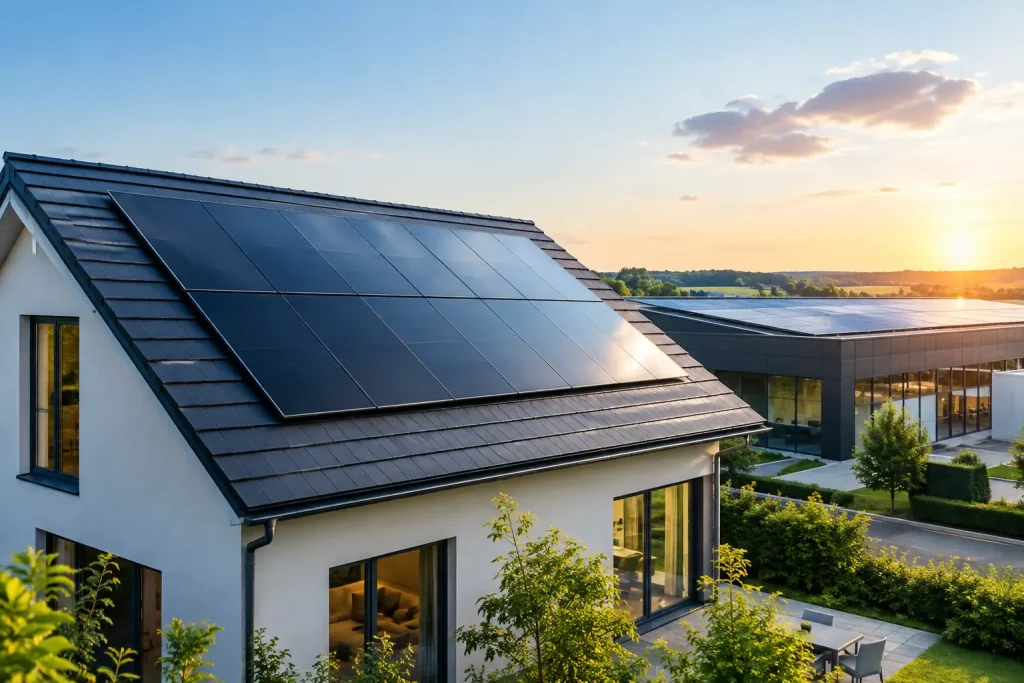
A roof replacement, new build or major extension is the moment when in-roof solar benefits can make the biggest difference. Rather than fitting panels on top of existing tiles or slates, in-roof solar panels become part of the roof covering itself. The result is a neat, low-profile solar array designed to generate your own electricity while giving the property a more integrated finish.
For homeowners, landlords and businesses looking to manage rising electricity costs, the appeal is clear. You gain clean generation from a system that looks considered rather than added as an afterthought. However, the right choice depends on your roof condition, budget, energy use and future plans for battery storage, electric vehicles or heat pumps.
What is an in-roof solar system?
An in-roof solar system replaces a section of roof tiles or slates with purpose-made solar modules and flashing components. The panels sit close to the roofline, creating a flatter appearance than conventional on-roof panels.
The system still works in the same basic way as any solar PV installation. Daylight is converted into electricity for use around the property. Your appliances use the solar power first, reducing the amount of electricity you need to buy from the grid. Any surplus can be exported, stored in a battery or used to support compatible technologies such as an EV charger.
In-roof solar is particularly well suited to new-build properties, extensions and planned re-roofing projects. Because the existing roof covering is removed where the array will sit, combining the work can be more practical and cost-effective than carrying out roofing and solar projects separately.
The main in roof solar benefits
A cleaner, more integrated roofline
The most noticeable benefit is appearance. In-roof panels sit within the plane of the roof rather than above it on rails, helping the array blend into the building. This can be especially valuable on modern homes, high-specification developments and commercial properties where presentation matters.
For developers and landlords, a smart-looking integrated system can also support a more future-ready property specification. It demonstrates that energy efficiency has been considered from the start, without compromising the overall design.
Lower electricity bills through self-generation
Solar electricity can reduce daytime grid consumption. Every unit of solar power used directly in your home or business is a unit you do not need to purchase at your usual electricity rate.
Savings will vary. A household that is empty all day will usually use less solar power directly than a home where someone works from home, runs appliances during daylight hours or charges an electric vehicle. Businesses with regular daytime electricity demand may be well placed to make use of a larger share of their generated power.
A battery can improve the value of the system by storing excess solar generation for use later in the day. This is often worth considering where evening electricity use is high or where the property is preparing to add an air source heat pump or EV charger.
Reduced carbon impact
Generating electricity from the roof reduces reliance on grid power and supports lower-carbon operation. For property owners with sustainability targets, solar is a visible and practical measure that can sit alongside efficient heating, ventilation and insulation improvements.
It is not a replacement for reducing wasteful energy use. A poorly insulated building or an ageing heating system can still create unnecessarily high running costs. But when solar is part of a properly planned energy strategy, it can help make a property cheaper and cleaner to run over the long term.
Ideal timing for a new roof or extension
If your roof needs replacing in the next few years, installing in-roof solar at the same time can avoid paying for roof work twice. The roofing design, weatherproofing and solar layout can be planned together, with fewer compromises around tile matching and panel positioning.
For an extension, it also allows the new roof to be designed around the solar array from day one. The roof pitch, usable area and cable routes can all be considered before construction is complete.
Fewer visible mounting components
Conventional solar panels need rails and brackets fixed above the roof. These are proven and reliable, but they remain visible from certain angles. In-roof systems use dedicated mounting and flashing details beneath and around the modules, so the finished array has a more streamlined profile.
That does not make in-roof solar inherently maintenance-free. Like every roof system, it needs correct installation and suitable weatherproofing. The benefit is that the solar and roofing elements are designed to work together as one finish.
In-roof solar versus on-roof solar
Both systems can produce valuable renewable electricity, and on-roof solar remains an excellent option for many properties. It is often quicker and less expensive to fit to a sound existing roof because there is no need to remove tiles or slates across the installation area.
In-roof solar usually carries a higher upfront cost where it is being added to an otherwise healthy roof. It can also involve more roofing labour and requires careful coordination between the installer and roofing work. If your priority is the lowest installation cost and your roof is in good condition, on-roof panels may offer the stronger financial case.
The performance difference should also be assessed realistically. Panel orientation, shading, system size and your electricity consumption generally have a bigger impact on returns than whether the modules are installed in-roof or on-roof. In-roof panels may run slightly warmer because there is less airflow behind them, which can affect output in some conditions. A good design should account for this rather than relying on headline figures.
Is your property suitable for in-roof solar?
A professional survey is essential. The roof needs sufficient usable space, a suitable pitch and a structurally sound design. South-facing roofs often offer strong annual generation, but east-west arrays can also work well, particularly for households that use more electricity in the morning and late afternoon.
Shade matters just as much as direction. Chimneys, dormers, nearby trees and neighbouring buildings can reduce output at key points in the day. Modern system design can use optimisers or other equipment where appropriate, but avoiding heavy shade in the first place is always preferable.
The age and condition of the roof are equally important. If repairs are likely soon, it is sensible to deal with them before or during the solar project. Removing and reinstating an integrated array later can add cost, so planning ahead protects your investment.
For listed buildings, conservation areas and unusual roof types, additional checks may be needed. Many domestic solar installations benefit from permitted development rights, but this is not universal. Your installer should assess the property and explain whether planning consent or other approvals are required.
Make more of your solar generation
Solar panels are most valuable when the electricity they produce is used effectively. The simplest approach is to shift flexible consumption into daylight hours. Running washing machines, dishwashers and other appliances while the system is generating can increase self-consumption without changing your lifestyle dramatically.
For a more complete solution, combine the array with complementary low-carbon technology. A solar battery stores spare generation for the evening. An EV charger can use available solar power to reduce charging costs. A heat pump and hot water cylinder can be designed to use electricity intelligently, although the system must be sized around the building’s heat loss and real energy demand.
This integrated approach is useful because each technology affects the others. A larger household with an electric car, home working and electric heating needs may benefit from a different panel and battery size than a small flat occupied mainly outside working hours. One-size-fits-all quotes rarely deliver the best outcome.
Installation quality protects the benefits
An in-roof system is both a solar installation and part of your roof. That makes workmanship particularly important. The array should be designed with appropriate drainage, flashing, ventilation, cable management and safe access in mind. Electrical components also need to be specified for the property and installed to current standards.
Choosing an experienced, MCS-certified installer provides greater confidence in system design, installation quality and the paperwork needed for relevant export arrangements. It also gives you a clearer route to support should you need help after installation.
Before approving a proposal, ask what generation has been estimated, how shading has been assessed, what equipment is included and whether the roof work is covered within the scope. A clear quotation should explain the expected system size, panel layout, warranties and any assumptions behind the projected savings.
A better roof can support a better energy plan
In-roof solar is not simply a design upgrade. For the right property, it is a long-term energy asset that can lower electricity purchases, improve the appearance of the roof and create a strong foundation for battery storage, EV charging and efficient electric heating. It is at its best when planned early, sized properly and installed as part of a wider move towards a cleaner, lower-cost property.
If you are replacing a roof, building an extension or developing a new property, consider the solar layout before finalising the roof design. That early decision can turn an unavoidable building project into a practical investment in lower running costs for years to come.