
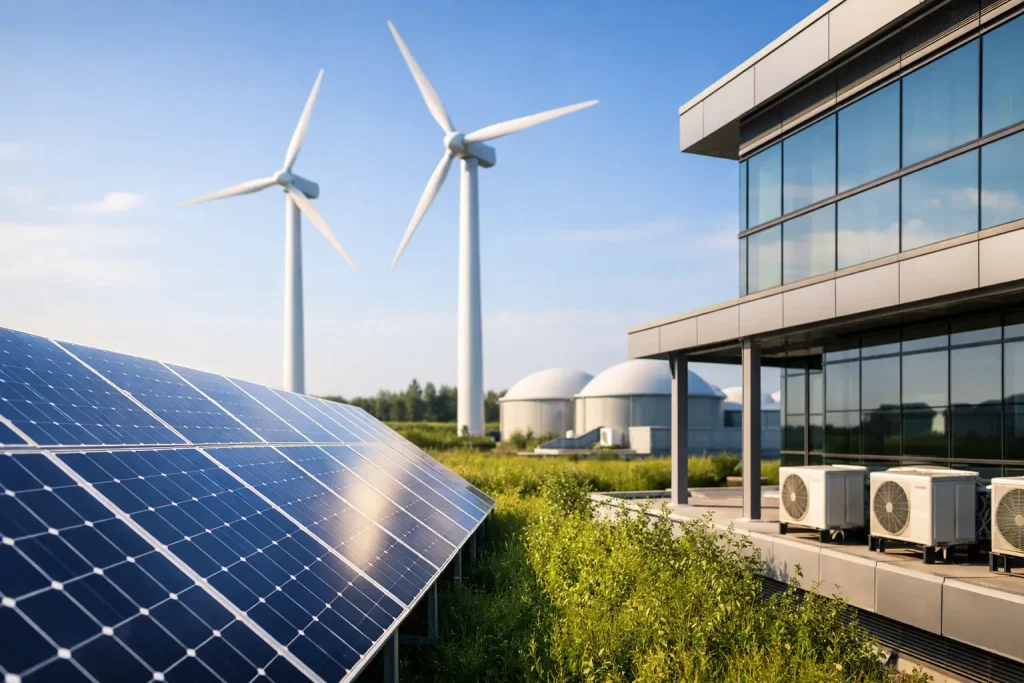
A high electricity bill is not simply a monthly overhead. For many UK businesses, it is a sign that valuable energy is being bought at peak prices, wasted through inefficient equipment, or used without any control over when it is generated. Renewable energy systems for business give owners and facilities managers a practical way to reduce that exposure while making their premises cleaner, more efficient and better prepared for the future.
The right solution is rarely a single product installed in isolation. A solar array may reduce daytime electricity purchases, but its value can increase significantly when paired with battery storage, EV charging and efficient heating or cooling. The best starting point is to look at how the building uses energy now, then choose systems that solve the most expensive problems first.
Why businesses are investing in renewable energy
Commercial energy costs can be difficult to predict, particularly for businesses with long operating hours, energy-intensive equipment or multiple vehicles. Generating more of your own electricity can reduce reliance on grid power and provide greater control over operating costs.
There is also a clear commercial case beyond the utility bill. Customers, tenants, staff and supply-chain partners increasingly expect businesses to take credible action on carbon emissions. Upgrading a property with low-carbon technology can support environmental targets without relying on vague promises. It demonstrates a visible investment in a more efficient workplace, warehouse, retail unit, office or development.
The return will depend on the building, the technology chosen and how energy is used. A business operating mainly in daylight hours may see particularly strong value from solar panels, while a site with high evening demand may benefit more from combining solar with battery storage. A detailed assessment prevents a system from being oversized, undersized or designed around assumptions rather than actual consumption.
Renewable energy systems for business: the most effective options
Solar panels for daytime electricity savings
Solar PV is often the natural first step for commercial premises with suitable roof space or available land. Panels generate electricity during daylight hours, helping to power lighting, computers, refrigeration, machinery, air conditioning and other everyday loads directly from the building.
For a business that is open through the day, this can reduce the amount of electricity purchased from the grid when it is needed most. Excess generation may also be exported, subject to the available tariff and system design. Roof orientation, shading, structural condition and the site’s half-hourly usage profile all affect the outcome, so a survey is essential before deciding on system size.
In-roof solar can be a strong option for new builds, major roof replacements and property developments. It provides a more integrated finish than traditional on-roof panels, although installation is usually best planned early in the construction programme.
Battery storage for greater control
Solar power is valuable when it is produced, but not every business uses its highest amount of electricity at the same time. Battery storage captures surplus solar generation for use later, such as after trading hours, during early morning starts or when demand rises.
It can also help a business make better use of its own generation rather than exporting electricity at a lower rate than the cost of importing it. For some sites, batteries can support peak-load management by reducing short periods of high grid demand. This is particularly relevant where electricity use rises sharply when machinery starts, refrigeration cycles or several chargers operate at once.
Battery capacity should match the site’s generation and consumption pattern. A larger battery is not automatically better value. The aim is to store useful energy regularly, not install capacity that remains unused for much of the year.
EV chargers for fleets, staff and customers
Electric vehicles are becoming a more common part of business operations, from company cars and vans to customer parking. Installing EV chargers at your premises can make the switch more convenient and reduce dependence on public charging availability.
Where chargers are supported by on-site solar and battery storage, a business can use more self-generated electricity for vehicle charging. Smart charging is important because it helps prevent several vehicles charging at full power at the same time and placing unnecessary strain on the site’s electrical supply.
The right approach depends on who will use the chargers. A staff car park may need slower charging over a full working day, while a service fleet with short turnaround times may require higher-powered units and careful load management.
Heat pumps and efficient heating upgrades
Businesses using older gas, oil or electric resistance heating may be paying more than necessary to keep their premises comfortable. Air source heat pumps use electricity to move heat from the outside air into a building, offering an efficient lower-carbon alternative when designed correctly.
They are especially effective in well-insulated buildings with heating systems suited to lower flow temperatures, such as larger radiators or underfloor heating. Hot water cylinders can also store heat efficiently for sites with regular domestic hot water demand, including hospitality, leisure and workplace facilities.
Heat pumps are not a quick fix for every commercial property. A draughty building with poor insulation, undersized emitters or a highly variable heat demand may need fabric improvements and a careful design first. Addressing those points protects comfort and helps the system perform as intended.
Cooling, ventilation and comfort systems
Energy efficiency is not only about generation and heating. In offices, retail spaces, hospitality venues and modern airtight buildings, overheating and poor air quality can affect staff comfort, customer experience and productivity.
Efficient air conditioning can provide controlled cooling and, in many cases, heating. Mechanical ventilation with heat recovery, often known as MVHR, brings in fresh filtered air while recovering heat that would otherwise be lost from extracted air. These systems work best when considered as part of the wider building design rather than added without a clear ventilation strategy.
Start with your energy use, not a product list
A successful project begins with evidence. Review at least 12 months of electricity and heating data, including seasonal changes, opening hours and periods of unusually high demand. If you have half-hourly electricity data, it can show exactly when the site uses the most power and whether solar generation is likely to be consumed directly.
Next, assess the building itself. Roof condition, available space, shading, electrical capacity, insulation levels and existing heating equipment all influence what is practical. A warehouse with a large unshaded roof may be ideal for solar PV, while a small office with heavy summer cooling loads may prioritise solar, batteries and air conditioning.
It is also worth considering future plans. If you expect to add electric vans, extend the premises, increase production or install new equipment, allow for that demand now. A system designed with expansion in mind can avoid unnecessary disruption later.
How to build a sensible investment plan
Rather than trying to install every technology at once, many businesses benefit from a phased plan. Start with the measure that provides the clearest and quickest benefit, then build towards an integrated system as budgets and property plans allow.
For example, solar panels may be the first priority for a daytime-operated business. Battery storage can follow once usage data shows how much surplus generation is available. EV charging may then be added as vehicles change. For a property undergoing refurbishment, it may make more sense to improve insulation, heating distribution and ventilation before introducing a heat pump.
Quality installation matters as much as equipment selection. Commercial systems need correct design, safe electrical work, suitable warranties and clear handover information. Choosing an MCS-certified installer where applicable provides added reassurance that work is being delivered to recognised standards. Airtech Renewables can help businesses bring solar, storage, heating, cooling and charging requirements into one coordinated plan rather than asking separate contractors to work around one another.
Measure performance after installation
Once the system is running, monitor it. Generation figures, battery charge cycles, imported electricity and heating performance can show whether the equipment is delivering the expected benefit. Monitoring also helps identify changes in behaviour that improve savings, such as running flexible equipment during solar-producing hours or scheduling EV charging overnight when appropriate.
Renewable technology is most valuable when it supports the way your business actually operates. With a well-designed combination of generation, storage and efficient building services, your premises can become less exposed to volatile energy costs and more comfortable to run every day.