
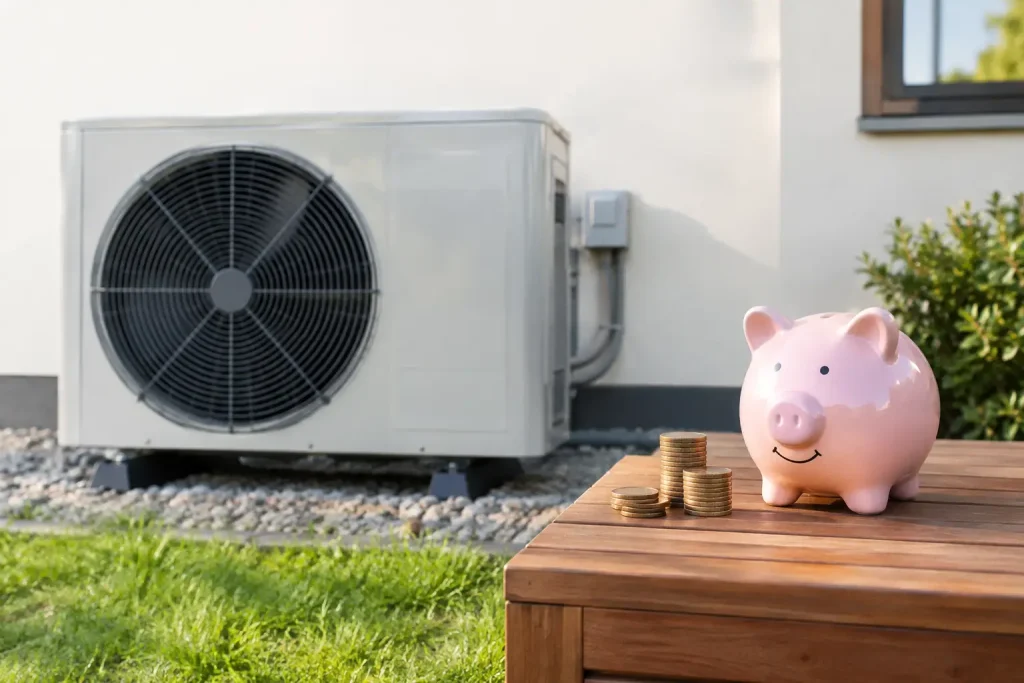
A heat pump does use electricity, but it does not create all of your heat from electricity in the way an electric radiator does. Heat pump electricity usage is better understood as the power needed to move heat from outdoor air into your home. For every unit of electricity used, a well-designed system can typically deliver around 2.5 to 4 units of heat.
That difference is why an air source heat pump can be a practical route away from gas or oil heating. However, the electricity used, and the bill you pay, will depend on the property, your heating habits, the system design and your electricity tariff. The right answer is never simply a single annual figure.
How much electricity does a heat pump use?
A typical UK home may require between 8,000 and 18,000 kWh of heat each year for space heating and hot water. If a heat pump achieves an annual efficiency, often called its seasonal performance factor, of 3, it would need roughly 2,700 to 6,000 kWh of electricity to provide that heat.
This is a useful starting point, not a promise. A compact, well-insulated home may use less, while a large older property with high heat loss may use substantially more. Hot water demand matters too. A household with several daily showers, a large bath and high occupancy will need more energy than a couple in a smaller home.
It is also worth separating electricity usage from cost. Using 4,000 kWh at one tariff can cost far more than using the same amount on a lower overnight or smart tariff. Your home’s existing energy use should therefore be reviewed alongside your tariff, not in isolation.
Why heat pump electricity usage changes from home to home
Heat loss is the biggest factor
A heat pump has to replace the heat leaving through walls, lofts, windows, floors and draughts. Better insulation reduces the amount of heating required, which reduces electricity use and allows the system to run more gently.
This does not mean every home needs a full refurbishment before installing a heat pump. Many existing UK homes are suitable. But practical improvements such as loft insulation, draught-proofing, improved glazing where needed and sensible heating controls can make a noticeable difference to comfort and running costs.
Lower flow temperatures improve efficiency
Heat pumps work most efficiently when they supply heating water at a lower temperature than a traditional boiler. This is why correctly sized radiators, underfloor heating and good heat emitter design matter.
If a home needs very hot radiator temperatures to feel warm, the heat pump must work harder. It will still heat the property, but its electricity consumption will rise. In some homes, replacing a few undersized radiators is a better investment than choosing a larger heat pump and expecting it to compensate for poor heat distribution.
Underfloor heating is particularly well suited because it delivers comfortable warmth across a large area at low water temperatures. Larger modern radiators can achieve a similar result where underfloor heating is not practical.
Outdoor temperature affects performance
Air source heat pumps collect heat from the air outside, so efficiency naturally changes with the weather. When it is mild, the unit has less work to do. During a cold spell, the home needs more heat at the same time as the heat pump has less available energy to collect.
This is normal and should be allowed for in the design. A properly specified system is sized for the property’s heat loss at local design temperatures, rather than based on a rough rule of thumb. It should provide reliable warmth through winter without relying heavily on an electric back-up heater.
Hot water settings and household routines matter
Most systems heat a hot water cylinder because a heat pump works best when it can heat water gradually and efficiently. Raising cylinder temperatures very high, reheating water repeatedly or using a frequent electric immersion boost will increase electricity use.
A well-sized cylinder, sensible schedule and suitable temperature settings can provide dependable hot water without unnecessary cycling. Periodic higher-temperature operation may be required for hygiene, but it should be configured appropriately rather than used as a daily default.
What does heat pump electricity cost in the UK?
To estimate running costs, multiply expected electricity usage by your unit rate. For example, a heat pump using 4,000 kWh per year at 25p per kWh would cost around £1,000 annually for heating and hot water. At 30p per kWh, the same usage would cost around £1,200.
That calculation is simple, but comparing it with a gas boiler requires more care. Gas is usually priced lower per kWh than electricity, yet a boiler turns fuel into heat less efficiently and is exposed to boiler servicing, repairs and eventual replacement. Heat pump economics improve where the property has a good seasonal performance factor, electricity is bought on a favourable tariff, and some power is generated by solar panels.
For homes currently using oil, LPG or direct electric heating, the case can be particularly strong. These fuels can be volatile or expensive, and a heat pump offers a lower-carbon, more controllable alternative. Every property should still receive an individual assessment before a predicted saving is quoted.
How to reduce electricity use without sacrificing comfort
The cheapest way to run a heat pump is usually not to switch it off for long periods and then demand a rapid recovery. Heat pumps are designed to maintain an even indoor temperature over longer hours. A steady approach can be more efficient and more comfortable than sharp daily temperature swings.
Set a realistic room temperature, generally around 18 to 21°C depending on the room and occupants. Use weather compensation where available. This control adjusts heating water temperature in response to outdoor conditions, helping the system operate at the lowest effective flow temperature.
Keep radiators clear of furniture and check that thermostatic radiator valves are not fighting the main controls. If rooms are consistently too warm or too cool, it is better to have the system reviewed than to keep changing settings. Correct balancing and commissioning have a direct effect on performance.
Solar panels can also reduce the cost of heat pump electricity usage. Generation is strongest in spring and summer, when it can support hot water heating and household demand. Winter solar output is lower, but batteries, smart controls and time-of-use tariffs can still help households use lower-cost electricity more effectively. The best results come from designing solar, battery storage, heating and hot water as one system rather than as separate purchases.
The importance of a correct heat pump design
A low running cost starts before installation. The installer should carry out a room-by-room heat loss calculation, assess existing radiators and pipework, identify suitable locations for the outdoor unit and specify a cylinder that matches your hot water needs.
An oversized heat pump can cycle on and off too frequently, which may reduce efficiency and add wear. An undersized unit may struggle in colder weather or call on costly electric back-up heating. The right size is the one that suits the building, not the largest model available.
Controls and commissioning are equally important. Homeowners should be shown how to use the system, understand normal operating patterns and know when to adjust settings. A heat pump that is well installed but poorly controlled will not deliver its full potential.
Airtech Renewables takes a whole-home approach, considering heat loss, radiator performance, hot water requirements and opportunities to combine a heat pump with solar, battery storage or underfloor heating. This creates a system designed around real energy use, not headline figures.
Is a heat pump right for your property?
Heat pumps suit a wide range of homes, including many older properties, but they are not a one-size-fits-all product. The strongest installations combine a suitable heat pump with sensible insulation improvements, adequate heat emitters and controls that fit the household’s routine.
If you are comparing quotes, ask each installer what annual electricity consumption they expect, what seasonal performance factor they have used, whether radiator upgrades are included and how hot water has been allowed for. A clear answer is more valuable than a low upfront figure with vague assumptions.
A properly designed heat pump should feel simple in daily life: steady warmth, reliable hot water and a clearer path to lower-carbon energy. Start with an accurate assessment of your property, and the expected electricity use will become a useful decision-making figure rather than a guess.