
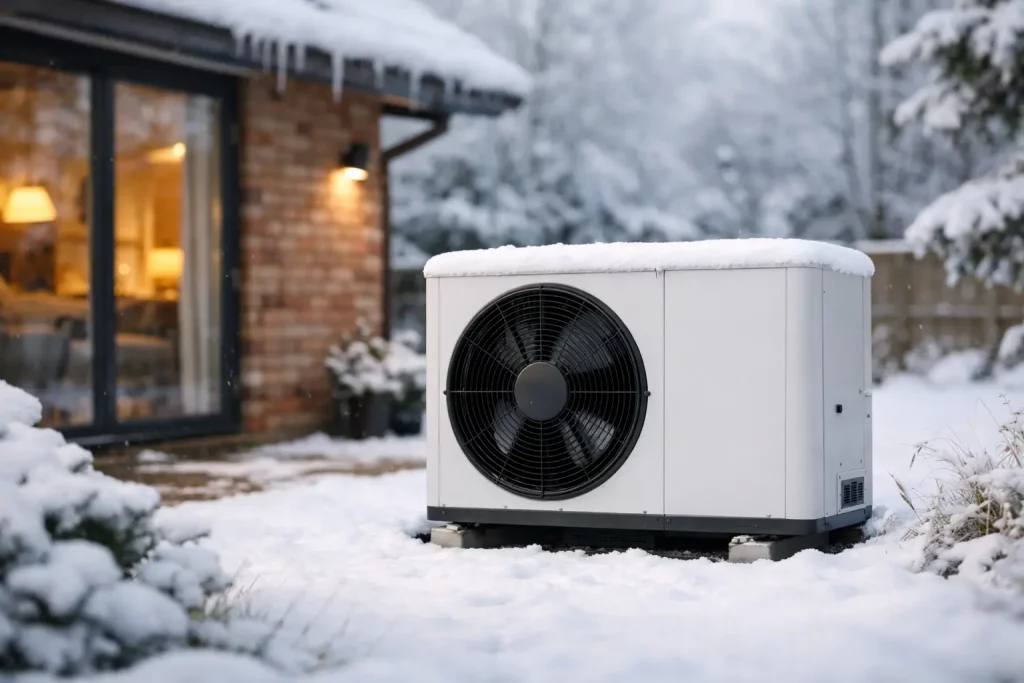
When frost hits and energy bills climb, one question comes up fast: do heat pumps work in winter? The short answer is yes. In the UK, a properly specified and correctly installed heat pump can heat your home effectively through winter, including during cold snaps, while still offering lower carbon heating and the potential for strong long-term savings.
What matters is not just the heat pump itself, but the whole system around it. Property insulation, radiator sizing, hot water demand and installation quality all affect winter performance. That is why some homes get excellent results while others feel underwhelmed.
Do heat pumps work in winter? Yes, but system design matters
A heat pump does not create heat in the same way as a gas or oil boiler. It moves heat from the outside air into your home. Even when outdoor temperatures feel cold, there is still usable heat in the air. A modern air source heat pump is designed to capture that heat and upgrade it to a usable temperature for your heating and hot water.
This is where people often get the wrong idea. They assume that because the air feels cold, there is no heat available. In reality, heat pumps can continue operating at low outdoor temperatures. The real question is how efficiently they work as temperatures drop, and whether the system has been designed to match the building.
In the UK climate, that usually works well. Our winters are cold, but they are not consistently extreme. That makes heat pumps a practical option for many homes and commercial properties, especially when paired with sensible improvements such as better insulation or upgraded emitters.
Why winter performance varies from one property to another
Two homes on the same street can have very different experiences with a heat pump in January. That is because winter performance depends on heat loss as much as heat production.
If a property leaks heat through poor insulation, draughty windows or an under-insulated roof, the heating system has to work harder to keep rooms comfortable. A heat pump can still do the job, but if the rest of the system has not been planned properly, efficiency may fall and comfort can suffer.
Radiators also matter. Heat pumps usually run at lower flow temperatures than traditional boilers. That means they work best with larger radiators, underfloor heating, or a system designed specifically for low-temperature heating. If older radiators are too small, rooms may warm more slowly in winter.
This is why design and installation are so important. A heat pump should never be sold as a one-size-fits-all product. It needs to be matched to the property and to how the building is actually used.
How cold can a heat pump handle?
Most modern air source heat pumps can operate well below freezing. In practice, that means they can continue heating a UK property during winter conditions without issue. Performance does reduce as outdoor temperatures fall, but reduced efficiency is not the same as stopped heating.
In many cases, homeowners are surprised by how steady the heat feels. Instead of short bursts of high-temperature heat, a heat pump is designed to run more consistently and maintain a comfortable background temperature. That suits winter operation well, especially in homes where occupants prefer stable warmth rather than sharp heating cycles.
There are limits, of course. If a system is undersized, poorly installed or fitted in a property with very high heat loss, very cold weather can expose those weaknesses. That is not a sign that heat pumps do not work in winter. It is a sign that the system was not designed properly in the first place.
What happens during frost and defrost cycles?
One concern people notice in winter is frosting on the outdoor unit. This is normal. When temperatures are low and moisture is present in the air, frost can build up on the external coil.
To deal with that, the heat pump enters a defrost cycle from time to time. During this process, it briefly reverses operation to clear the ice. That sounds alarming if you have never seen it before, but it is a standard part of winter running. A well-designed system accounts for this, and homeowners usually do not notice much impact indoors.
The important point is that defrost cycles are expected, not a fault. They are simply part of how an air source heat pump keeps operating reliably in cold and damp weather.
Are heat pumps efficient in winter?
Yes, but efficiency is seasonal rather than fixed. A heat pump will usually be more efficient on a mild autumn day than on a freezing winter morning. Even so, many systems still deliver worthwhile efficiency in winter compared with fossil-fuel heating, particularly in well-prepared homes.
The key is to think in terms of the full heating season, not one cold day. Heat pumps are built for year-round performance. In the UK, where winter temperatures are often cool rather than severe, that seasonal efficiency can be very attractive.
This is also where electricity costs need honest discussion. Heat pumps run on electricity, so running costs depend on system efficiency and tariff rates. If a home has poor insulation or the installation is not optimised, savings may be lower than expected. On the other hand, a properly installed system in a suitable property can cut both carbon emissions and ongoing heating costs over time.
For some households and businesses, pairing a heat pump with solar panels and battery storage makes the financial case even stronger. That kind of joined-up approach is often where the best value sits.
Do heat pumps keep homes warm enough in winter?
They can, yes. But they heat differently from boilers, and that difference matters.
A gas boiler often delivers very hot water to radiators quickly, creating a fast blast of heat. A heat pump usually works at lower temperatures and over longer periods. Rather than waiting until the home feels cold and then forcing the temperature up, the system performs better when it maintains a steady indoor temperature.
That means some homeowners need to adjust their expectations and controls. Once set up properly, many people find the comfort level better, not worse. Rooms feel consistently warm, with fewer temperature swings.
If you are used to switching heating on for an hour in the morning and an hour at night, a heat pump may feel unfamiliar at first. It is a different style of heating, but not an inferior one.
When a heat pump may struggle in winter
There are situations where results can disappoint. A badly insulated property with no radiator upgrades, poor commissioning and unrealistic promises is the most common example.
Listed buildings, very old properties and homes with exceptionally high heat demand may need additional planning. In some cases, fabric improvements should come first. In others, a hybrid system or phased upgrade may be more sensible than an immediate full switch.
That is why proper assessment matters more than sales claims. A good installer should look at heat loss, occupancy, hot water demand and emitter suitability before recommending a system. If that work is skipped, winter is when problems tend to show up.
What to look for before installing a heat pump
If you are asking do heat pumps work in winter, the better question is whether they will work well in your property. The answer depends on careful planning.
Start with the basics. Check the insulation levels in the loft, walls and floors where possible. Review windows and draughts. Ask whether your current radiators are suitable for low-temperature heating. Make sure the installer completes a proper heat loss calculation rather than offering a rough estimate.
It is also worth looking at the whole property, not just the heating unit. Hot water cylinders, controls and heating distribution all affect performance. A quality installation should feel like a complete system upgrade, not just a box fitted outside.
For property owners who want cleaner heating without unnecessary complication, working with an experienced installer makes the decision much easier. Airtech Renewables focuses on practical low-carbon systems that are designed to perform in real UK properties, not just on paper.
The bottom line on winter performance
Heat pumps do work in winter, and for many UK homes and businesses they work very well. The strongest results come from good design, careful installation and a property that is ready for efficient low-temperature heating.
If you want a heating system that can reduce carbon impact, support long-term energy savings and keep your property comfortable through the colder months, a heat pump is well worth serious consideration. The smartest next step is not guessing from headlines or horror stories. It is getting your property assessed properly, so the system fits the building and the building works with the system.