
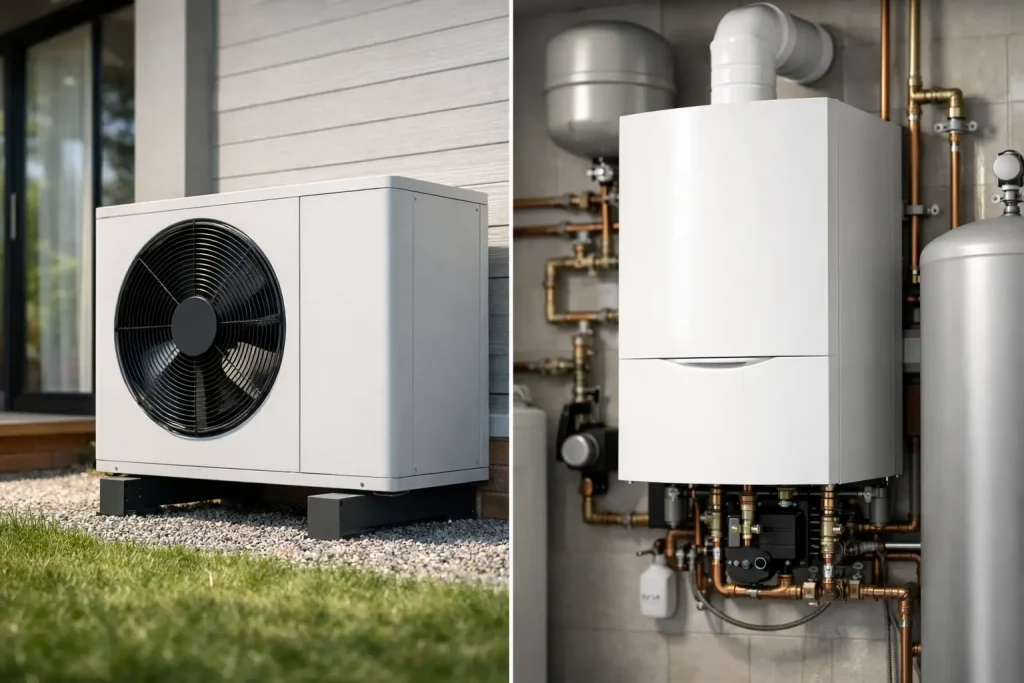
When your boiler is ageing, repairs are stacking up, and energy bills keep climbing, the usual replacement question is no longer just which boiler to buy. For many UK property owners, it is now air source heat pump vs boiler – and the right answer depends on how your building performs, how you use heat, and what you want your running costs to look like over time.
For some homes, a new boiler still makes sense. For others, an air source heat pump can cut carbon, reduce reliance on gas, and deliver lower day-to-day heating costs when the system is designed properly. The key is to compare them on real-world performance, not just the upfront price.
Air source heat pump vs boiler – the core difference
A boiler generates heat by burning fuel, usually mains gas, though some properties use LPG or oil. It heats water quickly and sends that heat to radiators, hot water cylinders or taps, depending on the setup.
An air source heat pump works differently. It takes heat energy from the outside air and transfers it into your heating system. Rather than creating heat in the same way a boiler does, it moves heat from one place to another, which is why it can be far more efficient in the right conditions.
That difference matters because efficiency affects both running costs and carbon emissions. A modern boiler can be efficient by boiler standards, but it is still burning fuel. A heat pump uses electricity, and when paired with a well-insulated property and correctly sized emitters, it can deliver more heat energy than the electrical energy it consumes.
Upfront cost and long-term value
This is often where the decision becomes more practical. A boiler is usually cheaper to buy and install. If you need a fast, lower-cost replacement and your home already has a working gas setup, a boiler can look like the obvious choice.
An air source heat pump normally costs more upfront. Installation can involve changes to pipework, radiator sizing, controls and hot water storage. That can make the initial investment feel harder to justify, especially if you compare equipment prices alone.
But upfront cost is only part of the picture. A heat pump can offer long-term value through lower heating costs, lower carbon output and better future resilience as the UK moves away from fossil fuel heating. For landlords, developers and homeowners planning to stay put, that wider return matters.
If you are looking at the next 10 to 15 years rather than the next 12 months, the conversation changes. A cheaper boiler replacement today may not be the cheapest route overall.
Running costs depend on the property
There is no honest one-size-fits-all answer here. In a well-insulated home with suitable radiators or underfloor heating, an air source heat pump can be very cost-effective to run. It works best when delivering steady, lower-temperature heat over longer periods.
A boiler is often better suited to homes that are less insulated, have older radiator systems, or need fast bursts of high-temperature heat. If the property leaks warmth and the heating is used in short, sharp cycles, a boiler may still feel simpler and more familiar.
Energy tariffs also matter. Heat pumps run on electricity, so their financial performance depends partly on electricity prices versus gas prices. Even so, efficiency can offset that difference, especially when the system design is right.
That is why a proper assessment matters more than headlines about one technology being cheaper than the other. The building fabric, heat loss, hot water demand and existing system all shape the result.
Comfort and how the heat feels
This is one of the biggest differences people notice after installation. A boiler tends to provide hotter radiators and a faster temperature rise. Many households are used to turning the heating on for a short period and expecting quick results.
A heat pump usually works in a steadier way. Instead of blasting high heat, it maintains a comfortable indoor temperature more consistently. In practice, that can mean a home feels more evenly heated, with fewer hot-and-cold swings through the day.
Some people prefer the familiar responsiveness of a boiler. Others find the stable background warmth of a heat pump more comfortable once they get used to it. Neither is automatically better – it depends on how you occupy the building and what kind of heating pattern suits you.
Efficiency and carbon impact
If reducing emissions is a priority, the air source heat pump has the stronger case. It is a low-carbon heating technology and aligns far better with the direction of travel for UK buildings.
A boiler, even an efficient condensing model, still relies on combustion. That means ongoing carbon emissions and continued dependence on fossil fuel supply.
For businesses trying to improve sustainability credentials, developers working towards modern building standards, or homeowners who want a more future-ready system, that matters. Heating is one of the biggest contributors to a property’s emissions, so switching technology can make a meaningful difference.
This is also where a wider renewable strategy becomes attractive. A heat pump can work particularly well alongside solar PV and battery storage, helping you build a more efficient and lower-cost energy setup across the whole property.
Suitability for different types of property
When a boiler may still be the right choice
If your property has poor insulation, limited space, no appetite for wider upgrades, or a very tight immediate budget, a boiler may still be the sensible option. The same applies if you need a straightforward replacement with minimal disruption.
For some older buildings, especially those with high heat demand and little scope for improvement, a boiler remains the more practical fit in the short term. That does not make it the better technology overall, but it may be the better match for current conditions.
When an air source heat pump is likely to be a strong option
A heat pump is often a strong choice for well-insulated homes, renovated properties, new builds and buildings with underfloor heating or appropriately sized radiators. It also suits owners who want to reduce carbon emissions and move away from gas.
If you are already improving insulation, replacing emitters, or upgrading multiple systems at once, a heat pump becomes even more attractive. This is where working with a specialist installer has real value, because heating, hot water, controls and complementary technologies need to work together properly.
Maintenance, lifespan and future planning
Both systems need professional installation and regular servicing. A boiler is familiar to most households and heating engineers, which can make routine maintenance feel more straightforward.
Heat pumps also require servicing, but they generally have fewer combustion-related issues because there is no burning of fuel. Lifespan can be strong when systems are specified and maintained correctly.
Future planning is another factor people often overlook. Gas boilers may still be common today, but policy, energy markets and buyer expectations are moving towards cleaner heating. If you are investing in a property for the long term, it makes sense to consider where the market is heading rather than where it has been.
That is especially relevant for landlords and developers. Tenant expectations, compliance pressures and energy efficiency standards are not standing still.
So which should you choose?
If your priority is the lowest upfront cost and a like-for-like replacement, a boiler can still be the practical answer. If your priority is lower carbon heating, better long-term efficiency and a system that fits the future of UK property, an air source heat pump is often the stronger investment.
The real decision is not just air source heat pump vs boiler in abstract terms. It is which system suits your property, your budget, and your plans for the next decade.
For many buildings, the best results come from looking beyond a single appliance and considering the wider energy setup. Insulation, controls, hot water storage, solar generation and heat emitters all affect performance. That is why proper design matters just as much as the equipment itself.
If you are weighing up your options, the most useful next step is a professional assessment based on your building, not guesswork. Done properly, the right heating system should not only keep the property warm – it should make your energy use smarter, cleaner and more cost-effective for years to come.