
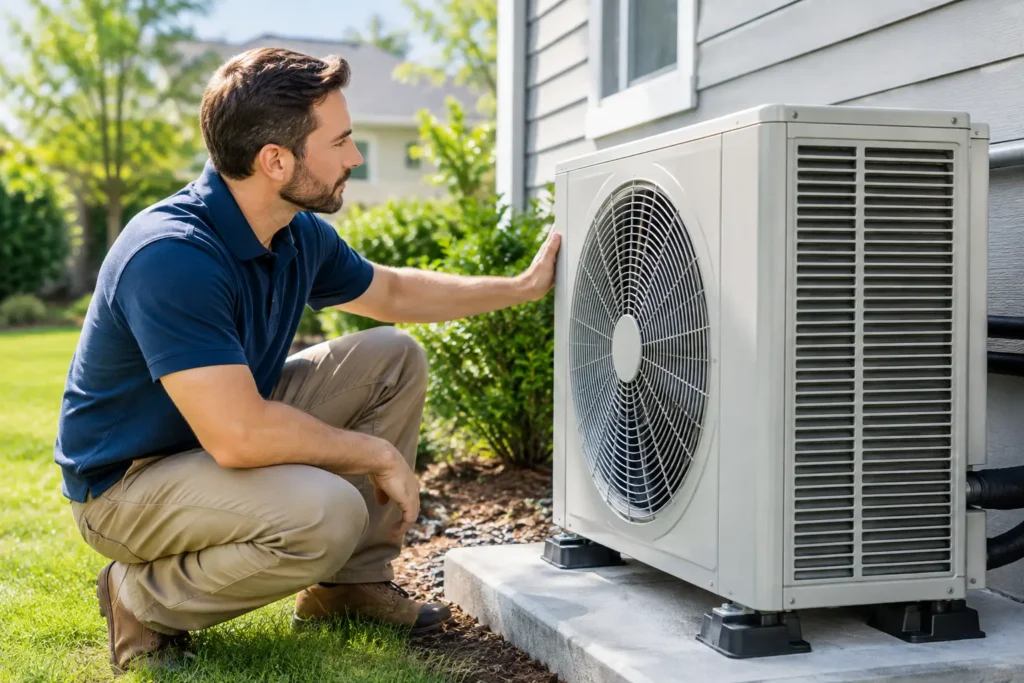
A heat pump should be heard, not constantly noticed. A low, steady fan or compressor sound during operation is normal, particularly when the system is working hard on a cold morning. Preventing heat pump noise starts much earlier than the first switch-on: with the right unit, a sensible location and an installation designed for the property.
For homeowners, landlords and businesses, this is not simply about comfort. A quiet, correctly installed air source heat pump is more likely to run efficiently, meet planning expectations and provide dependable low-carbon heating for years to come.
What does normal heat pump noise sound like?
An outdoor air source heat pump contains a fan and compressor, so it cannot be completely silent. Most modern units produce a controlled background sound similar to a quiet conversation or a domestic fridge heard from close by. From indoors, you should not normally hear more than a faint hum, if anything at all.
The sound can change during the day. The fan may become more noticeable when the temperature drops and the heat pump needs to draw more heat from the outside air. You may also hear a temporary change in operation during a defrost cycle in cold, damp weather. This is a normal part of keeping the outdoor coil clear and the system efficient.
What is not normal is rattling, banging, scraping, loud buzzing, persistent vibration through walls or floors, or a sudden increase in volume. These sounds should be investigated rather than ignored. Early attention can prevent a small installation or maintenance issue becoming a more expensive repair.
Preventing heat pump noise begins with the right location
Outdoor unit position has the greatest influence on how a heat pump sounds around a property. The goal is not to hide the unit completely. It needs unrestricted airflow and straightforward access for servicing. Instead, the location should balance clear space, distance from noise-sensitive rooms and a solid mounting surface.
A unit positioned outside a bedroom window, beside a neighbour’s patio or in a narrow passageway can make ordinary operating noise seem much louder. Hard, enclosed surfaces reflect sound back towards the house and can amplify it. Open space around the unit allows sound to dissipate naturally.
Where possible, installers will consider locations away from bedrooms, home offices and frequently used outdoor seating areas. A side or rear elevation may work well, but every property is different. Terraced homes, flats, conservation areas and compact gardens can require more detailed planning than a detached house with plenty of outdoor space.
The outdoor unit should also be kept away from loose fences, lightweight panels and items that may vibrate in the airflow. Moving a garden chair, bin or stored timber sounds minor, but these objects can create a surprising amount of additional rattle.
Do not rely on a decorative enclosure
Heat pump covers and screens are sometimes marketed as an easy noise solution. A well-designed acoustic screen can help in the right setting, especially where it blocks the direct line of sound towards a neighbour or seating area. However, a poorly designed enclosure can restrict airflow, make servicing difficult and reduce performance.
Any screen needs appropriate clearance around the unit and must follow the manufacturer’s installation guidance. Solid boxing placed tightly around a heat pump is rarely the answer. Good siting is more effective than trying to conceal an unsuitable location afterwards.
A stable base stops vibration travelling through the building
Much of the heat pump noise people complain about is not airborne sound from the fan. It is vibration transferred into the wall, slab, pipework or frame supporting the unit. This is why professional installation details matter.
The outdoor unit should sit on a level, stable base or suitable wall brackets designed to carry its weight. Anti-vibration mounts between the heat pump and its support help isolate normal compressor movement. Pipework should be secured correctly without being pulled tight against walls, joists or internal finishes where vibration can travel.
Wall mounting can be appropriate for some properties, but it is not automatically the quietest choice. The construction of the wall, the room behind it and the quality of the brackets all matter. A ground-mounted unit on a properly prepared base is often an excellent option, though it still needs to be located clear of bedrooms and neighbouring boundaries where practical.
Drainage is part of this work too. During defrosting, water drains from the unit. If it freezes, collects or repeatedly drips onto a hard surface, it can create avoidable noise as well as a slip risk. A competent installation accounts for condensate drainage from the outset.
Choose a heat pump that suits the property, not just the brochure
Heat pumps are available in different outputs and acoustic performance levels. The quietest published figure is useful, but it should not be the only deciding factor. Noise levels vary according to operating conditions, fan speed and distance from the unit, so comparing specifications without considering the property can be misleading.
Correct sizing is equally important. An oversized system may cycle more frequently, while an undersized system may work harder for longer during cold weather. Neither scenario represents the best route to quiet, efficient heating. A proper heat loss calculation helps select the right heat pump output and confirms whether radiators, underfloor heating and the hot water cylinder can operate effectively at lower flow temperatures.
For projects where a heat pump is close to neighbouring homes, an MCS-compliant design and noise assessment provide useful reassurance. The assessment considers the unit, its proposed position and nearby boundaries to establish whether the installation is likely to meet the relevant requirements. This is particularly valuable in built-up areas such as Leicester, where gardens and property boundaries may be close together.
Keep the system running smoothly through the seasons
Routine maintenance is one of the simplest ways to prevent unwanted sound. Leaves, grass cuttings, windblown litter and snow can obstruct the outdoor coil or fan guard. Keeping the area around the unit clear supports airflow and avoids the fan working against a blockage.
Homeowners can carry out basic visual checks. Look for debris around the unit, ensure nothing has been stacked against it and listen for a change in its usual operating sound. Do not attempt to remove covers, straighten fan blades or adjust refrigerant components yourself. These tasks should be left to a qualified engineer.
An annual service gives a professional the opportunity to inspect electrical connections, fan operation, mountings, pipework, controls and drainage. They can also identify worn components before they become disruptive. If the heat pump starts making a new noise after a storm, building work or a period of freezing weather, arrange an inspection promptly.
Check the rest of the heating system as well
Not every sound associated with a heat pump comes from the outdoor unit. Air in radiators, loose pipe clips, a noisy circulating pump or pressure issues within the heating system can all create internal noise. In some homes, the first sign of a system that needs balancing is a rushing sound through radiators or uneven heating between rooms.
A well-designed heat pump system uses suitable emitters and correct flow rates, helping it deliver steady warmth without unnecessary strain. Underfloor heating can be especially quiet because it works at low temperatures over a large area, although it is not essential for a heat pump to perform well. Correctly sized radiators can be just as effective.
Smart controls can help too. Consistent, gentle heating is generally better suited to a heat pump than repeatedly turning the system fully off and demanding rapid reheating. This approach can reduce sharp changes in operating speed while improving comfort and energy efficiency.
When should you call an installer?
Contact a qualified installer if you notice metallic scraping, repeated knocking, loud vibration indoors, fan noise that has suddenly become much louder, or a unit that is not heating properly. A heat pump may also need attention if it runs continuously in mild weather, freezes excessively or produces fault messages on its controller.
Avoid assuming that a louder unit is simply working harder. Heat pumps are designed for regular operation, but unusual noise can indicate an obstruction, loose fixing, fan issue or control fault. Prompt diagnosis protects both comfort and running costs.
The best result comes from treating noise as part of the whole heat pump design, not an afterthought. With careful siting, stable installation, correct sizing and professional servicing, an air source heat pump can deliver efficient low-carbon heating without taking over the soundscape of your home.