
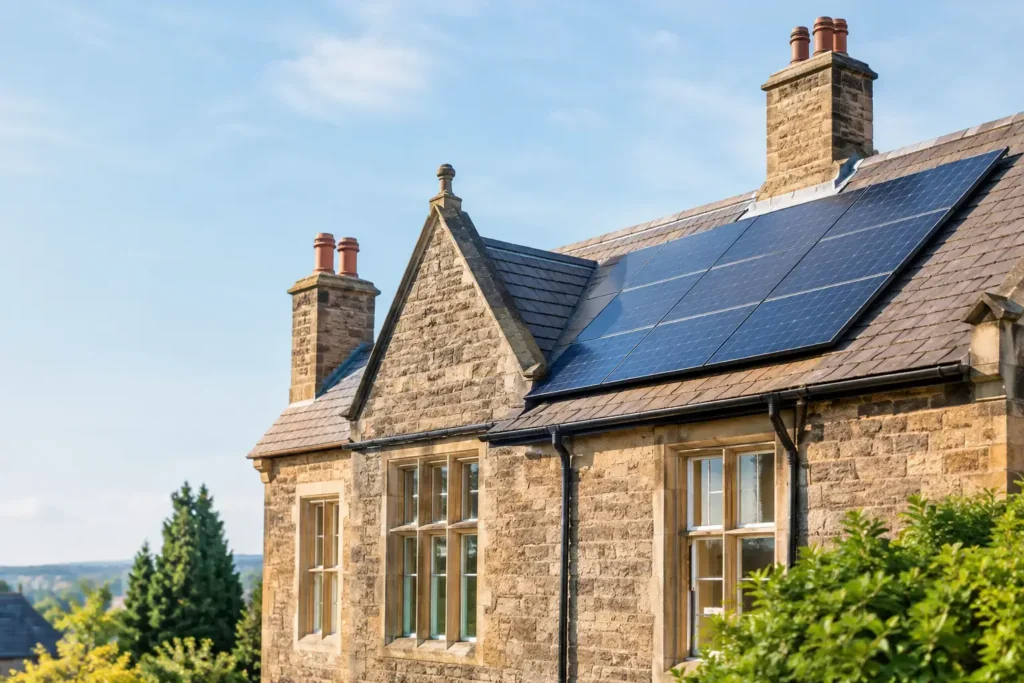
A listed property does not have to be left behind as energy costs rise. Solar panels for listed buildings are possible in many cases, but the project must protect the character of the property as well as improve its energy performance. The key is not simply choosing a panel and fitting it to the most obvious roof space. It is finding a design that delivers worthwhile generation while respecting the building, its setting and the conditions set by the local planning authority.
For homeowners, landlords and property managers, that means taking the right steps before any equipment is ordered. A carefully planned solar installation can reduce reliance on grid electricity, support battery storage and make a period home more practical to run for years to come.
Why listed building status changes the process
A listed building is protected because of its special architectural or historic interest. The protection can apply to more than the front elevation or the oldest part of the house. Original roofs, outbuildings, walls, interiors and features within the grounds may all be relevant, depending on the listing and the property’s history.
This does not automatically rule out solar. It does mean that visual impact, physical alteration and reversibility are considered more closely than they would be for a standard home. Local authorities will usually want to see that the system has been positioned and designed to minimise harm to the significance of the building.
Listed building consent is often required where solar panels alter the character of the property. Planning permission may also be needed, particularly in conservation areas, for prominent roof slopes or where equipment is installed within the grounds. Requirements vary across the UK and between local authorities, so assumptions can become expensive. Installing first and asking later can lead to enforcement action and the cost of removing the system.
The sensible starting point is a site-specific assessment. This establishes where the panels could sit, how visible they would be, whether the roof structure is suitable and what permissions are likely to apply.
Where can solar panels be installed?
The most successful proposals usually avoid the principal elevation and highly visible roof slopes. A rear-facing roof, a lower extension, a modern addition or a detached garage can offer a far more straightforward route to solar generation than the main historic roof.
An outbuilding can be particularly useful. If a garage, barn or garden building has a suitable roof and is not itself protected to the same degree, it may allow a meaningful solar array without changing the appearance of the main house. This can be an effective option for properties with large electricity demand, such as homes with electric vehicles, heat pumps or home offices.
Ground-mounted solar can also be considered where there is enough land. However, it is not automatically easier to approve. The impact on views, landscaping, archaeology and the setting of the listed building will still matter. A discreet location, careful screening and a modest scale can make a stronger case than an array placed in open view.
For many properties, the best answer is a smaller array in the least sensitive location, paired with a battery. The panels generate power during daylight hours, while the battery stores surplus electricity for use later in the day. This can improve self-consumption without forcing an unsuitable design onto a historic roof.
Choosing the right solar design for a listed property
Not every solar system looks or performs the same. The best approach depends on the building, roof condition, local authority guidance and the household’s electricity use.
On-roof solar panels
Conventional on-roof panels are fitted above the existing roof covering. They are usually the most cost-effective option and can provide strong generation where the roof is well orientated and unshaded. On a listed building, they are more likely to be acceptable when placed on a hidden rear slope or later addition.
The mounting method matters. Fixings should be designed to avoid unnecessary damage to historic fabric, and cable routes should be planned carefully. An experienced installer will also assess roof condition before proceeding. There is little value in fitting solar to a roof that needs repair or replacement in the near future.
In-roof solar systems
In-roof solar replaces part of the roof covering, allowing panels to sit lower and more flush with the roof line. This can create a neater appearance than a conventional raised array, especially on a new extension or when a non-original roof is already being replaced.
That said, in-roof solar is not a guaranteed solution for listed buildings. Replacing historic tiles or slates may cause more concern than fitting panels above them, and a flush finish does not remove the need for consent. It is often most suitable for modern extensions, conversions and secondary structures where the visual change is easier to justify.
Solar tiles and lower-profile options
Solar tiles may appear less conspicuous from a distance, but they are not always the right answer. They can cost more, may deliver less output per square metre than standard panels and still alter the appearance of a traditional roof. A good proposal should be based on the significance of the building, not just the product with the lowest profile.
What a strong consent application should address
Local authority conservation officers need enough information to understand the proposal and its effect. A vague application with a generic panel layout is less likely to inspire confidence than one that demonstrates careful thought.
The application may need to explain why solar is being considered, the proposed panel location, the visibility from public viewpoints and how the installation avoids harm to significant fabric. Roof plans, elevations, photographs and product information are commonly helpful. For sensitive properties, a heritage statement may also be required.
It is worth addressing alternatives honestly. If the main roof is highly visible but a rear extension can accommodate fewer panels, explain why the alternative has been selected. Showing that the design has prioritised the building’s character can make a material difference.
Early contact with the local planning authority can prevent wasted time. Their advice will not replace a formal decision, but it can identify likely concerns before the design is fixed. For larger projects or buildings with complex heritage value, specialist heritage advice may be appropriate.
Balance energy savings with realistic expectations
A listed home can use a considerable amount of energy, particularly if it has older glazing, limited insulation or a larger floor area. Solar can reduce purchased electricity, but it will not solve every efficiency issue on its own.
The return from a system depends on its size, orientation, shading, household demand and how much power is used on site. A south-facing array often produces the highest annual output, but east-west panels can be valuable too because they generate more electricity in the morning and late afternoon, when many households are using it.
Battery storage can be especially useful where the available solar area is limited. It allows more of the electricity generated at midday to be used in the evening. Smart controls can also direct spare solar power towards compatible appliances, such as an EV charger or hot water system, subject to the property’s electrical setup.
Before investing, look at the wider energy plan. Draught-proofing, appropriate insulation and efficient heating controls can lower demand without compromising traditional construction. Older buildings need breathable, sympathetic upgrades, so generic retrofit measures should never be applied without considering moisture and ventilation.
Choose an installer who will plan, not just fit
Solar on a listed property requires more than a standard quotation based on satellite imagery. The installer should inspect the site, assess shading and roof access, discuss cable routes and identify practical locations for the inverter and battery. They should also be clear about what sits within their scope and what may require planning, heritage or structural input.
Quality matters over the long term. A well-designed system should use dependable equipment, safe mounting methods and a layout that is straightforward to maintain. MCS-certified installation is also relevant for homeowners who may wish to access export payments through an eligible tariff, subject to supplier terms and the system meeting the required standards.
Airtech Renewables can help property owners assess solar, battery storage and complementary low-carbon technologies as part of a practical whole-property plan. The objective is not to install the biggest possible array. It is to install a system that works hard for the property while giving the best possible chance of meeting heritage requirements.
A considered route to cleaner electricity
Listed status calls for more care, not less ambition. Start with the building, identify the least sensitive location and build the system around how electricity is actually used. With the right design, permissions and installation standard, solar can be a sensible investment that helps a historic property meet modern energy demands without losing the qualities that made it worth protecting.