
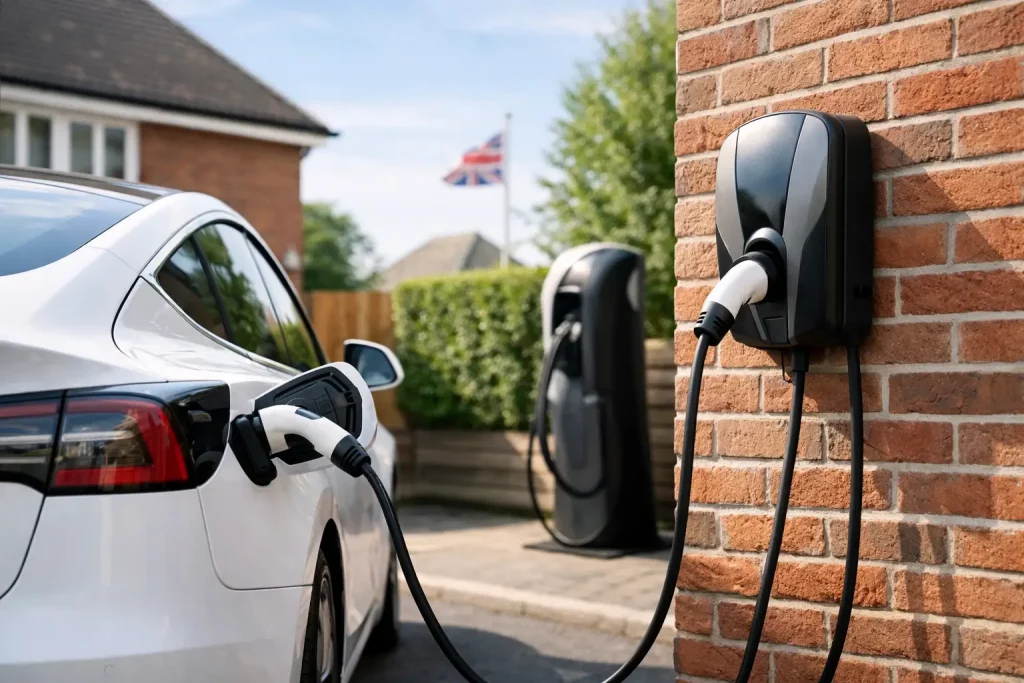
If you are comparing the best EV chargers for home, the wrong choice usually shows up after installation. It might charge more slowly than expected, miss out on off-peak tariffs, or fail to work properly with your parking layout. The right charger should fit your vehicle, your property and the way you use electricity day to day.
For most UK households, a home EV charger is no longer a luxury extra. It is part of running a more efficient property. Charge overnight, take advantage of lower-rate electricity where available, and if you already have solar panels or battery storage, there is even more value to gain from choosing the right system.
What makes the best EV chargers for home?
The best option is not always the most expensive or the one with the longest list of app features. In practice, a good home charger should do four things well. It should charge safely and reliably, work with your vehicle, make it easier to control electricity costs, and suit the physical setup of your home.
That means looking beyond appearance. Some chargers are compact and simple, while others are built around smart energy management. If you are a homeowner with solar, a battery, or plans to add both later, charger compatibility matters far more than a glossy finish.
In the UK, most domestic units are 7kW chargers. For the majority of homes, that is the right balance of speed and practicality. A standard 7kW charger can add a useful amount of range overnight and usually fits comfortably within a typical residential electrical supply. Faster options exist, but they are not always necessary or cost-effective for home use.
Best EV chargers for home: what to compare
Charging speed
A 7kW charger is the usual choice for single-phase domestic properties. It is far quicker than a three-pin plug and gives dependable overnight charging for most drivers. If you cover average mileage and charge while the car is parked at home, this is normally all you need.
Some larger properties or commercial settings may be able to support 22kW charging, but that depends on the electrical supply and whether the vehicle can accept that rate. For many homeowners, paying more for higher power offers little real benefit.
Smart charging features
A smart charger helps you reduce running costs rather than simply adding electricity to the car. Features worth having include scheduled charging, usage monitoring, app control and tariff integration. These let you shift charging to off-peak periods and keep better control of household energy use.
This becomes even more useful if your electricity prices vary by time of day. A charger that can automatically charge when rates are lower can make a noticeable difference across the year.
Solar and battery compatibility
If your property has solar panels, or you are planning a wider renewable upgrade, this is one of the most important points. Some EV chargers can prioritise surplus solar generation, sending excess electricity to the car instead of exporting it to the grid. That can improve self-consumption and reduce the cost of driving even further.
Battery storage adds another layer. A well-matched setup can help balance vehicle charging with household demand, rather than letting everything compete at once. This is where integrated system design matters. A charger should not be considered in isolation if the wider aim is lower bills and better energy efficiency.
Cable type and connector
Most EVs in the UK use a Type 2 connector for home and public AC charging. Even so, it is worth checking whether you prefer a tethered charger with a fixed cable or an untethered unit where you supply the cable yourself.
Tethered units are convenient for daily use. Untethered chargers can look neater and may suit households that expect to change vehicles over time. There is no single right answer here – it depends on convenience, storage and personal preference.
Safety and load management
A good charger should include built-in safety protections and dynamic load balancing where needed. This helps prevent overloading your property’s electrical supply, especially when other high-demand systems are running. If you already have an electric shower, heat pump, battery system or other major electrical loads, this matters even more.
An experienced installer will assess this before recommending a unit. That advice is often more valuable than any product brochure.
Which type of home EV charger suits your property?
For a typical homeowner with one electric car and off-street parking, a 7kW smart charger is the strongest all-round option. It gives the right charging speed for overnight use, supports cost-saving schedules and keeps the setup straightforward.
If your household has solar panels, the better choice is often a charger designed to work with renewable generation. This can help you use more of your own electricity rather than buying everything from the grid. The savings depend on your generation levels and driving habits, but the long-term benefit is clear when systems are designed to work together.
For landlords and developers, reliability and ease of use usually matter most. A charger should be simple for occupiers, durable, and suitable for future vehicle changes. In these cases, a clean, universal solution can be more practical than a highly specialised model.
For businesses, the decision may be different again. Access control, multiple users and reporting features may become priorities, especially where charging costs need to be tracked or allocated.
Popular features worth paying for – and ones that are not
Some upgrades genuinely improve value. Smart scheduling, solar integration and strong app control are all useful in real-world use. They help reduce costs, improve convenience and make the charger part of a wider energy-saving setup.
Other features are less essential. Very advanced analytics, premium cosmetic finishes or power ratings your property cannot actually use may increase the price without giving you much back. If the goal is practical savings, focus on function first.
This is also why the best EV chargers for home are not judged by hardware alone. Installation quality has a direct effect on performance, safety and long-term reliability. A strong charger fitted poorly is still a poor outcome.
Installation matters as much as the charger itself
A proper survey should look at your consumer unit, cable route, parking position, Wi-Fi signal and overall energy use. It should also consider whether you are likely to add solar panels, battery storage or a heat pump later. Planning ahead can avoid extra work and cost in the future.
Positioning matters more than many people expect. A charger placed awkwardly can make daily charging frustrating. Cable reach, parking habits and weather exposure should all be considered before installation starts.
This is where working with a specialist installer can make a real difference. If your charger is part of a wider move towards low-carbon technology, the best result comes from treating the property as one energy system rather than a collection of separate products.
How much should you expect to spend?
In most cases, the total cost includes the charger unit and installation. Prices vary depending on cable run length, electrical upgrades, charger specification and site complexity. A straightforward installation is naturally more affordable than one requiring major additional work.
Cheapest is not always best value. A lower upfront price can quickly lose its appeal if the charger lacks smart functions, does not support future upgrades or needs remedial work after fitting. The better approach is to choose a system that matches your needs now and still makes sense in a few years.
So, which charger is best?
The honest answer is that it depends on your property and priorities. For many UK households, the best EV charger for home will be a 7kW smart unit with dependable app control and tariff scheduling. If you have solar panels, a solar-compatible charger is often the stronger investment. If simplicity matters most, a reliable, easy-to-use model with solid installation support may be the best fit.
What matters is not chasing the most advertised product. It is choosing a charger that helps you cut running costs, fits your home properly and supports the way you plan to use energy in the years ahead. For homeowners looking at EV charging as part of a broader renewable upgrade, Airtech Renewables can help make sure the charger works as part of a practical, cost-saving system rather than a standalone add-on.
A home charger should make life easier from day one, but the best ones keep proving their value every time you plug in.