
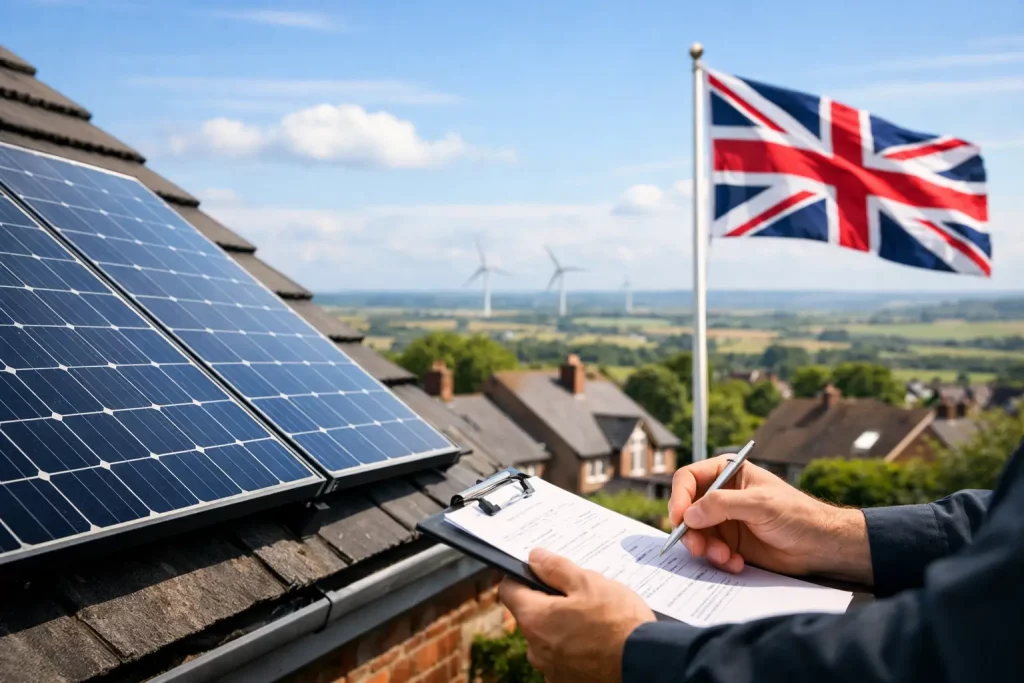
Rising electricity prices have pushed solar higher up the list for homeowners and businesses, but the upfront cost still gives many people pause. A clear guide to solar panel grants helps cut through the noise, because the support available in the UK is real – but it is not always straightforward, and it does not look the same for every property.
The first thing to know is that there is no single national grant that simply pays for every solar installation. Support tends to come through a mix of local authority schemes, regional funding pots, energy efficiency programmes, VAT relief, export payments and, in some cases, finance options that make installation more affordable. That means the right route depends on where you are, what type of property you own and whether you are applying as a homeowner, landlord or business.
How this guide to solar panel grants works
If you have been searching for a simple yes or no answer, the honest answer is: it depends. Some households may qualify for direct funding or part-funded upgrades. Others may not receive a grant in the traditional sense, but can still reduce costs through zero-rated VAT on eligible energy-saving materials, smart export payments for surplus electricity, or by combining solar with battery storage for stronger long-term savings.
That matters because the cheapest quote is not always the best outcome. The real value comes from looking at total installation cost, likely bill reduction, system quality and whether any support available to you comes with conditions on product choice, installer standards or property eligibility.
What counts as solar panel grant support?
When people talk about solar grants, they often mean any form of financial help that lowers the cost of going solar. In practice, that can include direct grants, local council schemes, government-backed energy efficiency programmes, business support, tax relief and export tariffs.
For domestic customers, the most relevant help usually falls into three areas. First, there may be local or regional grant schemes aimed at improving energy efficiency or reducing fuel poverty. Second, VAT on many energy-saving materials has been reduced, which lowers the purchase cost. Third, once your system is installed, you may be able to earn money for surplus electricity exported back to the grid through the Smart Export Guarantee.
For businesses, the picture is slightly different. Grants can be more location-specific and may come through local enterprise funding, decarbonisation schemes or sector-based support. Some commercial buyers also focus less on grants and more on capital allowances, energy savings and payback periods.
Homeowner options in the UK
Most homeowners start by asking whether the Government offers a standard solar panel grant. At the time of writing, there is no universal UK-wide grant open to every homeowner for standard solar panel installation. That can be disappointing, but it does not mean support is unavailable.
Local authorities sometimes run schemes for low-income households or homes with poor energy performance. In some cases, solar may be included alongside insulation, heat pumps or other improvements under broader retrofit funding. These schemes often have strict criteria based on income, benefits, EPC rating or postcode.
If you do not qualify for direct grant funding, zero-rated VAT can still make a noticeable difference. This reduces the cost of installing eligible energy-saving materials in residential properties, including solar panels in many cases. It is not a grant paid into your bank account, but it lowers the amount you need to spend upfront.
The Smart Export Guarantee is also worth factoring in. It allows eligible homes to receive payment for excess electricity sent back to the grid. The rates vary by supplier, so it will not cover the full installation cost on its own, but it improves overall return on investment.
A guide to solar panel grants for landlords
Landlords are in a slightly more complicated position. Funding aimed at private rented homes does exist from time to time, especially where properties have low EPC ratings, but access often depends on specific scheme rules. Some programmes prioritise vulnerable tenants or target homes that are expensive to heat.
For landlords, the decision is usually commercial as much as environmental. Solar can make a property more attractive to tenants, improve EPC performance and reduce running costs where the landlord retains responsibility for communal or shared electricity use. The trade-off is that not every landlord benefits directly from tenant energy savings unless the system is structured around landlord-held supply or wider asset value.
The practical point is this: landlords should check both grant eligibility and the longer-term effect on lettability, compliance and property value. Solar makes most sense when it supports a broader plan to modernise the building rather than as an isolated upgrade.
Solar grants and support for businesses
For commercial buildings, grants are less uniform but can still be very worthwhile. Businesses may be able to access regional decarbonisation funding, sector-specific support or local growth programmes that include low-carbon technology. These schemes are often competitive and may open and close with limited notice.
Even when grant funding is unavailable, solar remains attractive for many businesses because daytime generation often lines up with daytime electricity use. That means more of the power is used on site, which tends to improve the financial case. Warehouses, offices, farms, retail premises and industrial units can all benefit, although roof condition, usage profile and grid connection must be assessed properly.
For business owners, the key question is not only whether a grant exists, but whether the system will reduce operating costs enough to justify the investment. In many cases, it does.
What affects eligibility?
Eligibility rules vary, but a few factors come up again and again. Your postcode matters because many schemes are regional. Your property type matters because some funding is aimed at domestic homes, while other support focuses on businesses or social housing. Income and benefits may matter for household schemes, and EPC rating is often used to prioritise less efficient properties.
Installer standards matter too. If a scheme requires work to be completed by an accredited installer, choosing the right provider from the start can save time and avoid problems later. Product quality, warranties and certification should not be treated as extras. They are part of protecting your investment.
This is where a solution-led approach helps. A system should be designed around your roof, usage and budget, not simply around chasing the nearest grant deadline.
What to check before you apply
Before applying for any solar support, get clear on three things: whether the scheme is actually open, whether solar is included and whether your property meets the criteria. Many people waste time reading outdated guidance or assuming every energy efficiency fund covers solar panels.
It also helps to understand what the funding does and does not cover. Some schemes only contribute towards part of the installation. Others may include solar panels but not battery storage. Some require a retrofit assessment before approval. Timescales can also be slower than expected, especially where councils or third-party administrators are involved.
If you are comparing quotes, make sure you are comparing like for like. A lower-cost system without proper design, quality components or the right certification can cost more in the long run.
Grants are useful, but payback still matters
One of the biggest mistakes buyers make is focusing only on grants. Financial support is helpful, but it should not distract from the core reason solar works – lower electricity bills and better energy control over time.
A well-specified system can cut imported electricity significantly, especially when paired with battery storage and sensible energy use habits. If you work from home, run a business during daylight hours or charge an EV, the value can be stronger still. On the other hand, if your roof has heavy shading or limited usable space, the savings may be lower, so expectations need to stay realistic.
The strongest solar projects usually combine sensible upfront pricing with reliable installation, quality equipment and a clear view of long-term savings.
The right next step
If you are serious about solar, treat grants as one part of the decision rather than the whole decision. Check what support is available in your area, but also look closely at your roof, your electricity use and the likely return over the system’s lifetime.
For many UK property owners, the best route is not waiting indefinitely for the perfect grant. It is getting sound advice, choosing an MCS-certified installer and building a system that starts reducing bills from day one. Airtech Renewables works with homeowners and businesses that want exactly that – practical, affordable renewable energy with clear real-world value.
The best time to ask about funding is before you install, but the best reason to install is still the same: taking control of energy costs with a system that keeps paying you back for years.