
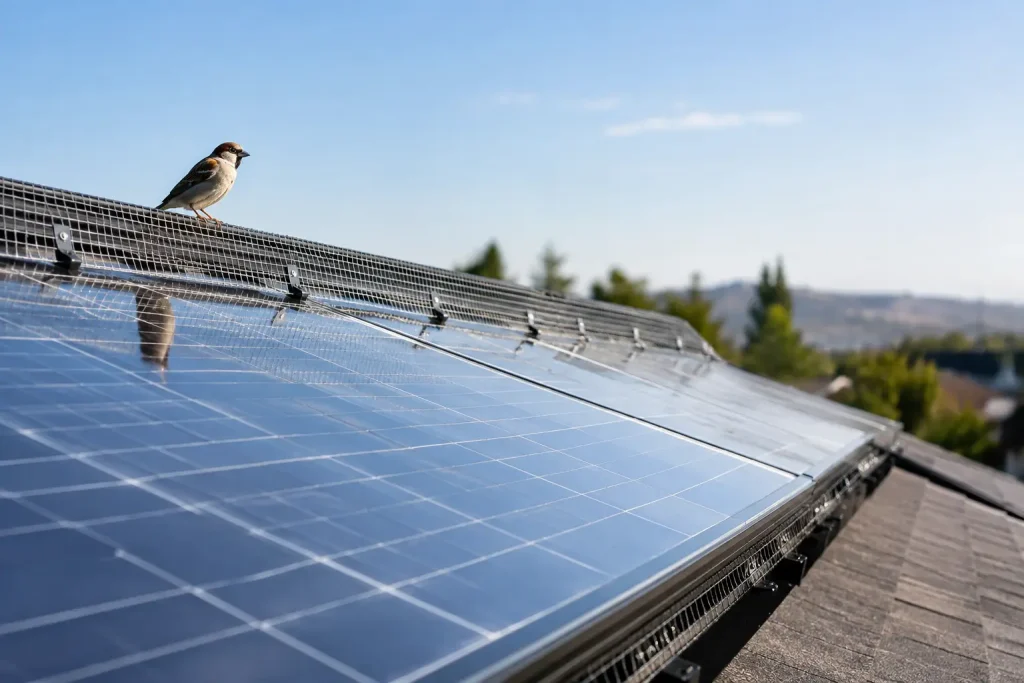
Pigeons beneath solar panels are more than an occasional nuisance. Once they find the sheltered gap between your roof and array, they can nest, create persistent noise and leave droppings around the property. Solar panel bird proofing closes off that space with a purpose-made barrier, helping protect the panels, roof and performance of your system without affecting how it generates electricity.
For homeowners, landlords and businesses, it is usually a sensible preventative measure – particularly where pigeons are already gathering on the roof. The right installation is discreet, secure and designed around the existing solar array, so it protects your investment without compromising ventilation or access for future servicing.
Why birds choose solar panels
Solar panels create a dry, protected space that is difficult for predators to reach. The small gap under a roof-mounted array is particularly attractive to pigeons looking for somewhere to roost or build a nest. Once a pair has settled in, the site can attract more birds over time.
You may notice cooing or scratching sounds, feathers near guttering, nesting material falling onto the ground, or concentrated droppings below the panels. In some cases, the first sign is a blocked gutter or an unpleasant smell after rain. These problems often become more noticeable during the nesting season, but birds can return to the same sheltered area throughout the year.
Not every solar installation needs protection immediately. A high, exposed roof with no signs of bird activity may remain clear for years. However, if neighbouring roofs have pigeons, your property is near food sources, or birds have begun perching around the array, acting early is generally less disruptive and less costly than dealing with an established nest.
What solar panel bird proofing does
The most effective solar panel bird proofing uses coated metal mesh fitted around the perimeter of the array. It creates a physical barrier between the panel edge and roof, preventing birds from getting underneath while leaving the panels themselves unobstructed.
A professional installer normally secures the mesh to the panel frame using purpose-designed clips. This matters because drilling into the panels, their frames or the roof can create unnecessary risks. A correctly fitted system should be strong enough to resist weather and wildlife, while remaining removable when panels need servicing, repair or replacement.
Quality mesh is shaped neatly to follow the edge of the array and is usually far less noticeable from ground level than many property owners expect. It is not there to trap birds or interfere with them. Its purpose is simply to stop access before birds can roost or nest beneath the system.
There is a balance to strike. The barrier must be close enough to prevent entry, but it should not obstruct the airflow that helps roof-mounted panels operate efficiently. This is why generic netting, foam fillers and improvised DIY fixes are rarely the best long-term answer. They can deteriorate, come loose in strong winds or create points where debris builds up.
Mesh, spikes and other approaches
Perimeter mesh is normally the preferred solution for solar arrays because it deals with the actual access point. Bird spikes can discourage birds from landing on ledges, but they do not usually stop pigeons entering beneath panels once a gap is available.
Visual deterrents such as reflective tape, decoy birds or sound devices may offer a short-term reduction in activity, but pigeons can become accustomed to them. They should not be relied on where nesting has already started. A physical barrier is generally the more dependable option for protecting a solar installation.
The problems bird activity can cause
Bird droppings do not automatically mean your solar panels have stopped working, but heavy soiling can reduce the light reaching the cells. If droppings, leaves and nesting materials accumulate around the lower edges of panels, rain may not be enough to clear the area properly. That can lead to uneven shading and lower output from affected parts of the array.
The bigger issue is often what happens underneath. Nesting materials can block drainage paths, contribute to gutter blockages and retain moisture against the roof. Feathers and debris may also gather around cables and mounting points. Although solar equipment is built for outdoor conditions, it should not be left exposed to avoidable contamination or interference.
There are practical property concerns too. Pigeon droppings can mark paving, windowsills and external walls, while repeated noise from a roof can be disruptive in bedrooms, loft rooms and top-floor flats. For landlords and commercial property managers, a bird issue can quickly become a maintenance and tenant comfort issue.
Bird proofing does not replace routine solar maintenance. Panels should still be visually checked, and any concerns about output, physical damage or electrical equipment should be assessed by a qualified solar professional. It does, however, remove one common source of recurring mess and avoidable disruption.
When should bird proofing be installed?
The best time is before pigeons establish a regular nesting spot. Installing protection at the same time as a new solar system is often the simplest option, as access equipment is already in place and the installer can design the finish around the array from day one.
Existing systems can also be bird proofed successfully. Before mesh is fitted, the area beneath the panels should be inspected for nests, debris and signs of damage. Any cleaning or remedial work needs to be completed carefully, with attention to the roof covering, cables and panel fixings.
Timing matters where active nests are present. Wild birds, nests and eggs can be legally protected in the UK, so no one should remove or disturb an active nest without taking appropriate professional advice. A responsible installer will assess the situation and explain the suitable next step rather than simply sealing birds into, or out of, an active nesting area.
What to expect from a professional installation
A proper assessment begins with the array itself. The installer should look at the panel layout, roof pitch, access requirements, visible debris and the extent of bird activity. They should also consider whether the roof or solar system needs any attention before a mesh barrier is added.
The work commonly involves safe roof access, removal of loose nesting material where appropriate, fitting of coated mesh around the exposed edges and a final check that the barrier is secure. The mesh should not rest loosely against the roof or leave wide gaps at corners, where determined birds may still find a route underneath.
For larger commercial arrays or difficult roofs, the installation method may vary. A ground-mounted system, an in-roof solar installation and a multi-aspect roof will each need a different approach. The principle remains the same: prevent entry without restricting the system’s operation or making future maintenance unnecessarily difficult.
Ask how the mesh is fixed, whether the solar panels can still be accessed for servicing, and what is included if debris needs clearing before the work starts. It is also worth choosing an installer experienced with solar systems rather than a general pest-control provider who may not understand panel frames, cables and roof-mounted equipment.
Is it worth the cost?
For a property with regular pigeon activity, bird proofing is usually a practical investment rather than an optional extra. It can reduce the need for repeated clean-ups, help avoid gutter maintenance, protect the appearance of the property and limit the risk of debris affecting the system over time.
The cost depends on the number of panels, roof height, access conditions, layout complexity and whether cleaning or nest-related work is required first. A straightforward domestic array is naturally quicker to protect than a large commercial system or a roof requiring specialist access equipment.
It is worth viewing the cost against the wider value of your solar investment. Solar panels are installed to reduce reliance on grid electricity and provide long-term energy savings. Keeping the area around the array clean, accessible and free from nesting problems helps protect that return. Airtech Renewables can advise on a suitable approach as part of a wider solar installation or maintenance discussion.
Keep the protection effective
Once installed, mesh needs very little attention, but it should be included in occasional visual checks. Look for loose edges after severe weather, debris caught around the array, or signs that birds are attempting to access a corner. Do not climb onto the roof or pull at the mesh yourself if access is unsafe.
If you are planning a solar installation, bird proofing is easiest to consider before the panels go on the roof. If pigeons are already making a home beneath an existing array, dealing with it promptly can restore a cleaner, quieter property and keep your solar system working in the conditions it was designed for.