
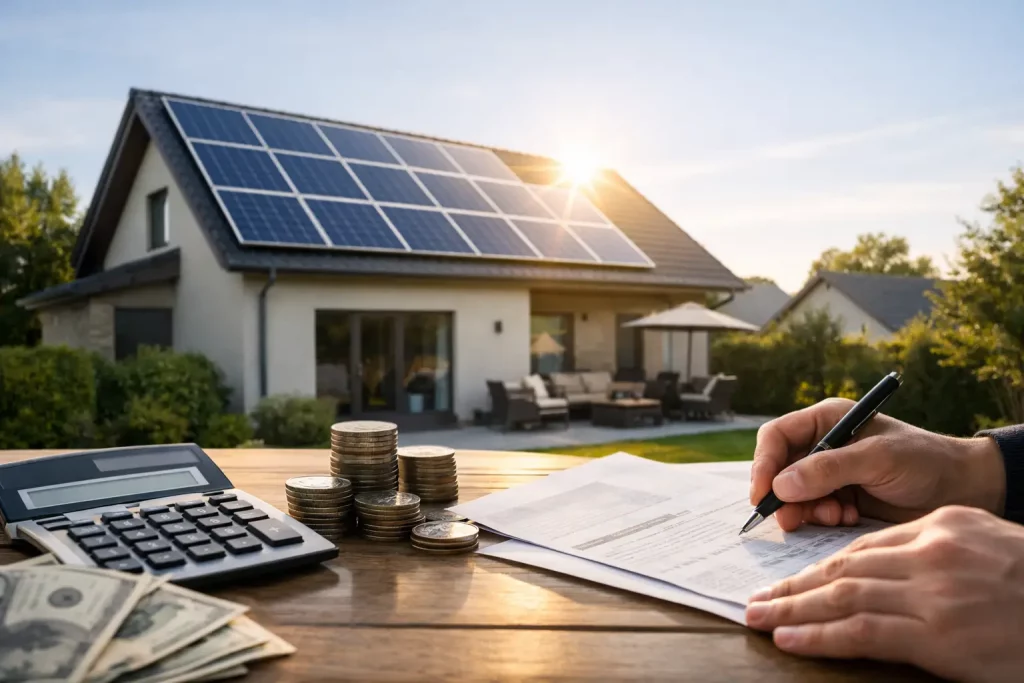
When your electricity bill keeps climbing but your daily habits have barely changed, it is fair to ask where the extra cost is really coming from. For many UK property owners, the answer is simple: too much reliance on expensive grid electricity. That is exactly how solar panels reduce bills – by generating usable power on your roof so you buy less from your supplier.
For homeowners, landlords and businesses, the appeal is not just environmental. It is financial. A well-designed solar system gives you more control over running costs, helps protect you from future price rises and turns unused roof space into a working asset. The savings can be significant, but the real amount depends on your property, your daytime usage and how the system is set up.
How solar panels reduce bills in practice
Solar panels generate electricity from daylight, not just bright sunshine. That means they can still produce useful energy across much of the year in the UK, including on overcast days. The electricity your system creates can then be used by your property straight away.
This is where the savings begin. If your fridge, lighting, office equipment, washing machine or other appliances are running while your panels are producing power, you use that solar electricity first. Every unit of electricity you use from your own system is a unit you do not need to buy from the grid.
Grid electricity is one of the most expensive parts of running a property. So the more of your own generation you use, the lower your electricity bill can be. Instead of paying retail rates for all of your power, you reduce imported energy and rely more on what your roof is producing.
Why self-consumption matters most
The biggest savings usually come from self-consumption. This simply means using your solar electricity as it is generated. If you are out all day and most of your electricity use happens in the evening, your system may still help, but not as much as it would if more of that energy was used during daylight hours.
For example, a household that runs appliances in the middle of the day, works from home or charges devices regularly during daylight is often in a stronger position to save. The same applies to businesses operating during normal daytime hours, since that usually lines up well with solar generation.
This is one reason commercial solar can be especially effective. Offices, warehouses, workshops and retail premises often have daytime demand that matches solar output. That means more direct use of generated electricity and less dependence on imported power.
Battery storage can increase the savings
One of the most common questions from customers is what happens to unused electricity. If your panels generate more power than you need at that moment, the surplus can be exported to the grid, but you can often improve your bill savings further with battery storage.
A solar battery stores excess electricity generated during the day so you can use it later, such as in the evening when household demand is often higher. This helps bridge the gap between production and usage. Instead of exporting all your extra energy and buying back electricity at a higher rate later, you keep more of your own power on site.
That is why solar and battery storage work so well together. Panels reduce what you buy in the daytime, while the battery helps reduce what you buy after sunset. For many properties, that combination delivers stronger all-round savings and better energy independence.
Your bill does not disappear completely
It is worth being clear about expectations. Solar panels can reduce bills substantially, but they do not usually remove them altogether. Most properties still need some electricity from the grid, especially during winter, at night or during periods of very high usage.
How much you save depends on several factors. Roof size, panel output, shading, orientation, electricity tariffs and daily usage patterns all make a difference. A larger system is not always the right answer if your property cannot use the power effectively. Good system design matters just as much as the hardware itself.
This is where professional advice pays off. A system should be sized around your property and your usage, not just sold on headline panel numbers. The aim is practical savings, not unnecessary overspend.
How much can UK homes and businesses save?
There is no single figure that fits every property, but many customers can achieve worthwhile reductions in ongoing electricity costs. Some households see moderate savings, while others with strong daytime use and battery storage can cut bills much more aggressively. Commercial sites with steady daytime demand may see even stronger returns because they are able to use a larger share of generation directly.
The key point is that solar turns part of your energy spend from a permanent outgoing cost into an investment in your own infrastructure. Instead of paying more and more to suppliers year after year, you generate a portion of your own electricity on site.
That shift matters. Energy prices may rise, tariffs may change and the grid will always remain outside your control. Solar gives you a way to reduce exposure to those costs.
How solar panels reduce bills over the long term
The long-term value of solar is one of its strongest advantages. Once installed, your panels can continue producing electricity for many years with relatively low maintenance requirements. While the upfront installation cost needs to be considered, the system can keep delivering savings long after it has been fitted.
This is what makes solar different from many other household expenses. Most bills give you nothing back. Solar can keep reducing a recurring cost month after month. Over time, those reductions can add up to a strong return on investment, particularly when energy prices stay high.
For landlords and developers, there is also a wider property benefit. Energy-efficient homes and buildings are increasingly attractive to occupiers and buyers. Lower running costs are a selling point, and renewable systems can help modernise a property in a way that is both practical and visible.
What affects the level of savings?
Not every roof performs the same way. South-facing roofs often produce the best results, but east and west-facing roofs can still be very effective depending on the site and the usage profile. Shading from trees, chimneys or nearby buildings can reduce output, so this needs to be assessed properly.
The age and efficiency of the panels also matter, as does the quality of the installation. A cheaper system that is poorly designed may not deliver the savings a customer expects. That is why product quality, installer experience and recognised standards such as MCS certification should never be treated as an afterthought.
Usage habits matter too. If you shift some demand into daylight hours, you can often improve your savings without changing your lifestyle dramatically. Running the dishwasher in the afternoon, charging devices during the day or timing certain business processes around solar production can all help you use more of your own electricity.
Solar works even better as part of a wider system
For some properties, the biggest savings come from combining technologies rather than installing solar in isolation. Battery storage is the obvious partner, but EV chargers, hot water systems and heat pumps can also be part of a more efficient setup.
If your property uses electricity to support heating, hot water or vehicle charging, solar can offset part of that demand. That creates a more joined-up energy system where generation, storage and usage work together. It is a smarter approach than treating each upgrade separately.
This is especially useful for customers planning long-term improvements rather than a single quick fix. A coordinated system can reduce running costs more effectively and help future-proof the property at the same time.
Is solar still worth it in the UK?
Yes, for many properties it is. The old idea that solar only works in hot climates has never really matched the way modern systems perform. UK solar installations rely on daylight, and with energy prices where they are, the financial case remains strong for many households and businesses.
That said, it is not a one-size-fits-all purchase. A poor roof, heavy shading or very low daytime electricity use may limit the benefit unless battery storage is added. The best results come from honest assessment and careful design, not exaggerated promises.
For customers who want cleaner energy and lower operating costs, solar remains one of the most practical upgrades available. Airtech Renewables focuses on that practical outcome – installing quality systems that help properties cut costs, reduce carbon impact and make better use of the energy they generate.
If you are looking at ways to take control of rising electricity costs, solar is not really about chasing a trend. It is about keeping more of your money in your property instead of sending it out in monthly bills.