
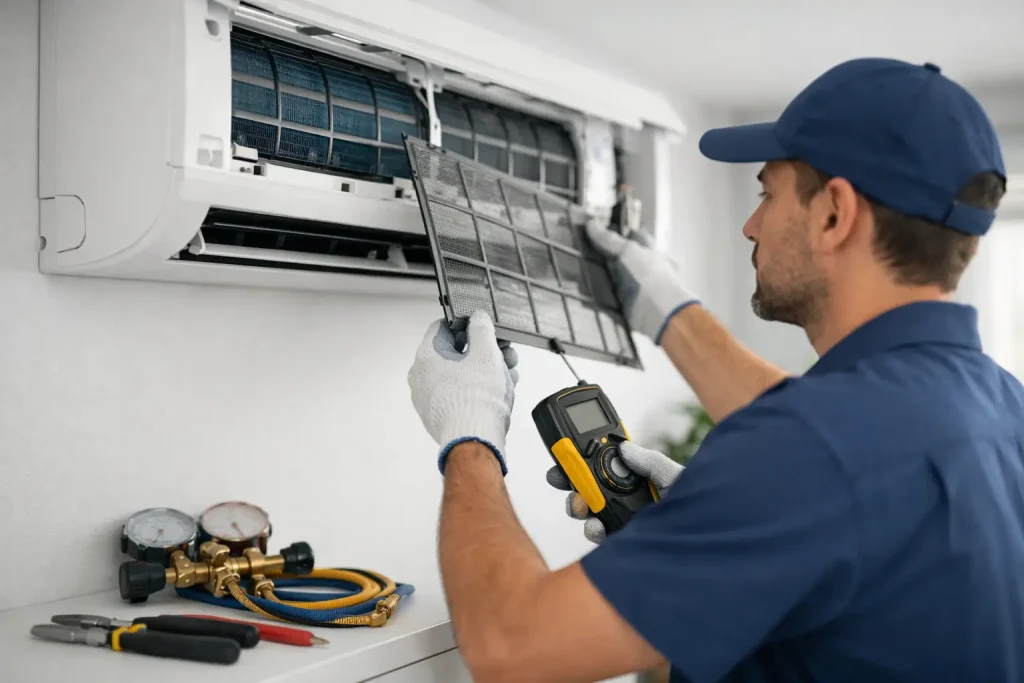
A poorly maintained air conditioning unit rarely stops working without warning. It usually becomes noisier, takes longer to cool a room, develops an unpleasant smell or quietly uses more electricity than it should. Knowing how to maintain air conditioning helps protect your comfort, indoor air quality and running costs – particularly when your system is also used for efficient heating through the colder months.
For most homes and businesses, the basic routine is straightforward: keep airflow clear, clean filters regularly and arrange professional servicing at the right intervals. The key is recognising which tasks are safe for a property owner or facilities manager to handle, and when to call a qualified engineer.
Why regular air conditioning maintenance pays off
Air conditioning works by moving heat rather than simply producing cold air. For that process to remain efficient, air needs to pass freely through the indoor unit and outdoor condenser, while refrigerant, electrics and drainage must all operate correctly. A blocked filter or dirty coil forces the system to work harder for the same result.
That extra effort can mean higher electricity bills, inconsistent temperatures and unnecessary wear on components. In a commercial setting, it can also affect staff comfort, customer experience and the reliability of equipment in server rooms or offices. In a home, neglected units may circulate dust and allergens or struggle when you need cooling most.
Regular maintenance is therefore not just about preventing a breakdown. It is a practical way to extend the useful life of the system and maintain the energy-saving benefits that made air conditioning a worthwhile investment in the first place.
How to maintain air conditioning between services
A few simple checks can make a meaningful difference. Always switch the unit off at the isolator before cleaning it, and avoid removing sealed covers or touching electrical connections.
Clean the indoor filters
Filters collect airborne dust, lint, pet hair and pollen before air is returned to the room. When they become clogged, airflow drops and the indoor unit has to run longer to reach the temperature set on the controller.
In a typical household, inspect filters every month during regular use and clean them every one to three months. Homes with pets, smokers, open-plan kitchens or allergy sufferers may need more frequent cleaning. In busy commercial premises, monthly checks are often sensible.
Most washable mesh filters can be gently vacuumed or rinsed with lukewarm water. Let them dry fully before refitting them. Never operate the unit without its filters in place, and do not use harsh cleaning products that could damage the mesh. Some systems use additional air-purifying filters that require replacement rather than washing, so check the manufacturer guidance for your model.
Keep the indoor unit clear
Avoid placing tall furniture, shelving or heavy curtains directly in front of the indoor unit. These restrict airflow and can leave parts of a room feeling warmer or cooler than others. Leave clear space around the unit and make sure supply and return vents are not blocked by belongings.
Wipe the external casing and visible louvers with a soft, dry or slightly damp cloth. If you notice persistent mould, staining or a musty odour, do not rely on fragrance sprays to mask it. It may indicate contamination in the coil, fan or condensate tray that needs a deeper professional clean.
Check the outdoor condenser
The outdoor unit needs unrestricted airflow to release heat efficiently. Remove leaves, grass cuttings, litter and loose debris from around it, especially after autumn or windy weather. Keep shrubs and planting trimmed back so air can circulate on all sides.
Do not cover the condenser while it is operating. A purpose-made weather guard may be suitable where recommended by the manufacturer, but improvised covers can trap moisture and restrict ventilation. Avoid using a pressure washer on the coil fins, as they bend easily and reduced airflow can follow.
Look for drainage problems
When cooling, an air conditioning unit removes moisture from indoor air. That water should drain away safely through the condensate pipe. Check occasionally for dripping from the indoor unit, water marks on walls, damp patches or a blocked drain outside.
A small amount of water from the external drain can be normal when the system is cooling. Water leaking indoors is not. Switch the unit off and arrange an inspection before water damages ceilings, finishes or electrical parts.
Use settings that support efficiency
Maintenance and operation go together. Setting a very low temperature will not cool a room faster, but it can make the system run for longer and increase consumption. In summer, a setting around 21-24°C is comfortable for many properties, although the best setting depends on insulation, room use, sun exposure and personal preference.
Use timers, schedules or smart controls so the system runs when the building is occupied rather than all day by default. Closing windows and external blinds during the hottest part of the day reduces the cooling load. In winter, if your air conditioning system provides heat, keep filters clean and use steady, sensible settings rather than repeatedly switching it between extreme temperatures.
For properties with solar panels and battery storage, controls can sometimes be set to make better use of on-site electricity generation. The detail depends on the equipment installed and household usage patterns, but aligning cooling or heating with daytime solar output can improve the value of the system.
Arrange professional servicing at the right time
Homeowners should generally arrange an annual professional service, ideally before the main cooling season. A system that is used for both heating and cooling, or one serving a high-use business environment, may benefit from more frequent planned maintenance.
A competent engineer will do more than clean the visible surfaces. They can inspect the refrigerant circuit for signs of leaks, clean coils safely, test electrical connections, check fan operation, assess drainage, confirm temperature performance and identify wear before it becomes a costly failure.
This is particularly important for split systems, which contain refrigerant and must be worked on by appropriately qualified professionals. Refrigerant handling is not a DIY task. If a unit is losing cooling performance, icing up or making unusual noises, topping it up without finding the underlying cause is not a proper repair.
For landlords and businesses, planned servicing also creates a useful maintenance record. Larger systems may have additional legal responsibilities depending on their refrigerant charge and the equipment in place. A professional can advise on the servicing and inspection schedule that applies to your property.
Warning signs not to ignore
A unit does not need to fail completely before it needs attention. Book an engineer if you notice any of the following:
- Reduced cooling or heating despite normal settings and clean filters.
- Repeated tripping of electrics, error codes or difficulty starting.
- Grinding, rattling, buzzing or unusually loud fan noise.
- Ice on pipework or the indoor unit, water leaks, or a persistent musty smell.
- A noticeable rise in electricity use with no change in how the system is used.
Some issues have simple causes, such as a blocked filter or a controller setting. Others may point to a drainage obstruction, fan fault, refrigerant problem or electrical issue. Acting early is usually less disruptive and less expensive than waiting for a complete shutdown during a heatwave or cold spell.
Maintenance differs by property and system
There is no single schedule that suits every air conditioning installation. A bedroom unit used only on a few hot nights each year will have different needs from a multi-room system in a south-facing home office. A retail unit running for long opening hours will collect more dust and experience more wear than a lightly used domestic system.
Location also matters. Outdoor units near busy roads, trees, building works or coastal air may need more frequent visual checks. If a property has recently been renovated, cleaned aggressively after building work or occupied by pets, inspect filters sooner than usual.
The best approach is to combine simple, regular owner checks with professional maintenance based on usage. Keep a note of filter cleaning dates, service visits and any changes in noise or performance. This makes it easier to spot a pattern and gives an engineer useful information if a fault develops.
Airtech Renewables can help property owners plan air conditioning servicing alongside complementary systems such as ventilation, solar power and battery storage, so comfort and energy performance are considered together. A clean, correctly serviced unit should be quiet, responsive and economical to run – and that is the standard worth maintaining throughout the year.