
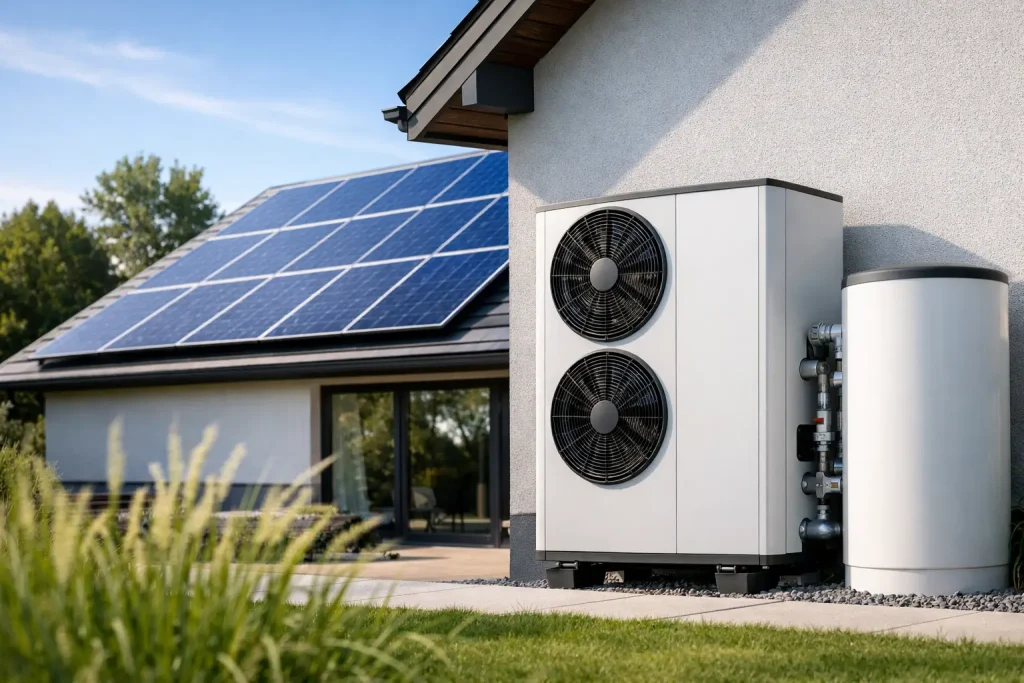
A heat pump can cut the carbon from your heating, while solar panels can reduce the cost of the electricity it uses. Knowing how to combine solar and heat pump systems properly is what turns two good upgrades into a more efficient, lower-running-cost energy solution for your property.
For UK homeowners and businesses, the opportunity is clear. A heat pump replaces fossil-fuel heating with efficient electric heating, and solar PV generates electricity on site. The systems will not remove every energy bill, especially through darker winter months, but a well-designed installation can reduce reliance on imported electricity and make your property more comfortable year round.
How solar panels and heat pumps work together
An air source heat pump takes heat from the outside air and upgrades it for use inside your property. It runs on electricity, but it does not create heat in the same way as an electric resistance heater. For every unit of electricity used, a correctly designed heat pump can typically provide several units of useful heat.
Solar panels produce electricity during daylight hours. That electricity can supply appliances, EV charging, battery storage and a heat pump whenever they are running. Any power your property does not use at that moment can be stored in a battery, exported to the grid, or used to heat water in a cylinder where suitable controls are in place.
The key point is that solar PV does not connect directly to a heat pump as a dedicated power source. Both connect to your property’s electrical system. Smart controls then help you use solar generation at the most valuable times, without compromising heating comfort or hot water availability.
Start with the heat pump design
The strongest solar and heat pump installations begin with a proper heat loss assessment. Before choosing equipment, an installer should understand how much heat the building needs, how well it is insulated, the size and condition of radiators, hot water demand and the available outdoor space.
A heat pump should be sized for the property, not simply chosen as the largest model possible. Oversizing can increase upfront cost and lead to inefficient operation. Undersizing may leave the system relying too heavily on supplementary heating during cold weather.
Heat pumps work best when they can deliver heat at lower flow temperatures. This is why radiator upgrades, underfloor heating or improvements to insulation may be recommended. Larger radiators can release the required warmth at lower water temperatures, helping the heat pump operate more efficiently. Better insulation also means less heat escapes, reducing the electricity needed to keep rooms comfortable.
For many properties, a hot water cylinder is equally important. Unlike a combi boiler, a heat pump system commonly stores hot water. This gives you a useful thermal store that can be heated when solar output is strong and used later for showers, baths or commercial hot water demand.
Size solar PV around your wider electricity use
Solar panel sizing should reflect more than the heat pump alone. Consider your existing electricity consumption, roof orientation, shading, future EV charging, battery storage and whether your household or business uses more energy during the day or evening.
A south-facing roof often delivers strong annual generation, but east and west-facing arrays can also be highly effective. An east-west layout spreads generation across the morning and afternoon, which may suit properties where electricity use starts early and continues into the evening.
It is tempting to size solar only around summer production figures. However, the heat pump’s highest demand is usually in winter, when solar generation is lowest. This does not mean combining the technologies is ineffective. It simply means expectations must be realistic. Solar can make a meaningful contribution to annual electricity use, while the heat pump delivers efficient low-carbon heating throughout the year.
The best system size depends on roof space, budget, electrical demand and export arrangements. A site survey should also check roof condition, shading from trees or nearby buildings, inverter location and whether the existing electrical supply needs upgrading.
Use a battery and cylinder to increase solar use
A solar battery can store excess daytime electricity for use later, helping to increase the proportion of solar power used on site. This can be particularly useful in spring, summer and autumn, when solar production may exceed daytime household demand.
Battery storage has limits. It is not designed to store enough electricity from summer for winter heating, and its financial value depends on your usage pattern, tariff and system size. Even so, it can reduce evening grid imports and provide greater control over how you use generated electricity.
A hot water cylinder provides another form of storage. When solar generation is high, controls can prioritise heating stored water, subject to the heat pump’s operating settings and your comfort requirements. Heat stored in water can then be used later without needing the heat pump to run at a more expensive time.
This combination is often more practical than trying to force the heat pump to run only when the sun is shining. Your heating system should maintain a stable indoor temperature. Smart control should improve the use of solar electricity around that requirement, not leave the building cold while waiting for better weather.
Choose controls that work with your lifestyle
Controls make the difference between equipment that simply shares an electricity supply and a system that actively works together. A properly configured system can monitor solar output, household demand, battery charge and hot water temperatures to make sensible decisions automatically.
For example, controls may allow the hot water cylinder to heat during periods of surplus generation. Weather compensation can adjust the heat pump’s flow temperature according to outdoor conditions, avoiding unnecessary energy use. Time-of-use tariffs can also influence when the battery charges or when heating and hot water are scheduled.
The right settings depend on the property. A family home with regular daytime occupancy may use solar electricity directly as it is generated. A household that is empty all day may benefit more from battery storage and carefully timed hot water heating. For commercial premises, weekday operating hours can align well with solar production, though heating demand, occupancy and building fabric still need to be considered.
Avoid relying on manual switching. Energy systems perform best when controls are commissioned correctly and the owner understands the everyday settings. You should be able to see what the system is generating, consuming, storing and importing, without needing to manage it constantly.
Plan for winter, not just sunny days
UK solar generation drops significantly in winter, precisely when a heat pump may run more often. The grid remains an essential part of the system, supplying electricity when solar output is limited. This is normal and should be included in any savings calculation.
The benefit comes from reducing the amount of electricity required in the first place. A heat pump can provide more heat per unit of electricity than conventional direct electric heating, while solar generation reduces purchased electricity whenever conditions allow. Good insulation, appropriate emitters and sensible controls make both technologies work harder for you.
It is also worth comparing electricity tariffs. Some tariffs offer lower rates at particular times, which can support battery charging and hot water heating. The cheapest option is not always the tariff with the lowest headline rate. Your installer or energy adviser should consider how your actual consumption pattern will change once the heat pump, solar panels and any battery are installed.
Installation standards, permissions and future upgrades
Work with an experienced installer that can assess the complete system rather than treating solar, heating and storage as separate projects. Electrical design, cylinder capacity, heat pump output, controls and grid connection requirements all affect the finished result.
MCS-certified installation is particularly valuable for qualifying technologies and can be relevant where you wish to access available schemes or export payments. Requirements can change, so check the current eligibility criteria before committing to an installation. Planning rules also vary by property type, location and whether the building is listed or in a conservation area.
If budget means you cannot install everything at once, plan the first stage for future expansion. Choose an inverter that can support battery storage where appropriate, allow space for a cylinder, and make sure the heating design can accommodate additional solar generation later. A phased approach can still be effective when it is designed as one long-term energy plan.
At Airtech Renewables, the focus is on matching proven low-carbon technology to the way a property is actually used. A detailed survey can identify whether solar PV, battery storage, an air source heat pump and improved heating controls will deliver worthwhile savings for your home or business.
The most valuable next step is not choosing the biggest panel array or the highest-rated heat pump. It is getting a joined-up design that keeps you warm, uses your electricity wisely and gives your property a practical route away from rising fossil-fuel costs.