
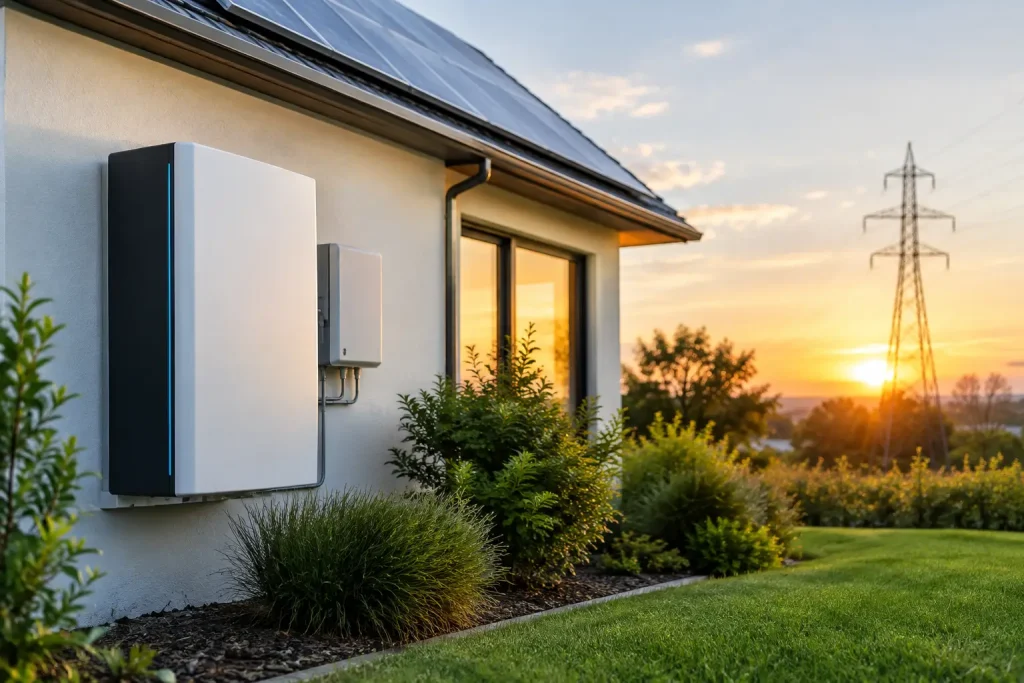
A home with solar panels can generate plenty of electricity at midday, then buy power from the grid just as the household returns home, cooks dinner and switches on the heating controls. Battery backup power changes that pattern. It stores electricity when it is most valuable to keep, so you can use more of your own generation later in the day rather than exporting it at a lower rate.
For UK households and businesses facing unpredictable energy costs, a battery is not simply an add-on to solar. It is a practical way to gain more control over when electricity is used, charged and purchased. The right system can reduce grid imports, support lower running costs and make a property better prepared for a smarter energy future.
What battery backup power does
A solar battery stores direct current electricity generated by your panels. An inverter then manages how that power is converted and supplied around the property. Instead of unused solar electricity flowing straight back to the grid, the system can charge the battery for later use.
In a typical home, stored electricity may cover evening lighting, appliances, television use, refrigeration and other everyday loads after solar production falls. If you have an electric vehicle charger, air source heat pump or air conditioning system, battery storage can also form part of a wider plan for managing electricity demand. The benefit is greatest when the system is designed around how the building actually uses energy, not just around the size of the roof.
Battery backup power can also charge from the grid at lower-cost periods where a suitable time-of-use tariff is available. That electricity can then be used when rates rise. Whether this makes financial sense depends on tariff pricing, battery efficiency and your consumption habits, but it can be particularly useful through winter when solar generation is lower.
Battery storage is not always power-cut backup
The phrase battery backup power can mean two different things, and the distinction matters. Most solar batteries provide stored energy when the grid is operating normally. They help reduce electricity bought from the supplier, but they may switch off during a power cut for safety reasons.
If you want selected circuits to keep running during an outage, your system needs a dedicated backup or emergency power supply function. This is often called EPS. It can support essentials such as lighting, broadband, refrigeration, sockets and heating controls, depending on the design and the battery capacity.
Whole-home backup is possible in some properties, but it requires more careful planning. High-demand equipment such as electric showers, ovens, induction hobs, heat pumps and EV chargers can drain a battery quickly or exceed the backup output available. A sensible approach is usually to identify the circuits that matter most rather than pay for capacity that is rarely needed.
How much battery capacity do you need?
There is no single battery size that suits every property. A compact battery may be enough for a smaller home with modest evening electricity use, while a large family home, rental portfolio or commercial unit may need a larger capacity or multiple batteries.
The best starting point is your electricity consumption. Look at annual usage, but also consider when that usage happens. A household that is empty through the day and active in the evening will usually gain more from storage than one that consumes most of its electricity while solar panels are producing.
Solar output is the next factor. An undersized solar array may not regularly generate enough surplus electricity to fill a very large battery in spring and autumn. Conversely, a strong solar system can benefit from enough storage to avoid exporting high volumes during bright weather. Your export tariff also affects the calculation. If export payments are attractive, keeping every spare unit in a battery may not always deliver the best return.
Battery capacity is measured in kilowatt-hours, or kWh. This indicates how much energy the battery can hold. Power output, measured in kilowatts, is equally important because it affects how many appliances the system can supply at once. A battery with ample capacity but limited output may still import electricity when several high-use appliances run together.
An installer should assess your consumption profile, roof generation, tariff and future plans. It is worth discussing likely changes too, including an electric car, heat pump, extension, home office or changes in occupancy. Choosing a system that can be expanded later can be a sensible route where your demand is expected to grow.
The financial case: savings depend on how you use it
Battery storage helps you use more of the electricity you generate, which can lower your reliance on imported power. However, savings are not identical from one property to the next. They depend on solar generation, export rates, import tariffs, battery size, household behaviour and the price paid for the equipment.
The strongest case often comes from combining technologies. Solar panels generate low-carbon electricity. A battery shifts it into the evening. Smart controls can prioritise charging at the right time, while an EV charger or heat pump can be scheduled to use energy more efficiently. Rather than treating each product as separate, it makes sense to consider how the full system will work together.
For businesses, storage can be especially useful where electricity demand continues beyond solar hours or where tariff periods create a clear difference between low and high rates. Commercial systems should be sized with close attention to half-hourly consumption data, operational loads and expansion plans. A battery that is too small may have little impact, while an oversized system can take longer to justify.
What to look for in a battery system
Product quality, safety and installation standards should come before headline capacity. A battery is a long-term electrical asset, so it should be installed in a suitable location with proper ventilation, clear access and an appropriate electrical design. The installer should explain where it will be fitted, how it will operate and what happens if grid power is lost.
When comparing options, focus on usable capacity rather than only the headline figure. Also check the warranty length, expected cycle life, inverter compatibility, expansion options and monitoring features. A clear app or monitoring platform can help you see solar generation, battery charge, grid imports and export performance, making it easier to adjust how you use energy.
For new solar installations, an integrated solar and battery design is often the cleanest option. Existing solar owners can frequently add an AC-coupled battery, which works alongside the current system. The right route depends on the age and specification of the inverter, available space and your goals for backup power.
Installation planning for UK properties
Before installation, a qualified installer should complete a site survey and review the existing consumer unit, cable routes, solar equipment and property demand. Battery location matters. Garages, utility rooms and other suitable internal areas are common choices, but every installation needs to meet manufacturer guidance and relevant electrical requirements.
Planning is also the point to discuss backup circuits. Do not assume that every socket will operate in a power cut. Ask exactly what will be protected, for how long, and whether the system will automatically switch to backup operation. Clear expectations prevent disappointment later.
Airtech Renewables designs solar battery storage as part of a practical, property-specific energy system. By considering generation, storage, heating, charging and everyday demand together, the aim is to deliver equipment that works hard for the building rather than an off-the-shelf battery chosen on capacity alone.
Is a battery right for your property?
Battery storage is particularly worth considering if you already have solar panels and export a significant amount of daytime generation, or if you are planning solar and want to increase self-consumption from the outset. It can also suit properties using flexible electricity tariffs, electric vehicles and electrically powered heating.
It may be less compelling where daytime consumption already closely matches solar generation, the property has very low electricity use, or export payments are high enough to narrow the benefit of storing power. That does not mean a battery is the wrong choice. It simply means the decision should be based on realistic figures rather than a generic savings promise.
The most useful question is not just, “How big a battery can I fit?” It is, “Which electricity costs am I trying to avoid?” Once that is clear, battery backup power becomes a focused investment in lower bills, cleaner energy and greater control over the way your property runs.