
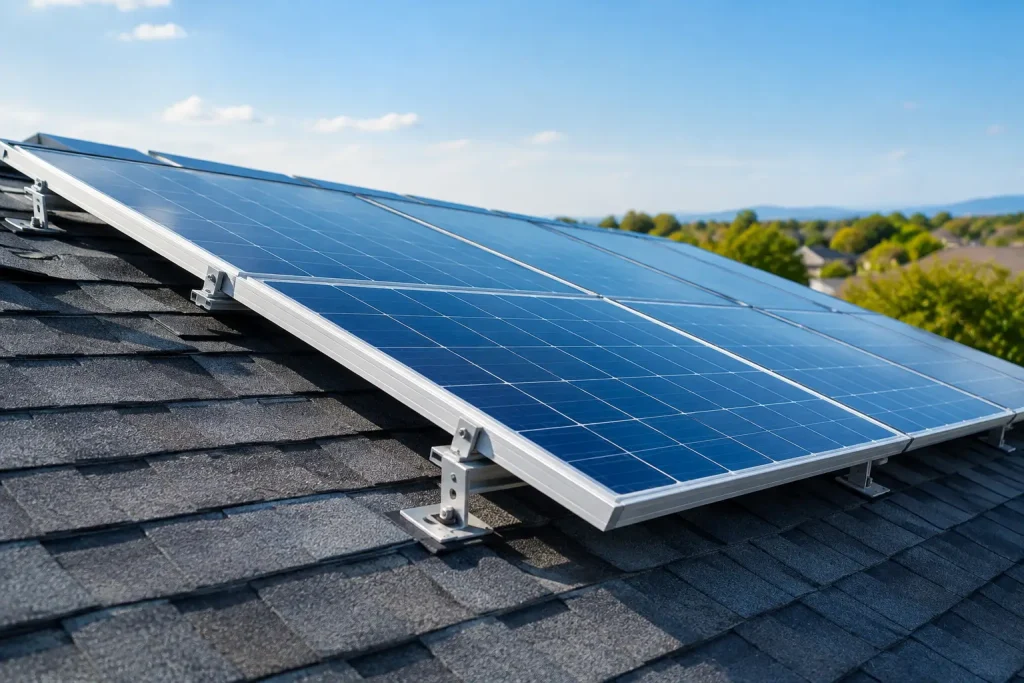
A solar panel system is only as dependable as the structure holding it in place. Choosing between the best roof mounting systems affects how your panels perform, how your roof looks, how easily the system can be maintained and, most importantly, whether the installation remains secure through years of British wind, rain and changing temperatures.
For most UK homes and commercial properties, the right answer is not simply the cheapest mounting kit. It is a system designed around the roof covering, roof structure, panel layout and local exposure. A well-planned installation protects the roof while helping you generate more of your own electricity for decades.
What a solar roof mounting system does
A roof mounting system secures solar panels to a building without compromising the roof’s weatherproofing or structural integrity. It usually includes roof fixings, aluminium rails, clamps, flashing components and bonding equipment. Together, these parts transfer the weight of the panels and wind loads safely into the roof structure.
The panels themselves may look like the main event, but the mounting system deserves equal attention. Poorly positioned fixings can create the risk of slipped tiles, water ingress or unnecessary stress on rafters. High-quality components and careful installation keep panels level, ventilated and secure.
There are two main approaches for pitched roofs: on-roof mounting and in-roof solar. Flat roofs use a different approach, normally a ballasted or mechanically fixed frame that holds panels at an appropriate angle.
The best roof mounting systems for UK properties
The best system depends on your roof rather than a single product name. Each option has a place, and a suitable site survey should establish which one offers the best balance of output, appearance, cost and long-term protection.
On-roof rail systems
On-roof mounting is the most common choice for existing homes. Panels sit above the current roof covering on aluminium rails, which are attached to the roof structure using purpose-made roof hooks or brackets. Tiles or slates are lifted during fitting, and the fixings are positioned to connect securely with rafters.
This approach works well with many tiled and slate roofs. It is generally quicker and more cost-effective than replacing part of the roof covering, making it a practical route for homeowners focused on reducing electricity bills without major building work.
A small gap beneath the panels allows air to circulate. This helps manage heat around the array, which can support efficient generation in warmer weather. It also allows access for inspections and makes it simpler to replace a panel if needed.
The trade-off is appearance. Panels sit proud of the roofline, so an on-roof array is more visible than an integrated system. For many properties that is not a concern, particularly where the roof is set back from the road or panels are installed on a rear elevation.
In-roof solar systems
In-roof solar replaces a section of the roof covering. The panels sit lower and closer to the roofline, creating a cleaner, more integrated finish. It is often a strong option for new builds, extensions, loft conversions and re-roofing projects, where the roof is already being opened up.
For homeowners and developers who value a discreet finish, in-roof systems can make solar feel like a natural part of the building rather than an addition. The mounting arrangement includes weathering trays and flashing components designed to direct rainwater safely around the array.
In-roof solar can cost more to install on an existing roof because tiles or slates must be removed and the roof detail needs careful preparation. It can also be less straightforward to make changes later. However, when planned at the same time as roofing works, it can be an excellent long-term design choice.
Flat-roof mounting frames
Flat roofs need a system that sets panels at an angle towards the sun while keeping wind loading under control. Ballasted frames use weighted blocks to hold the array in position. Mechanically fixed systems are anchored through the roof structure, subject to the roof build-up and waterproofing specification.
Ballasted systems avoid penetrations in some situations, which can be attractive on commercial roofs. However, the roof must be assessed for the additional weight of panels, frames and ballast. Wind exposure, parapet height, drainage routes and safe maintenance access all need to be considered.
Mechanically fixed frames may be more suitable where weight capacity is limited or wind forces are particularly high. The key is proper detailing around every penetration, carried out by installers who understand both solar and roofing requirements.
Standing-seam metal roof clamps
Many modern commercial buildings and agricultural properties have standing-seam metal roofs. Where compatible, specialist clamps can attach to the raised seams without drilling through the roof sheets. Rails or panel clamps are then fitted to the clamp system.
This can be an efficient, tidy solution that reduces the need for roof penetrations. Compatibility matters greatly here. The seam profile, metal thickness, roof pitch and manufacturer guidance must all be checked before a system is specified.
How to choose the right mounting approach
Start with the condition of the roof. If tiles are ageing, cracked or nearing the end of their serviceable life, it often makes sense to resolve roofing works before fitting solar. Installing panels over a roof that needs significant attention in a few years can add avoidable removal and refitting costs later.
The roof structure matters just as much as the surface. A competent survey considers rafter size and spacing, loading, roof pitch and the condition of timbers. Solar panels are not excessively heavy when correctly distributed, but wind uplift can place significant forces on the mounting points.
Roof orientation and shading influence the layout. A south-facing roof can be highly productive, but east and west-facing arrays can also provide useful generation across more of the day. Chimneys, dormers, roof windows and nearby trees may require panels to be positioned in separate groups or omitted from certain areas.
Appearance should be an honest part of the decision. On-roof systems are often the most affordable choice with strong performance. In-roof systems offer a more refined finish but are usually best value when tied to planned roofing work. A good installer will explain these differences clearly rather than treating every property as identical.
Installation details that protect your roof
The quality of fitting is more important than chasing the lowest equipment price. Roof fixings should connect into the structural rafters, not rely on tiles alone. Tiles should be carefully lifted, adjusted or replaced where necessary so they sit correctly around roof hooks.
Weatherproofing is a core part of the work. Fixings must be located and detailed to maintain the roof’s drainage path. Cable routes also need care: solar cables should be protected, neatly secured and kept away from sharp edges or areas where water can collect.
For a flat roof, drainage must remain clear. Panels and ballast should never obstruct outlets or create areas where standing water becomes a problem. Adequate spacing also gives installers safe access for future inspections and maintenance.
Ask how the proposed system has been designed for wind loading, especially if your property is exposed, elevated or close to the coast. The answer should cover the roof type, fixing arrangement and panel layout, not simply a general assurance that the kit is strong enough.
Certification, warranties and future maintenance
A solar installation should be designed and fitted to recognised standards, with the appropriate documentation supplied at handover. MCS-certified installation is particularly relevant for homeowners seeking quality assurance and eligibility for applicable export arrangements.
Check what is covered separately by the panel manufacturer, inverter manufacturer and mounting system provider. Mounting components are often built for a long service life, but warranty terms can depend on using approved parts and following the correct installation method.
Solar panels require very little routine maintenance, but the mounting system should be visually checked as part of sensible property upkeep. After severe weather, look for obvious damage, loose components or displaced tiles from ground level where possible. Do not climb onto the roof yourself. An installer can assess anything that looks unusual safely.
If you are also considering battery storage, an EV charger or a heat pump, think beyond the roof array alone. A correctly sized solar system can become the foundation of a wider low-carbon energy plan, helping you use more of the electricity you generate and reduce reliance on grid energy at expensive times.
Airtech Renewables designs solar installations around the property, its energy use and the outcome you want to achieve. The right mounting system is not a hidden detail: it is what gives your solar investment the secure, efficient base it needs to keep working year after year.
Before approving an installation, ask for a clear explanation of the roof fixings, the expected panel layout and any roof work required. A straightforward, site-specific answer is a good sign that your solar system is being built to last.