
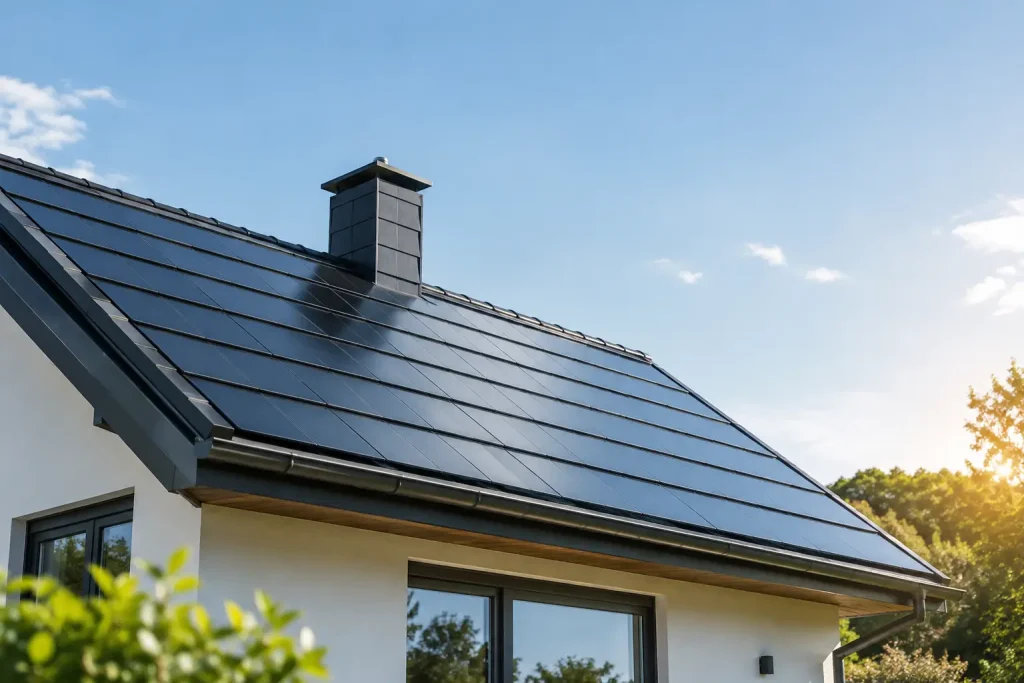
A roof replacement is a major investment, so it is the ideal point to consider how that roof could also produce electricity. Solar roof tiles offer a more discreet alternative to conventional rooftop panels, combining weather protection and solar generation in one finish. For homeowners who want cleaner energy without changing the appearance of their property too dramatically, they can be an attractive option.
They are not the right answer for every roof, however. The best choice depends on the property, the condition and shape of the roof, your electricity use, and how strongly appearance influences your decision. A well-designed solar system should reduce reliance on grid electricity while fitting the building and budget sensibly.
What are solar roof tiles?
Solar roof tiles are photovoltaic units designed to look and perform more like traditional roof materials than standard solar panels. Rather than fixing a separate panel above existing tiles or slates, solar-generating tiles form part of the roof covering itself. They convert daylight into electricity, which can be used around the property, stored in a battery, or exported to the grid.
The term is often used broadly. Some products are genuinely individual solar tiles, while others are in-roof solar modules installed flush with surrounding slates or tiles. Both create a neater, lower-profile finish than on-roof panels, but they are different systems with different installation methods and costs.
For many UK homes, in-roof solar is the more practical route. It delivers the clean, integrated look people want while using larger modules that can make better use of the available roof area. Individual solar tiles can suit certain architectural projects, extensions and heritage-sensitive designs, but they usually require more components and more installation time.
Why homeowners choose a tiled solar roof
The main appeal is visual. Conventional solar panels sit above the roof surface, whereas solar roof systems sit within it or replace sections of the covering. This can be particularly appealing on new builds, major renovations and homes where street-facing rooflines matter.
There are practical benefits too. If an ageing roof needs new tiles, fitting an integrated solar system at the same time can avoid paying to remove and replace roof materials twice. The solar array becomes part of a coordinated roofing and electrical project rather than an add-on.
Solar generation can also lower daytime electricity purchases. The benefit is strongest where electricity is used while the system is generating, such as for appliances, home working, hot water heating, EV charging or a heat pump. Adding battery storage can retain surplus daytime generation for use in the evening, helping a household use more of the power it produces.
For landlords, developers and businesses, the integrated appearance can support a modern, energy-efficient specification without compromising the design of the building. It can also contribute towards lower operational costs and a reduced carbon footprint.
Solar roof tiles versus conventional solar panels
The choice is rarely just about which system generates electricity. It is a balance between appearance, cost, roof work and output.
Conventional on-roof panels are normally the most cost-effective option when the existing roof is in good condition. They are quick to install, straightforward to maintain and often provide strong output per pound spent. If saving money as soon as possible is the priority, they are usually difficult to beat.
Solar roof tiles and in-roof systems cost more because they involve roofing work as well as electrical installation. The system may also generate slightly less electricity from the same roof footprint, depending on product choice, ventilation and the number of smaller modules needed around roof features.
That does not make an integrated system poor value. If roof replacement is already planned, part of the additional cost is shared with work that would have happened anyway. The decision becomes less about comparing solar products alone and more about planning the roof, energy system and future maintenance together.
Is your roof suitable for solar roof tiles?
A survey should look beyond whether the roof faces south. East- and west-facing roofs can still produce useful electricity, often spreading generation more evenly across the day. South-facing sections may offer the highest annual output, but shading and available area matter just as much.
The most important checks include:
- Roof orientation, pitch and usable surface area
- Shading from chimneys, trees, nearby buildings and roof features
- The age and condition of the existing roof structure and covering
- Space for cabling, inverters and optional battery storage
- Your typical electricity demand now and in the years ahead
Complex roofs can still work well, but dormers, valleys, rooflights and chimneys reduce usable space. On a small roof, conventional panels may provide a higher capacity more economically. On a large replacement roof, integrated solar can be a compelling long-term solution.
A good design also considers future loads. If you expect to buy an electric vehicle, install an air source heat pump or change how you work from home, your electricity use may rise. Designing around only today’s consumption can leave useful roof space underused.
Costs, savings and realistic expectations
There is no single price for solar roof tiles. Costs vary with the roof size, chosen product, access requirements, scaffolding, electrical upgrades, roof complexity and whether the installation includes a battery. A full re-roof with integrated solar is naturally a larger project than adding panels to a sound existing roof.
Savings depend on how much electricity the system generates and, crucially, how much of that electricity is used on site. A household that is empty during most sunny hours will export more power unless it uses automated controls or battery storage. A home with daytime demand, an EV charger or a heat pump may be able to use a greater share directly.
It is worth treating high savings claims carefully. Solar can make a meaningful difference to bills, but output changes with the seasons, weather, shading and household habits. The most reliable forecast comes from a property-specific design that estimates annual generation and explains the assumptions behind it.
Planning, certification and installation standards
Many domestic solar installations fall under permitted development rights, but there are exceptions. Listed buildings, conservation areas, ground-mounted systems and certain roof designs may need additional checks. An installer should identify planning considerations before work begins, rather than treating them as an afterthought.
For grid-connected systems, the electrical design and notification process matter too. Your distribution network operator may need to be informed or approve the connection, depending on the system size and configuration. This is particularly relevant where battery storage, larger arrays or three-phase supplies are involved.
Choose an installer that can provide clear system information, workmanship assurance and the appropriate certification. MCS-certified installation is especially relevant for customers who want access to eligible export arrangements and confidence that the system has been designed to recognised standards. Roofing details matter as much as the electrical components: the finished roof must remain weather-tight, properly ventilated and safe to maintain.
Making solar generation work harder
Solar roof tiles become more valuable when they are part of a joined-up energy plan. A battery can store excess generation for the evening. An EV charger can be scheduled to use lower-cost or surplus electricity. Smart controls can prioritise heating hot water when solar output is high.
This does not mean every property needs every technology. A smaller solar system with a carefully selected battery may suit one household, while another may benefit more from a larger array and smart EV charging. The right combination comes from looking at the building, energy use and future plans as a whole.
Airtech Renewables can assess whether solar roof tiles, an in-roof system or conventional panels will give your property the best balance of appearance, generation and value. The most useful next step is a proper survey and an honest design conversation, so your roof does more than keep the weather out – it helps control the energy costs coming in.