
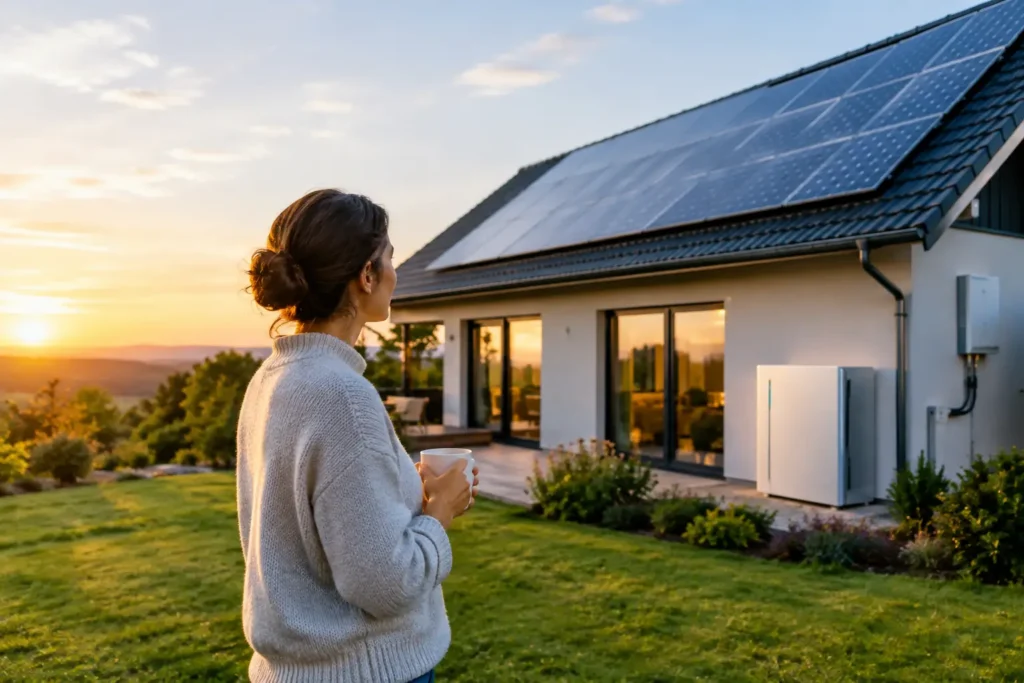
When electricity prices rise or a cold spell puts extra pressure on heating, the cost of relying on a single energy source becomes clear. Energy security gives homeowners and businesses more control: less exposure to volatile bills, more efficient use of energy, and a property better prepared for the years ahead.
For most UK properties, this is not about disconnecting from the grid. It is about reducing unnecessary dependence on it through sensible, well-designed technology. Solar generation, battery storage, efficient heating and effective controls can work together to make every unit of energy go further.
What energy security means for a UK property
At a national level, energy security concerns the dependable supply of affordable energy. At property level, it means being able to meet more of your electricity and heating needs without being wholly exposed to wholesale prices, supply pressures or an ageing heating system that wastes fuel.
A secure property energy setup does three practical things. It generates energy where possible, uses less energy through efficient equipment, and stores or controls energy intelligently. The balance will differ between a Victorian terrace, a new-build development, a warehouse and a school, but the principle is the same: reduce waste before adding more capacity.
This approach can also support lower carbon emissions. However, the first benefit most owners notice is financial control. Producing electricity on site and improving heating efficiency can reduce the amount purchased from the grid at its most expensive times.
Security is not the same as going off-grid
A fully off-grid system can be costly and is rarely the best answer for a typical UK home or commercial premises. Winter solar output is lower, while demand for lighting and heating is often higher. Maintaining a grid connection provides valuable back-up.
The stronger option for many properties is grid-connected independence: solar panels to generate power, a battery to retain surplus electricity, and efficient systems that reduce demand. You still have the grid when you need it, but you buy less from it and are better protected from price fluctuations.
Build energy security in the right order
The best installations are planned around how a building uses energy, not around a single product. A large solar array may look attractive, but it will deliver better value when the property can use or store a high proportion of what it produces.
Start with an assessment of electricity consumption, heating demand, roof space, shading, occupancy patterns and future plans. A household that works from home has a different daytime usage profile from a family out all day. A business operating machinery in daylight hours may use solar generation immediately, while a retail unit with evening demand may gain more from battery capacity.
1. Reduce wasted energy first
Energy efficiency is the foundation. Heat escapes through poorly insulated lofts, walls, floors, windows and draughts, forcing heating systems to work harder. Improving the building fabric is often the most cost-effective first move, particularly before installing an air source heat pump.
Heating controls also matter. Zoned heating, smart thermostats and correctly sized hot water cylinders help avoid heating unused rooms or storing more hot water than necessary. For properties with ventilation challenges, mechanical ventilation with heat recovery can provide fresh air while retaining warmth that would otherwise be lost.
Efficiency does not mean compromising on comfort. It means maintaining the right temperature and air quality with less energy.
2. Generate electricity on site
Solar panels remain one of the clearest ways to improve energy security. They produce electricity during daylight hours for appliances, lighting, heat pumps, air conditioning and EV charging. Any electricity used directly from the roof is electricity that does not need to be purchased at the normal import rate.
The right system size depends on available roof area, orientation, shading and consumption. South-facing roofs can offer strong annual production, but east and west-facing arrays can be highly useful because they spread generation across the morning and afternoon. In-roof solar can also suit new builds and re-roofing projects where a cleaner integrated finish is required.
Solar output naturally changes with the seasons and weather, so realistic expectations matter. It will not meet every unit of annual demand, especially through winter, but it can make a meaningful reduction in grid consumption over the year.
3. Store more of what you generate
Without a battery, surplus solar electricity is usually exported once immediate demand has been met. Export payments can be useful, but their value may be lower than the cost of importing electricity later in the evening. Battery storage keeps more of that generation available for use after sunset.
A battery can also charge during lower-cost tariff periods and discharge when electricity costs more, where the tariff and household usage make this worthwhile. This can add another layer of bill control even on darker days.
Capacity should be matched to the property. An oversized battery may take longer to pay back if it is rarely filled, while an undersized unit can leave valuable solar generation unused. A professional design should consider daily consumption, solar production, export arrangements and likely future loads such as an electric vehicle or heat pump.
4. Replace high-cost heating with efficient systems
Space heating and hot water are often the biggest energy costs in a property. Replacing an older boiler or direct electric heating with an air source heat pump can significantly improve efficiency, particularly where insulation and radiator sizing have been addressed first.
Heat pumps work best when they are designed as part of the whole heating system. That may include larger radiators, underfloor heating, a suitable hot water cylinder and controls set for steady, efficient operation. They are not a like-for-like boiler swap, and that is precisely why a proper survey matters.
Solar electricity can support a heat pump during daylight hours, while a hot water cylinder can act as a useful store of thermal energy. The combination does not make heating free, but it can reduce running costs and reliance on gas or expensive electric resistance heating.
Energy security for businesses and developments
For businesses, energy security is closely tied to operating costs and continuity. Electricity-intensive equipment, refrigeration, IT systems, workshops and EV fleets can create substantial demand at predictable times. Solar and storage can reduce peak imports, while efficient heating and cooling systems improve comfort without allowing utility costs to escalate.
Property developers can also build energy security into new schemes from the start. Considering solar, heat pumps, EV charging, ventilation and underfloor heating at design stage is usually simpler than retrofitting each system later. It also creates homes and commercial spaces that are more attractive to buyers and tenants concerned about ongoing bills.
There are trade-offs. A business with limited daytime consumption may not benefit from solar in the same way as one operating nine to five. A listed building may require a more tailored approach. Roof condition, planning considerations, electrical capacity and budget all affect the best solution. The aim is not to install every technology available, but to select the combination that delivers a dependable return.
Why installation quality matters
Energy systems only perform as well as their design and installation allow. Poor placement, incorrect sizing or weak commissioning can reduce savings and create avoidable disruption. MCS-certified installation provides added reassurance for eligible renewable technologies and can be important when accessing relevant schemes or export arrangements.
Working with one specialist for generation, storage, heating, cooling, ventilation and charging also helps prevent disconnected decisions. Airtech Renewables designs practical low-carbon systems around the way a property is used, helping customers combine technologies without unnecessary complexity.
A good proposal should explain expected performance clearly, including what cannot be guaranteed. It should set out system sizing, likely generation or consumption changes, maintenance requirements, warranties and the assumptions behind projected savings. Clear information is more valuable than exaggerated promises.
Make the next energy decision count
Energy prices may move up and down, but a property that generates more, wastes less and uses energy intelligently has greater control whatever happens next. Start with an honest assessment of your building, then invest in the measures that will deliver the strongest long-term improvement in comfort, cost and confidence.