
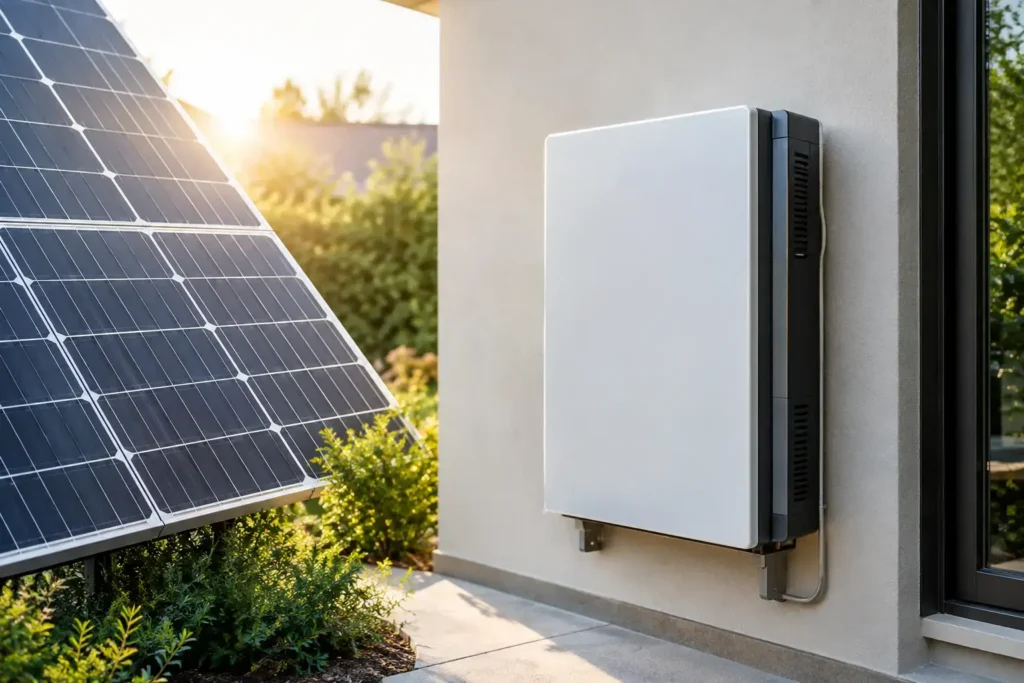
A solar battery is designed to work hard: charging from your panels during daylight, powering your property after sunset and helping you buy less electricity from the grid. Naturally, many homeowners ask, when do solar batteries degrade? The short answer is that degradation begins gradually from the first day of use, but a quality battery should retain useful capacity for many years. What matters most is how quickly that capacity reduces and whether the system has been correctly specified for your property.
For most households, battery degradation is not a sudden failure. It is a slow, expected reduction in the amount of energy the battery can store. With the right equipment, installation and settings, that reduction should be manageable and predictable.
When do solar batteries degrade in real terms?
Every rechargeable battery loses a small amount of capacity over time. Solar batteries are no different. A battery that stored 10 kWh when new may, after years of regular use, store slightly less. It will still operate, charge and discharge, but it may not cover quite as much of your evening electricity use as it once did.
Many modern home battery systems are expected to last around 10 to 15 years, depending on the battery chemistry, usage pattern and operating conditions. Manufacturers commonly offer warranties of 10 years, often guaranteeing that the battery will retain a stated percentage of its original capacity at the end of that period. A figure of around 60% to 80% retained capacity is common, although warranty terms vary between products.
This means a battery does not necessarily need replacing when its warranty ends. It simply means the guaranteed performance period has finished. Some systems continue to provide worthwhile storage for years afterwards, particularly where household demand and battery use have been well matched.
What causes a solar battery to lose capacity?
There are two main forms of battery degradation: calendar ageing and cycle ageing. Calendar ageing occurs simply as the battery gets older, even if it is not used every day. Cycle ageing is linked to charging and discharging. Each time energy moves in and out of the battery, its cells experience a very small amount of wear.
A battery installed on a solar PV system may complete a partial or full cycle most days, especially through spring and summer. That is exactly what it is built to do. The key is choosing a battery with an appropriate cycle life and usable capacity for the property, rather than expecting a small unit to cover an unusually high level of demand.
Temperature also plays a part. Batteries perform best within a controlled temperature range. Very high temperatures can accelerate cell ageing, while prolonged cold can reduce charging performance temporarily. In the UK, this is usually less of a concern than in hotter climates, but location still matters. A battery placed in a suitable garage, utility room or protected external location will generally have a more stable operating environment than one exposed to direct sun, damp or severe temperature swings.
The depth of discharge is another factor. This is the percentage of stored electricity used before the battery is recharged. Regularly taking a battery from full to almost empty can create more strain than shallower use. Most quality battery systems manage this automatically by keeping a protected reserve that is not available for day-to-day use. This helps safeguard the cells without asking the homeowner to manage charging manually.
Battery chemistry and build quality make a difference
Not all solar batteries age in the same way. Lithium-ion batteries are now the standard choice for domestic storage, but there are different lithium chemistries. Lithium iron phosphate, often called LFP, is widely used because it offers strong thermal stability and a long cycle life. Other lithium-ion types can offer high energy density, but performance and warranty terms depend on the individual product.
The headline battery capacity is only one part of the decision. It is also worth considering usable capacity, expected cycles, charging and discharge power, warranty conditions, compatible inverter equipment and monitoring features. A low-priced battery may appear attractive at first, but it can be a false economy if its usable storage, support or warranty is limited.
A professionally designed system uses proven components that work together. The inverter controls how energy flows between your panels, battery, home and grid. Battery management software monitors cell temperature, charge levels and performance. These controls are central to protecting battery health over the long term.
How fast should degradation happen?
There is no single percentage that applies to every installation. A well-used battery may lose a small amount of capacity each year, but the rate is rarely perfectly even. It can be slightly more noticeable in the early years and then settle into a slower pattern.
As a practical example, a 10 kWh battery with an 80% capacity guarantee after 10 years should still provide around 8 kWh of usable stored energy at that point, subject to the manufacturer’s stated terms. For many households, that remains enough to shift a meaningful proportion of solar generation into the evening and reduce grid purchases.
Your results will depend on your electricity habits. A family with high evening demand, an electric vehicle, electric heating or a heat pump may use battery storage differently from a couple with modest consumption. This is why correct sizing is so valuable. Bigger is not always better, but an undersized battery can be worked harder than necessary and may leave more of your solar generation unused.
Signs your solar battery may need attention
Gradual capacity loss is normal, but sudden changes are worth investigating. Most systems include an app or monitoring portal that shows solar generation, battery charge, household demand and grid imports. Checking this data occasionally can help you spot a performance issue early.
Look out for a battery that no longer reaches its usual state of charge in similar weather conditions, discharges much more quickly than before, repeatedly shows fault messages or stops communicating with the inverter. A sharp change in performance is not automatically degradation. It could be a settings issue, an inverter fault, reduced solar generation, a connectivity problem or a change in household electricity use.
If your property has added a heat pump, EV charger, air conditioning or other significant electrical load since the battery was installed, the battery may simply be meeting greater demand. Reviewing the system as a whole is more useful than judging battery performance in isolation.
How to slow solar battery degradation
You cannot stop battery ageing altogether, but sensible system design and operation can reduce avoidable wear. The most effective approach starts before installation: choose a reputable battery, size it around genuine consumption and make sure it is installed in an appropriate location.
After installation, allow the battery management system to do its job. Avoid overriding recommended operating settings unless advised by your installer. Keep the battery area clear, dry and well ventilated where required, and arrange professional support if the monitoring system reports an error.
It can also help to think about the wider energy system. Solar panels, battery storage, an EV charger and a heat pump can work more efficiently when their controls are planned together. For example, charging a vehicle directly from daytime solar where possible may preserve stored battery energy for evening household use. The best arrangement depends on your tariff, daily routines and the equipment installed.
Is a degrading solar battery still worth having?
Yes, in most cases. A solar battery does not need to remain at 100% capacity to deliver value. Its purpose is to increase the amount of your own renewable electricity you use and reduce reliance on higher-priced grid power. Even with some gradual capacity reduction, it can continue to support lower bills, greater energy independence and better use of your solar generation.
The strongest return comes from a system designed around your property rather than a one-size-fits-all package. Airtech Renewables can help assess your electricity use, solar output and future plans so storage capacity is practical from the start. A well-specified battery will age, as every battery does, but it should keep delivering useful savings long after the first few years of ownership.