
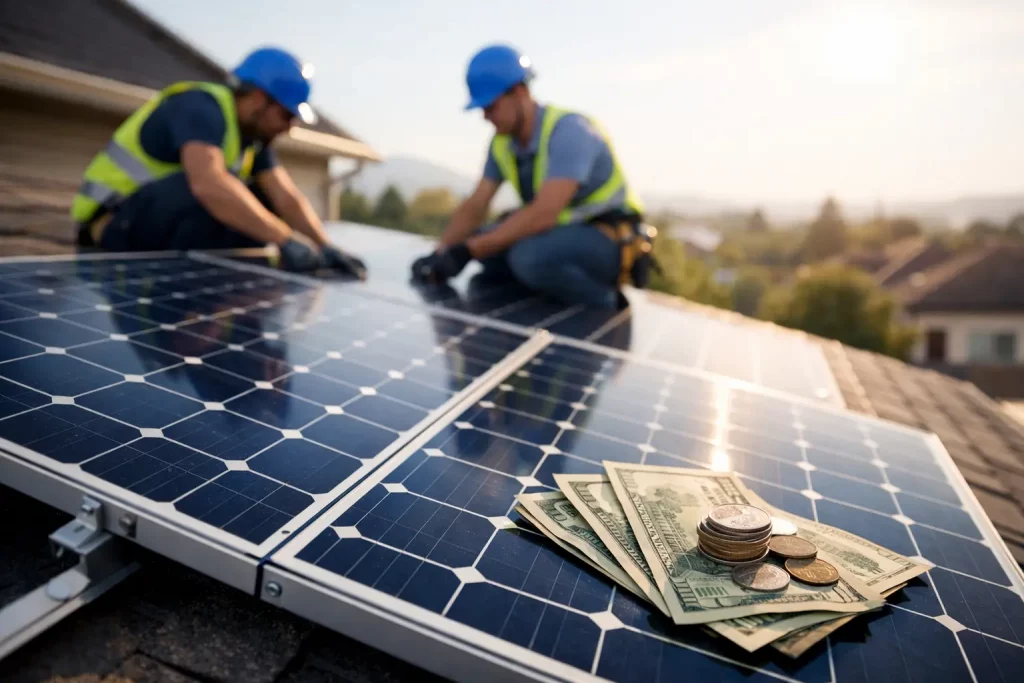
A roof that sits in full daylight for most of the year should be doing more than keeping the rain out. For many UK homes and commercial properties, solar panel installation is now one of the most practical ways to cut electricity costs, reduce reliance on the grid and make the building work harder every day.
The appeal is straightforward. Energy prices remain unpredictable, and every unit of electricity you generate on site is one you do not need to buy at the full retail rate. That matters whether you are a homeowner looking to reduce monthly bills, a landlord improving a rental property, or a business trying to control overheads across the year.
Why solar panel installation makes sense now
The case for solar has moved well beyond early adoption. Panels are more efficient than they were a decade ago, battery storage is more accessible, and more property owners understand that the return is measured in both savings and resilience.
A well-planned system can lower daytime electricity costs from the moment it is switched on. If the property uses a good share of that power while it is being generated, the financial benefit is stronger. Homes with people in during the day, businesses operating in daylight hours, and properties with high background electricity demand often see the clearest gains.
There is also the carbon side. Generating electricity on your own roof helps reduce dependence on fossil-fuel-based grid power. For households, that supports a lower-impact lifestyle without changing daily routines. For businesses and developers, it can support wider sustainability targets and improve the long-term appeal of the property.
What a good solar panel installation looks like
Not every system delivers the same result. The panels matter, but design matters just as much. A good installation starts with the property rather than a one-size-fits-all package.
Roof orientation is one of the first checks. South-facing roofs usually offer the strongest generation, but east and west-facing roofs can still perform very well, especially when electricity use is spread across the morning and afternoon. Shading is another key factor. Chimneys, neighbouring buildings and mature trees can all reduce output, so these need to be assessed properly before any recommendation is made.
Roof condition also matters. If a roof is nearing the point where major repair or replacement will be needed, it is sensible to deal with that first or consider an in-roof solar system as part of a wider upgrade. This can be especially relevant for new builds, extensions and full refurbishments where appearance and integration are a priority.
The electrical side is just as important. Your inverter, generation capacity and any battery storage should be matched to the building’s usage pattern. Oversizing can leave you exporting more than you benefit from. Undersizing can mean missed savings. The right design is the one that reflects how the property actually uses power.
Roof-mounted or in-roof solar
For many properties, standard roof-mounted panels are the most cost-effective option. They are proven, efficient and suitable for a wide range of homes and commercial buildings.
In-roof systems sit flush with the roofline and create a cleaner visual finish. They are particularly popular on new builds and where appearance matters. The trade-off is that they can involve a different installation approach and may cost more depending on the project. The right choice depends on budget, aesthetics and the stage of the build.
Costs, savings and the payback question
When people ask about price, what they usually want to know is whether the numbers stack up. In many cases, they do – but payback is never identical from one property to the next.
System size, roof layout, electricity usage and product choice all affect cost. A smaller domestic system will obviously cost less up front than a larger commercial one, but the more useful question is how much of the generated electricity will be used on site. Self-consumption has a major impact on value.
If your property uses a lot of electricity during the day, savings build faster. If usage peaks in the evening, battery storage may help capture more of the solar energy generated earlier. Export payments can add value too, but they are usually secondary to the savings made from using your own power directly.
This is why sensible advice matters. A system should be built around real usage, not inflated promises. The strongest returns usually come from a balanced design, quality components and installation standards that protect performance over the long term.
Solar battery storage changes the picture
Solar works without a battery, but adding storage can make the system more effective. Instead of sending excess daytime generation back to the grid, a battery stores it for later use. That can be especially useful for households where people are out during the day and use more electricity in the evening.
For commercial settings, battery storage can also help manage peak demand and improve the value of on-site generation. It is not always essential, and not every property needs it from day one, but it is worth considering as part of the design stage.
The key is to avoid treating battery storage as an automatic upgrade. In some cases, a customer is better off investing in the right solar array size first and adding storage later. In others, the battery makes financial sense immediately. It depends on your consumption profile, tariff and budget.
Choosing the right installer for solar panel installation
The installer you choose has a direct impact on performance, compliance and peace of mind. Solar is not just about getting panels onto a roof. It is about system design, electrical safety, product quality and making sure the installation is built to deliver savings for years.
Look for an MCS-certified installer and ask clear questions about warranties, expected output, mounting methods and aftercare. A dependable company should be able to explain the system in plain English, not bury the decision under jargon.
It is also worth looking at the bigger picture. If you are planning wider property upgrades, such as battery storage, EV charging or a heat pump, working with one specialist across multiple technologies can simplify the process and help ensure the systems complement each other properly. That joined-up approach is one reason many customers choose Airtech Renewables for renewable energy upgrades.
What to ask before you go ahead
Ask how the proposed system matches your actual electricity use. Ask what assumptions are being made about annual generation and savings. Ask whether your roof needs any work before fitting begins. And ask what happens if you want to expand the system later.
These are not difficult questions, and a good installer should answer them directly. If the answers are vague, the proposal probably is too.
Solar panel installation for homes, landlords and businesses
The benefits of solar are shared across different property types, but the priorities vary.
For homeowners, the focus is usually lower bills, better energy independence and future-proofing the property. Solar can also make sense alongside electric vehicle charging and all-electric heating systems, where electricity demand is likely to rise.
For landlords, solar can help improve a property’s efficiency and marketability, especially as tenants become more conscious of running costs. The exact benefit depends on tenancy arrangements and who pays the energy bills, so the financial model needs to be thought through properly.
For businesses, the value often comes from scale and daytime consumption. Offices, retail units, workshops and other commercial sites that use power through working hours can often make very effective use of solar generation. It can also support brand credibility where environmental performance matters to customers, staff or procurement teams.
Is your property suitable?
Many are, but suitability should never be assumed. A site survey will usually look at roof direction, pitch, shading, available space, structural condition and electrical setup. Planning considerations may also apply in some cases, particularly for listed buildings or properties in conservation areas.
That does not mean awkward roofs are ruled out. It means the recommendation should be honest. Sometimes the right answer is a smaller system than expected. Sometimes it is an in-roof option. Sometimes it is waiting until other building works are complete. Practical advice saves money in the long run.
There is no perfect moment to start, but there is a clear cost to waiting if your property is well suited and your electricity bills are already high. A properly specified solar panel installation can start reducing those costs from day one, while improving the efficiency and long-term value of the building. If the roof is ready and the numbers work, it is often less about whether solar makes sense and more about how soon you want the savings to begin.