
A heat pump should quietly keep your property warm, your hot water reliable and your running costs under control. This guide to heat pump servicing explains what professional maintenance involves, what you can safely check yourself and why an annual visit can protect the performance of a low-carbon heating system for years to come.
For homeowners, landlords and businesses, servicing is not simply a box-ticking exercise. A well-maintained air source heat pump can operate more efficiently, identify small faults before they become expensive repairs and help you meet the conditions of the manufacturer’s warranty. It is a practical way to protect the investment you have made in cleaner, more affordable heating.
Why heat pump servicing matters
Unlike a gas boiler, a heat pump does not create heat by burning fuel. It captures energy from outside air and transfers it into your heating and hot water system. This process is highly efficient, but it relies on the outdoor unit, controls, pipework, filters and heating distribution system working together correctly.
Over time, leaves can gather around the outdoor unit, settings can be changed, filters may become dirty and small issues such as a pressure drop or a noisy fan can develop. None of these necessarily means the heat pump has failed. Left unchecked, however, they can reduce efficiency, affect comfort and increase electricity use.
Regular servicing gives a qualified engineer the opportunity to check that the system is delivering the heat your property needs without working harder than it should. For a landlord, it can also support a planned maintenance approach across a portfolio. For a business, it helps avoid disruption during colder periods when dependable heating matters most.
How often should a heat pump be serviced?
Most manufacturers recommend professional servicing once every 12 months. Your installation paperwork, warranty terms and product manual should confirm the requirement for your particular unit. If your heat pump provides both central heating and hot water, an annual check is especially sensible because it works throughout the year.
A newer system that appears to be operating well still benefits from its first annual service. Early visits allow an engineer to verify that settings are correct, inspect the installation and spot any minor adjustments that could improve day-to-day performance.
There are situations where an additional visit may be worthwhile. This includes a noticeable fall in heating performance, unfamiliar sounds, repeated error codes, unusually high electricity consumption or a system that struggles to provide hot water. Do not wait for the annual appointment if your home is not reaching the set temperature or the unit is regularly shutting down.
What a professional heat pump service includes
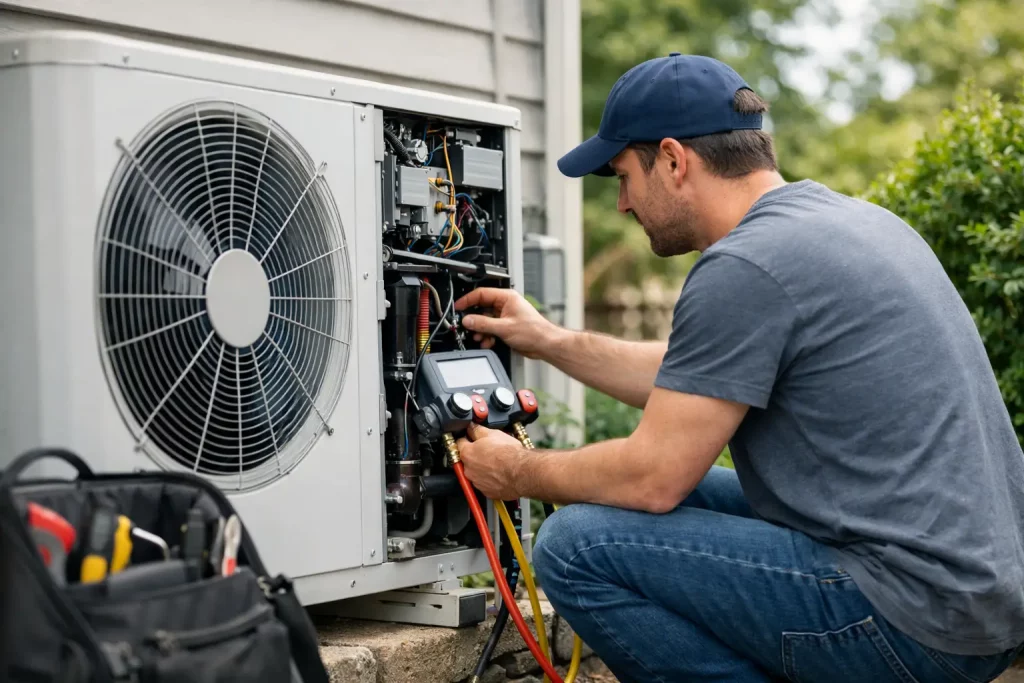
The exact process depends on the make, model and type of system, but a thorough service looks beyond a quick visual inspection. The engineer will assess the heat pump’s condition, confirm safe operation and check how it is performing within the wider heating system.
A professional service commonly includes:
- Inspecting the outdoor unit, fan, casing and clear space around the unit for damage, debris or restricted airflow.
- Checking electrical connections, controls, safety devices and operating readings.
- Examining pipework, insulation, valves, condensate drainage and signs of leaks or corrosion.
- Reviewing the heating circuit pressure, filters, circulation and hot water cylinder operation where fitted.
- Testing system performance, checking fault history and confirming that the heat pump is responding correctly to its controls.
Where refrigerant work is required, it must be carried out by a suitably qualified engineer. This is not a DIY task. The same applies to electrical connections, sealed refrigeration components and internal repairs. Using a competent heat pump specialist gives you confidence that the system is being assessed properly rather than treated like a conventional boiler.
What you can check between service visits
There are a few simple checks property owners can make without opening the unit or altering technical settings. These small habits can help the system run as intended and make it easier to explain any issue to an engineer.
Keep the area around the outdoor unit clear. Leaves, garden waste, stored items and overgrown plants can restrict airflow. The unit needs space to draw in and release air, particularly during cold weather when it is working hardest. Take care not to block the fan or use a cover that prevents ventilation.
Check that the controller is set to a sensible schedule and that thermostats have not been turned down or overridden accidentally. Heat pumps generally work best by maintaining a steady indoor temperature rather than being switched on and off in short, intense bursts. Large and frequent temperature changes can make them work less efficiently.
It is also worth looking for obvious warning signs: persistent error messages, water where it should not be, loud rattling sounds, reduced hot water or radiators that stay cool. A light layer of frost on an air source heat pump can be normal in cold, damp conditions. The unit should run a defrost cycle to clear it. Heavy ice that remains in place, or repeated defrosting with poor heating output, needs professional attention.
Servicing the whole heating system, not just the pump
A heat pump is only one part of the system. Its efficiency is influenced by the condition of radiators or underfloor heating, the hot water cylinder, controls and the property’s insulation. This is why a good service appointment considers how these parts work together.
For example, dirty system water can restrict circulation and affect heat transfer. A blocked filter may make the heat pump work harder. Poorly configured heating controls can leave rooms too warm, too cool or heated when nobody is using them. In a property with underfloor heating, the manifold and zone controls may also need checking.
If your home has solar panels and battery storage, the heat pump controls may be able to make better use of lower-cost electricity or surplus solar generation. The options vary by equipment and tariff, but coordinated controls can make a meaningful difference to running costs. This is one reason integrated energy systems benefit from an installer who understands the full picture.
Signs that your heat pump needs attention
A service is preventative, but problems can occur at any point in the year. Contact a qualified engineer if your system repeatedly displays fault codes, trips the electrics, loses pressure, produces little heat or hot water, or makes a new and persistent noise.
Higher electricity use deserves investigation too, especially if your household routine and weather conditions have not changed significantly. Consumption naturally rises during colder spells, and a heat pump will use more energy when demand is high. The concern is a clear, ongoing change without an obvious reason.
Avoid trying to reset faults again and again without finding the cause. A single reset may be part of the manufacturer’s guidance, but repeated shutdowns can indicate an issue with flow, sensors, electrical components or the refrigerant circuit. Recording the error code and when it occurs will help the engineer diagnose the problem more efficiently.
Choosing the right engineer for heat pump servicing
Heat pump servicing requires knowledge of low-temperature heating, controls and refrigeration technology. Ask whether the engineer has experience with your heat pump brand and whether they can work on the relevant electrical and refrigerant components. Keep your commissioning documents, service records and warranty details available for the appointment.
Price matters, but the cheapest visit is not always the best value if it omits meaningful checks. A clear service report is useful because it confirms what was inspected, highlights any recommended work and creates a maintenance record for future reference. This can be particularly valuable when selling a property or managing rented accommodation.
Airtech Renewables supports property owners with practical renewable energy solutions designed around long-term efficiency, comfort and lower operating costs. The right maintenance plan helps ensure that a heat pump continues to deliver the benefits it was installed to provide.
Book servicing before the colder months if possible, when appointment availability can be better and any recommendations can be dealt with before heating demand rises. A well-looked-after heat pump does not need constant attention, but an annual professional check gives you the reassurance that your home or business is ready for the season ahead.