
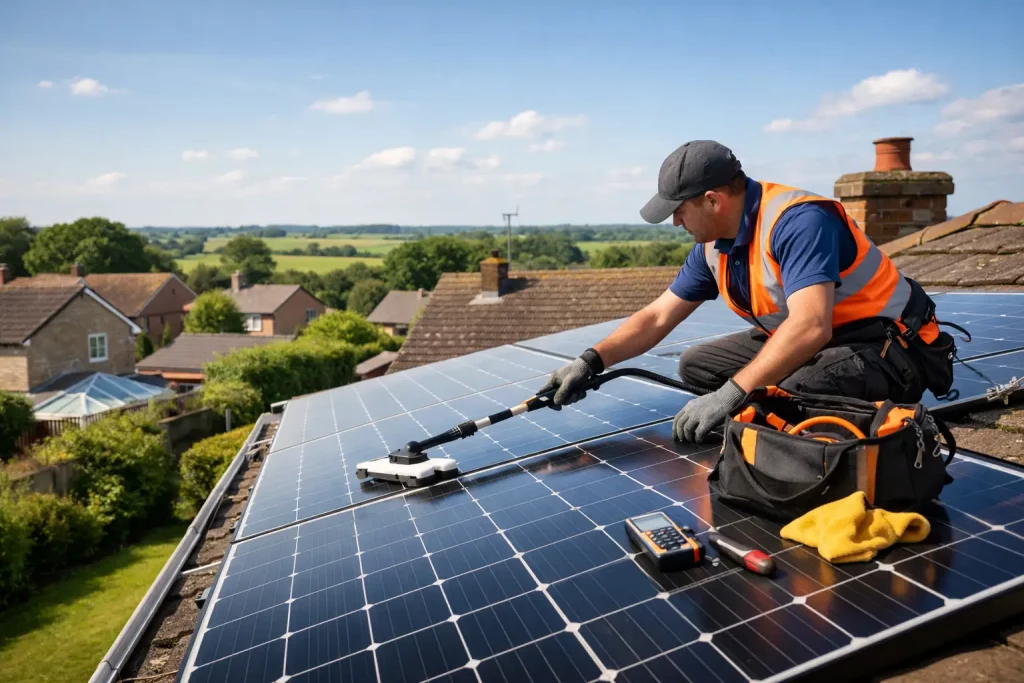
A well-designed solar system should quietly reduce your electricity bills for decades. That does not mean it should be forgotten once the installation is complete. This solar panel maintenance guide explains the straightforward checks that help UK homeowners and businesses protect generation, spot faults early and keep their investment working as intended.
Most solar PV systems need very little day-to-day attention. The key is to avoid unnecessary cleaning, never take risks on a roof, and know when a small change in performance needs professional investigation.
What Solar Panel Maintenance Really Involves
Solar panels have no moving parts, which is one reason they are a reliable way to generate clean electricity. Rain will usually remove ordinary dust and light dirt from angled panels, particularly in the UK climate. In many cases, regular monitoring is more valuable than regular cleaning.
Maintenance is mainly about keeping an eye on output, making sure there is no new shading, and arranging a professional inspection if the system shows signs of damage or underperformance. Your inverter, battery and monitoring app also deserve attention, as these components tell you whether the system is producing and storing energy effectively.
A small seasonal check is sensible. An annual review is a practical routine for most properties, especially where panels are close to trees, busy roads, farmland, the coast or areas with large bird populations. These locations can experience more dirt, salt residue, pollen or droppings than an exposed suburban roof.
Check Your Solar Generation Regularly
The easiest maintenance task is reviewing the system’s generation data. Many installations include an inverter display, online portal or mobile app that shows daily, monthly and yearly production. Looking at this information once a month gives you a useful picture of normal performance across the seasons.
Do not expect identical output every day. Solar generation naturally changes with daylight hours, cloud cover, temperature and the angle of the sun. A clear day in June will produce considerably more electricity than a short, overcast day in January. What matters is a sustained or unexpected drop compared with similar weather and the same period in previous years.
If output falls sharply, first consider simple explanations. Has a nearby tree grown enough to cast shade? Has scaffolding, a new extension, a chimney or satellite dish affected the panels? Is there a message or warning light on the inverter? If there is no obvious explanation, arrange a qualified inspection rather than attempting repairs yourself.
For businesses, routine monitoring is particularly useful because even a modest performance issue can add up across a larger commercial array. Assigning responsibility for checking generation data helps ensure faults are not missed for months.
Inspect Panels Safely From Ground Level
A visual inspection from the ground can reveal concerns without putting anyone at risk. Use binoculars if needed, but do not climb onto the roof or lean ladders against panels. Solar arrays are electrical equipment, and roof access creates obvious fall risks as well as the possibility of damaging cables, tiles or modules.
Look for visible debris, such as leaves gathering along the bottom edge of the array, substantial bird droppings, heavy moss growth nearby or branches overhanging the roof. Also look for cracked glass, loose-looking fittings, damaged roof tiles or panels that appear to have shifted after a storm.
Contact an installer promptly if you notice physical damage. A cracked panel may still generate some electricity, but water ingress and reduced performance can become more serious over time. Equally, never touch exposed wiring, connectors or electrical equipment. Solar panels can generate electricity whenever daylight reaches them, even if the mains supply is switched off.
Do Solar Panels Need Cleaning?
Often, no. For many UK properties, rain provides enough natural cleaning and paying for frequent panel cleaning may not offer a worthwhile return. A light layer of dust rarely makes a dramatic difference to output, particularly on panels installed at a suitable angle.
Cleaning can make more sense where there is stubborn soiling that is clearly visible and likely to block light. Examples include heavy bird droppings, residue from nearby construction work, agricultural dust, pollen or pollution. Check the system’s generation data before and after any professional clean to judge whether it has made a meaningful difference.
Avoid cleaning panels in strong sunshine. Cold water on very hot glass can cause thermal stress, while wet surfaces can be hazardous. Do not use abrasive pads, pressure washers, harsh detergents or household glass cleaners. These can scratch the surface, damage seals or leave a film that attracts more dirt.
If the panels can be safely reached from ground level, use clean water and a soft, non-abrasive brush designed for solar panels. However, roof-mounted systems are best left to an insured, trained professional with the correct access equipment. The cost of a safe inspection is generally far lower than the cost of repairing roof damage or dealing with an accident.
Keep Shading Under Control
Shade is one of the most common causes of reduced solar production. Even partial shade from a tree branch, chimney or neighbouring structure can affect the output of connected panels. Modern systems with optimisers or microinverters can reduce the impact, but shade should still be managed wherever possible.
Review your roofline at least twice a year, particularly after spring and summer growth. Prune trees responsibly and check whether permission is needed before work is carried out, especially where trees are protected or sit outside your property boundary. Do not attempt to remove branches while standing on a roof or near electrical cables.
It is also worth thinking ahead. A garden structure, loft conversion, roof extension or new flue may alter the shade profile of your property. Discuss planned building work with a solar specialist before it begins so your system can remain as productive as possible.
Check the Inverter, Battery and Electrical Equipment
The inverter converts the electricity generated by your panels into power your property can use. It will usually show a green operating light or a clear status message when working normally. Check it periodically for warning symbols, fault codes or unusual noises.
Inverters commonly have a shorter expected lifespan than solar panels, often around 10 to 15 years depending on the product, location and operating conditions. That does not mean replacement is inevitable at a fixed date, but it is sensible to budget for the possibility over the life of the system.
If you have solar battery storage, use the manufacturer’s app or display to check charge and discharge behaviour. Batteries work best when their settings reflect how you use energy. For example, a household on an off-peak tariff may benefit from charging at lower-cost periods, while a business may prioritise stored solar electricity for daytime demand. Settings should only be changed if you understand the effect on battery health, backup provision and tariff savings.
Keep the area around the inverter and battery clear, dry and well ventilated. Do not store boxes, paint tins or other items against the equipment. If a battery appears swollen, overheats, emits an unusual smell or reports a persistent fault, isolate the issue by following the manufacturer’s safety guidance and contact a qualified installer immediately.
When to Book Professional Solar Maintenance
A professional service is worthwhile if your output has dropped without a clear weather-related reason, the monitoring system reports a fault, the panels are visibly damaged or your inverter is nearing the end of its expected working life. It is also sensible after severe weather, roof repairs or electrical work that may have affected the system.
A competent solar technician can inspect panel condition, mounting hardware, cables, connectors, isolators, inverter operation and system performance. They can also identify issues that are not visible from the ground, such as degraded connections, water ingress or faults affecting only part of an array.
Use an appropriately qualified installer, particularly for electrical work. Keeping records of inspections, repairs and generation figures can help with warranty queries and gives you a clearer view of the system’s long-term return. If your installation is covered by manufacturer or workmanship warranties, check the conditions before arranging third-party work.
A Simple Yearly Routine
For most owners, solar maintenance does not need to become another demanding household job. Check generation monthly, look over the array safely from ground level every few months, and review trees and potential shade as the seasons change. Book professional support when performance, physical condition or electrical warnings suggest something is wrong.
This measured approach avoids both extremes: ignoring a valuable energy asset and spending money on unnecessary work. Clean, unobstructed panels combined with accurate monitoring can help you make the most of every daylight hour.
If you are concerned about solar output, planning battery storage or want a system check after roof work, Airtech Renewables can help you take practical next steps. A solar system should make your property easier and cheaper to run – regular, sensible care helps keep it that way.