
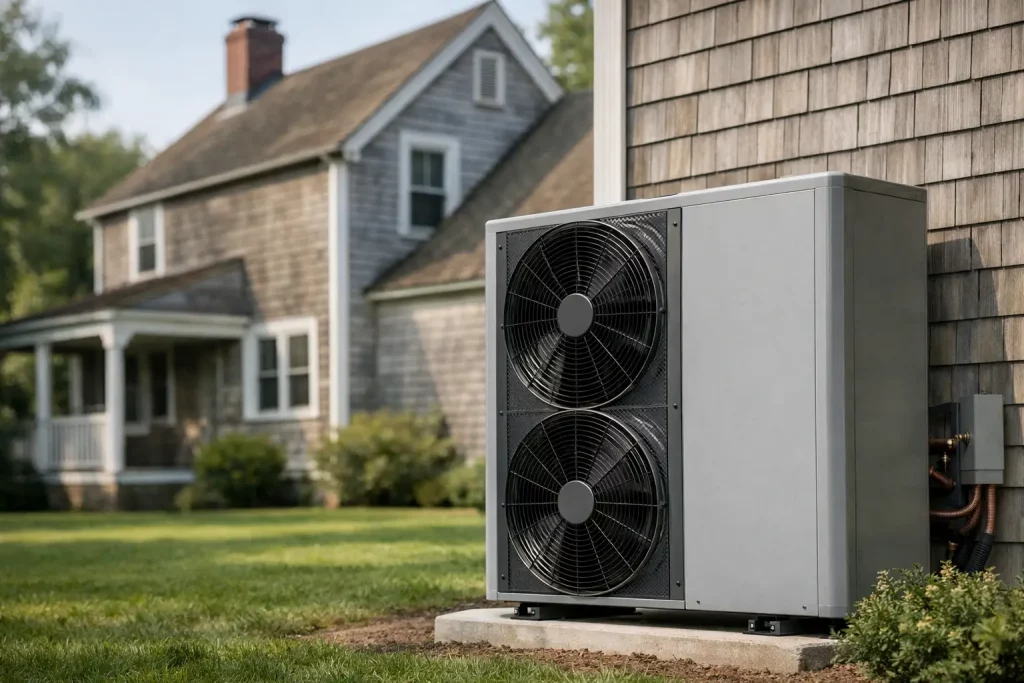
A lot of UK homeowners assume older properties are a poor match for modern heating. That is usually where the confusion starts. Heat pumps for older homes can work very well, but the result depends less on the age of the building and more on how the system is designed, sized and installed.
If you own a Victorian terrace, a 1930s semi, a post-war house or a converted period property, the question is not simply whether a heat pump can be fitted. The better question is whether your home can hold heat efficiently enough for a low-temperature system to deliver steady comfort without pushing running costs in the wrong direction.
Why heat pumps for older homes are often misunderstood
Many older homes were built around gas or oil boilers that run at high flow temperatures. Those systems can pump out a lot of heat quickly, even in draughtier buildings with patchy insulation. Heat pumps work differently. They are designed to run for longer at lower temperatures, providing a more consistent level of warmth rather than short bursts of intense heat.
That difference leads some people to think heat pumps are only suitable for new builds. In practice, plenty of older properties across the UK are suitable, including homes that are far from perfect on paper. What matters is the whole heating setup. Insulation levels, radiator sizes, hot water demand, room-by-room heat loss and control strategy all play a part.
A badly sized boiler can still make a home feel warm because it brute-forces heat into the system. A heat pump rewards accuracy instead. When it is matched properly to the building, it can lower carbon emissions, improve comfort and reduce dependence on volatile fossil fuel prices.
What matters most before installation
The first thing to assess is heat loss. Older homes vary massively. One stone cottage with upgraded loft insulation and decent double glazing may be easier to heat than a newer-looking house with poor detailing and cold spots throughout. Age alone tells you very little.
A proper survey should look at how much heat each room loses, how well the building fabric performs and whether the current emitters can deliver enough warmth at lower flow temperatures. This is where many projects succeed or fail. If the survey is rushed, the system may be undersized, oversized or paired with the wrong radiators.
Insulation is often the biggest factor. That does not mean an older home needs to be wrapped like a new-build box before a heat pump becomes viable. It does mean the obvious weak points should be addressed where practical. Loft insulation is usually one of the quickest wins. Draught reduction, upgraded glazing and sensible fabric improvements can also make a noticeable difference.
There is always a balance to strike. Some period homes need sympathetic upgrades to preserve character, and not every wall can be insulated internally or externally without cost or disruption. Even so, targeted improvements can still make the heating system perform far better.
Radiators, pipework and hot water
One of the most common concerns with heat pumps for older homes is whether existing radiators need replacing. Sometimes they do, sometimes they do not. Because a heat pump usually runs at a lower temperature than a gas boiler, radiators may need to be larger to deliver the same room comfort.
This is not automatically a major problem. In many homes, some radiators can stay and others may need upgrading. A detailed room-by-room assessment will show what is necessary rather than guessing. In properties with underfloor heating, heat pumps are often an especially good fit, but radiator-based systems can work well too.
Pipework also needs checking. Older pipe runs are not always a deal-breaker, but they should be inspected for condition, layout and suitability. Hot water is another point that needs proper planning. Heat pumps can provide domestic hot water effectively, though cylinder specification and usage patterns matter. Larger households or properties with high demand need this built into the design from the start.
Running costs depend on efficiency, not just the unit price of electricity
A lot of homeowners compare gas prices with electricity prices and stop there. That only tells part of the story. Heat pumps are efficient because they move heat rather than generate it in the same way as direct electric heating. The key measure is system efficiency over time, not a simple fuel comparison.
For older homes, running costs depend on several linked factors: the heat loss of the building, the quality of installation, the system controls and how high the flow temperature needs to be. If a heat pump is forced to work harder than it should because the home leaks heat badly or the emitters are undersized, efficiency drops.
On the other hand, a well-designed system in an improved older home can deliver strong performance and steady savings, especially when replacing oil, LPG or older electric heating. Homes coming off mains gas may see the strongest financial case, but even gas-heated properties can benefit where long-term efficiency and carbon reduction are priorities.
Comfort is different from boiler heat – and often better
People are used to the feel of boiler heating: sharp bursts of heat, hot radiators and bigger temperature swings. A heat pump aims for stable comfort. Rooms stay more even, and the system is designed to maintain temperature rather than chase it.
In older homes, this can be a real advantage. Cold corners and uneven warmth are common with ageing heating systems. A well-set-up heat pump can make the house feel more balanced throughout the day. It is a quieter, steadier form of heating.
There is an adjustment period for some households. If you are used to turning the boiler on for a quick blast in the morning and again at night, heat pump controls may feel different at first. The best results usually come from letting the system run consistently and efficiently rather than stopping and starting it aggressively.
Can listed and period properties use heat pumps?
Yes, in many cases, but it depends on the building and any planning or conservation constraints. Listed homes and period properties often need a more careful approach, especially where external appearance matters or fabric changes are restricted.
That does not rule out a heat pump. It simply means the design needs more thought. Unit placement, insulation strategy, internal alterations and hot water storage all need to be considered alongside the character of the property. The right installer will look for practical solutions rather than assuming the building is unsuitable.
Installation quality matters more in older properties
This is not a product you can treat like a straight boiler swap. Older homes are less forgiving of poor design choices because their thermal performance is often less predictable. A rushed installation may still run, but it may not deliver the comfort or savings you were expecting.
That is why proper heat loss calculations, correct system sizing and MCS-certified installation standards matter. A good installer should explain what needs improving now, what can wait, and where the real value lies. That level of honesty is important because not every home needs the same package of upgrades.
For some properties, the sensible route is staged improvement. Start with insulation and draught-proofing, then install the heat pump. In other homes, the building is already ready enough, and the heating upgrade can move ahead straight away.
When heat pumps for older homes make the most sense
They tend to make the strongest case where the current system is expensive to run, nearing the end of its life or tied to high-carbon fuels like oil or LPG. They also appeal to homeowners and landlords who want a more future-ready property with lower emissions and better energy performance.
For developers and property investors, heat pumps can support compliance, improve asset quality and make homes more attractive to tenants or buyers who are conscious of running costs. For owner-occupiers, the value is often a mix of bill control, comfort and long-term resilience.
Airtech Renewables works with customers who want practical savings, not vague promises. That means looking at the whole property and recommending a system that fits the building properly.
The real question to ask
Instead of asking whether your house is too old for a heat pump, ask whether your current heating is still the best option for the next ten to fifteen years. If your property can be improved and your system can be designed properly, older does not mean unsuitable. In many cases, it simply means the project needs more care, and that is exactly where good planning pays off.