
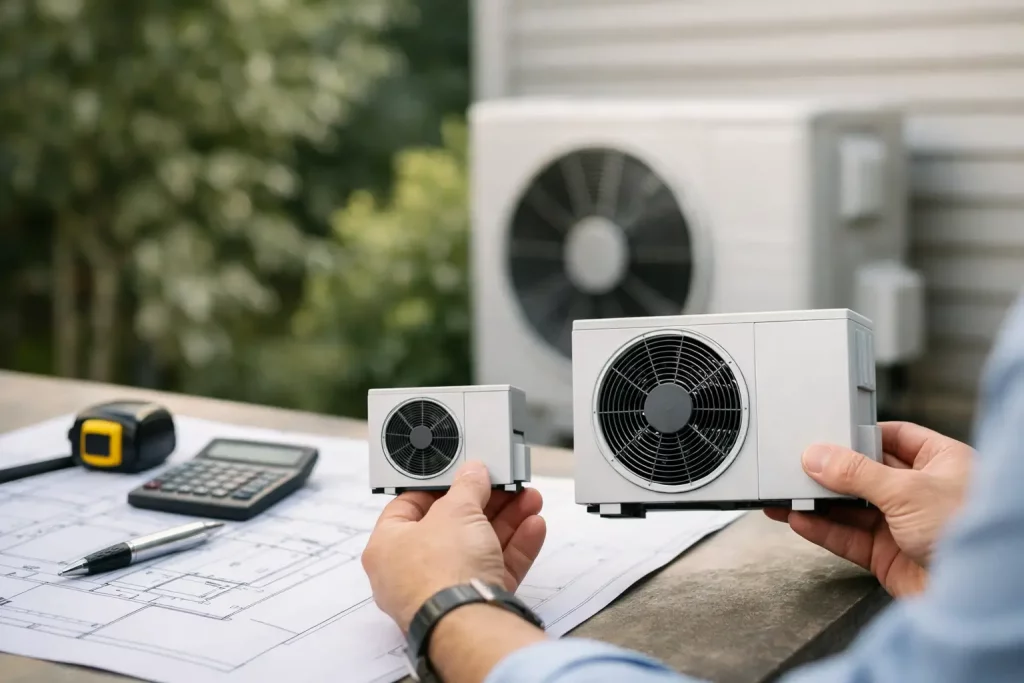
A heat pump that is too small will struggle on the coldest days. One that is too large can cost more to buy, cycle on and off too often, and run less efficiently than it should. If you are wondering how to choose heat pump size, the right answer is not guesswork or copying what a neighbour has installed. It comes down to your property, your heat loss, and how the system is designed as a whole.
For homeowners, landlords and businesses, sizing matters because it affects comfort, running costs and long-term value. A properly sized system should keep the building warm without wasting energy, while also working efficiently with radiators, underfloor heating and hot water demand.
How to choose heat pump size without getting it wrong
The most reliable way to choose a heat pump is through a full heat loss calculation. This works out how much heat your property loses in winter and how much the heat pump needs to replace to maintain the target indoor temperature.
This is why square metre rules of thumb often cause problems. Two homes with the same floor area can need very different heat pump sizes. One may be well insulated with modern glazing and good airtightness, while the other may have solid walls, older windows and higher heat loss throughout the day.
A proper assessment looks at the building room by room. It considers insulation levels, wall and roof construction, window sizes, air leakage, ceiling heights and the outside design temperature for your area. In the UK, that last point matters. A system sized for milder conditions may not perform as expected when temperatures drop.
What actually determines heat pump size?
Heat pump size is usually measured in kilowatts. That figure refers to the amount of heat the unit can deliver, not the amount of electricity it uses. A 10kW heat pump does not consume 10kW of electricity in normal operation. It delivers around 10kW of heat output under specific conditions.
Heat loss is the starting point
The key figure is your property’s heat loss. If your home loses 8kW of heat on a cold design day, the heating system needs to be able to cover that demand. If it cannot, indoor temperatures may fall short. If the unit is far bigger than necessary, you may pay more upfront without seeing better performance.
Insulation changes everything
The better the insulation, the lower the heat demand. Loft insulation, cavity wall insulation, double or triple glazing, draught proofing and overall airtightness all influence the result. In many cases, improving insulation first can reduce the size of heat pump required, which may lower installation costs and improve efficiency.
Emitter size matters too
Heat pumps work best at lower flow temperatures than traditional boilers. That means the radiators or underfloor heating system need to be suitable for delivering enough warmth at those lower temperatures. If existing radiators are too small, they may need upgrading. The heat pump size and the emitter design have to work together.
Hot water demand can affect the choice
If the system also provides domestic hot water, usage patterns matter. A larger family home with multiple bathrooms may need a different cylinder and system setup than a small property with lower demand. That does not always mean a much larger heat pump, but it does affect the overall design.
Why oversizing is not always better
A common assumption is that bigger means safer. With heat pumps, that is not usually the best approach.
An oversized heat pump can reach target temperature too quickly and then switch off, only to switch back on again soon after. This frequent cycling can reduce efficiency and place unnecessary strain on components. It can also increase upfront cost for capacity you do not really need.
There are cases where some allowance is sensible, especially where hot water demand is higher or property use is unusual. But this should come from system design, not from adding extra kilowatts just to be on the safe side.
Why undersizing causes problems as well
Undersizing is the other side of the problem. A heat pump that cannot meet the building’s heat loss on cold days may run constantly and still struggle to maintain comfort. If a back-up heater has to step in regularly, running costs can rise.
Some systems are intentionally designed with a small amount of supplementary support for extreme temperatures, but that should be a conscious design choice. It should not be the result of poor sizing.
How installers calculate the right size
If you want a serious answer to how to choose heat pump size, ask whether the installer carries out a full room-by-room heat loss survey. That is the standard that matters.
A good installer will measure the property, assess construction details and review the heating distribution system. They should also discuss how you use the building. A detached home with occupants in all day has a different heating pattern from an office unit occupied only during working hours.
In many projects, the process also includes checking radiator outputs, cylinder sizing, control strategy and whether insulation upgrades would improve the outcome. This is especially important in older UK properties, where performance can vary significantly from room to room.
Common shortcuts to avoid
There are a few red flags when choosing a supplier or reviewing a quote.
If someone recommends a heat pump size without visiting the property, that should raise questions. If the recommendation is based only on floor area or the size of your current boiler, that is another warning sign. Boilers are often oversized, and boiler output does not automatically tell you what heat pump size is suitable.
You should also be cautious of quotes that focus only on the outdoor unit. The wider system matters just as much. Pipework, radiators, cylinder choice, controls and commissioning all affect performance.
The role of property type and age
A modern new-build home will usually need a smaller heat pump relative to its floor area than an older, less efficient property. Flats can also differ from detached homes because they may lose less heat through exposed walls and roofs.
That said, older homes are not automatically poor candidates for heat pumps. Many can work very well with the right design. The key is understanding the actual heat loss and making sensible upgrades where needed. Sometimes that means improving loft insulation or replacing selected radiators before installation.
Commercial properties need the same care
For commercial buildings, sizing is just as important, but the usage profile can be more complex. Offices, retail units and mixed-use buildings often have varying occupancy patterns, internal heat gains and hot water demands.
That makes a detailed survey even more valuable. A system that works well in a small office may not suit a workshop, care setting or multi-unit property. Commercial customers should expect design decisions to reflect how the building is used, not just the square footage.
Efficiency, running costs and long-term savings
Correct sizing is one of the foundations of a cost-effective heat pump system. When the unit is matched properly to the property and emitter system, it can run more steadily and efficiently. That usually means lower electricity use for the heat delivered, better comfort and stronger long-term value.
This is where quality installation matters. Even a good heat pump can disappoint if it is badly sized or poorly integrated with the rest of the heating system. For customers looking to reduce energy bills and cut carbon without unnecessary hassle, the design stage is where the result is won or lost.
What you should ask before going ahead
Before accepting a quote, ask how the heat pump size was calculated. Ask whether a room-by-room heat loss assessment has been completed. Ask whether your current radiators are suitable for low-temperature heating and whether any upgrades are recommended.
It is also worth asking how hot water demand has been factored in, what flow temperature the system is designed to run at, and whether the installer is working to recognised standards. Clear answers here usually indicate a more reliable installation process.
For many UK property owners, the best route is to work with a specialist that looks at the whole system rather than treating the heat pump as a standalone product. That joined-up approach tends to deliver better comfort, better efficiency and fewer surprises after installation.
Choosing the right heat pump size is really about choosing the right design. Get the survey right, get the calculations right, and the system has a much better chance of delivering the savings and comfort you expect.