
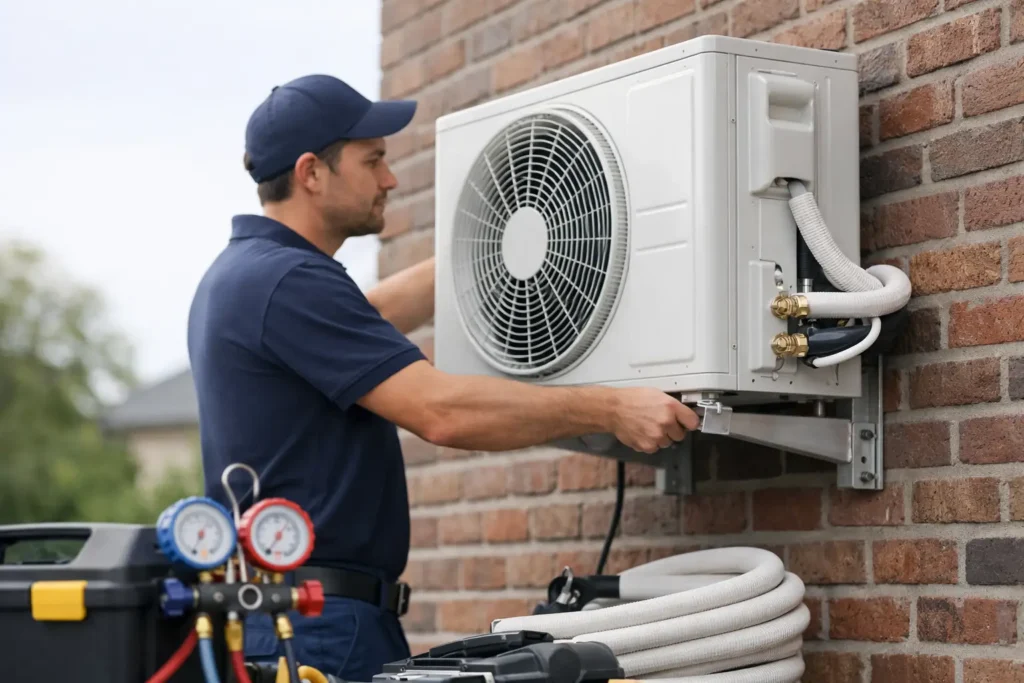
A reliable air conditioning installer Leicester property owners can turn to should do far more than fit a unit to a wall. The right system can make bedrooms easier to sleep in during hot weather, keep offices productive, and provide efficient warmth when temperatures drop. The wrong system, or a rushed installation, can mean excess noise, poor airflow and energy bills that do not reflect the comfort delivered.
For homes and commercial premises across Leicester, air conditioning is increasingly a practical year-round investment. Modern systems are designed to cool, heat and dehumidify with impressive efficiency. The value comes from choosing equipment that suits the building and having it designed and installed properly from the start.
Why air conditioning is becoming a year-round solution
Air conditioning was once seen as something needed only for a handful of unusually hot summer days. That is no longer how many households and businesses use it. Summers are becoming harder to manage in loft rooms, south-facing bedrooms, garden offices, retail spaces and workplaces with heat-producing equipment. At the same time, an air-to-air system can provide responsive heating during spring and autumn, or support an existing heating system in selected rooms.
A modern split air conditioning system moves heat rather than generating it directly through an electric element. In heating mode, it extracts available heat from outside air and transfers it indoors. This can make it a cost-effective way to heat a room, particularly where a whole-house heating upgrade is not required or where certain spaces need independent temperature control.
It is not a replacement for every heating setup. A larger property with an ageing boiler, poor insulation or inconsistent heating may benefit more from a broader review that includes an air source heat pump, improved controls or insulation. But for targeted comfort in living areas, bedrooms, offices and commercial units, air conditioning offers a flexible answer.
What a professional air conditioning installer in Leicester should assess
Every property is different. Room size matters, but it is only one part of a proper system design. A professional survey should consider how heat enters and leaves the room, how the space is used and where indoor and outdoor equipment can be positioned.
A glazed extension with afternoon sun may need a different capacity from a similarly sized north-facing bedroom. A busy office with several people, computers and lighting will have a higher cooling demand than a quiet home study. Ceiling height, insulation levels, open doorways and the direction of windows also affect performance.
The survey should also establish whether a single-split or multi-split system is most suitable. A single-split system connects one indoor unit to one outdoor condenser, making it a straightforward option for one room. A multi-split system allows several indoor units to connect to one outdoor unit, which can be neater where more than one room requires cooling or heating.
More indoor units are not always better. Fitting units in every room adds upfront cost and may not be necessary if only bedrooms and the main living space become uncomfortable. Equally, undersizing a system to reduce the initial quote can leave it running harder for longer without reaching the desired temperature. Good advice should focus on the rooms that will deliver the strongest everyday benefit.
Choosing the right type of system
Wall-mounted indoor units are the most familiar choice and work well in many homes and small commercial settings. They are compact, efficient and positioned high on the wall to distribute conditioned air effectively. For a discreet finish, units can often be selected in colours and styles that suit the room.
Ceiling cassette, ducted and floor-mounted systems may be more appropriate in particular buildings. A cassette unit can suit an office with a suspended ceiling, while ducted air conditioning can provide a more concealed solution in a renovation or new build. These options need careful planning because access, ceiling voids and pipe routes are central to the installation.
The outdoor unit needs a sensible location too. It must have sufficient airflow, be securely mounted and remain accessible for servicing. Positioning should take account of neighbouring properties, visual impact, condensate drainage and the practical route for refrigerant pipework. An experienced installer will explain any compromises before work begins, rather than presenting them after the equipment has arrived.
Installation quality affects comfort, efficiency and lifespan
Air conditioning installation combines electrical work, refrigerant handling, drainage and building finishes. The details matter. Pipework should be correctly sized and insulated, electrical supplies should be suitable for the system, and condensate must drain safely without creating staining or damp issues.
The refrigeration circuit must also be pressure-tested and evacuated correctly before the unit is commissioned. This removes moisture and air from the pipework, helping protect the equipment and maintain efficient operation. Work involving fluorinated refrigerant gases must be carried out by appropriately certified engineers.
A tidy installation is not simply about appearance, although that matters in a home or customer-facing business. Neat trunking, considered pipe routes and careful reinstatement reduce the chance of accidental damage and make future maintenance simpler. The installer should also test heating and cooling modes, check controls, and show the customer how to use the system before leaving site.
Running costs depend on use as well as equipment
Customers often ask how much air conditioning costs to run. There is no single figure because electricity tariffs, room size, insulation, set temperatures and operating hours all make a difference. However, modern inverter systems are designed to adjust output to demand rather than constantly switching fully on and off. This helps maintain a stable temperature with less wasted energy.
The way the system is used has a significant effect. Setting cooling to an extreme temperature does not cool a room faster, but it can increase consumption and create an uncomfortable contrast with outdoor conditions. In most occupied spaces, a sensible setpoint, closed windows and doors, and clean filters will give better results.
Heating mode can be particularly useful when only one or two rooms are occupied. Rather than heating an entire building for a short period, an efficient air conditioning unit can provide quick warmth where it is needed. It depends on the property and existing heating arrangement, but this targeted approach can help improve control over energy use.
Maintenance keeps the system working properly
Air conditioning needs straightforward, regular care. Filters collect dust and should be cleaned as advised by the manufacturer, especially in homes with pets or in busy commercial environments. Clear filters support airflow, improve indoor air quality and reduce strain on the unit.
Professional servicing remains worthwhile. It gives an engineer the opportunity to inspect electrical connections, clean coils, check drainage, assess refrigerant circuit performance and identify developing faults before they interrupt heating or cooling. For commercial systems, planned maintenance may also support operational continuity and help meet obligations around refrigerant management.
If a unit starts dripping indoors, produces unusual smells, becomes noticeably noisier or no longer reaches temperature, it should be checked rather than ignored. Small faults can become more expensive if they are allowed to affect the compressor or drainage system.
Planning for a smarter, lower-carbon property
Air conditioning works especially well as part of a wider energy plan. Solar panels can generate electricity during daylight hours, often when cooling demand is highest. Solar battery storage can retain surplus generation for later use, while an EV charger, heat pump and smart controls can help create a more efficient property overall.
This does not mean every customer needs every technology. The best starting point is the practical problem you want to solve: overheating bedrooms, an uncomfortable workspace, a poorly heated extension or rising operating costs in a business. From there, a tailored system can be designed around the building, budget and likely usage.
Airtech Renewables helps customers consider how air conditioning can sit alongside other low-carbon upgrades, rather than treating each system in isolation. That can make installation decisions clearer now and leave room for future improvements.
A well-designed air conditioning system should feel simple once it is installed: comfortable rooms, responsive control and equipment that works efficiently in the background. Start with a proper survey, ask how the system will perform in both cooling and heating mode, and choose an installer who treats the design as carefully as the fitting.