
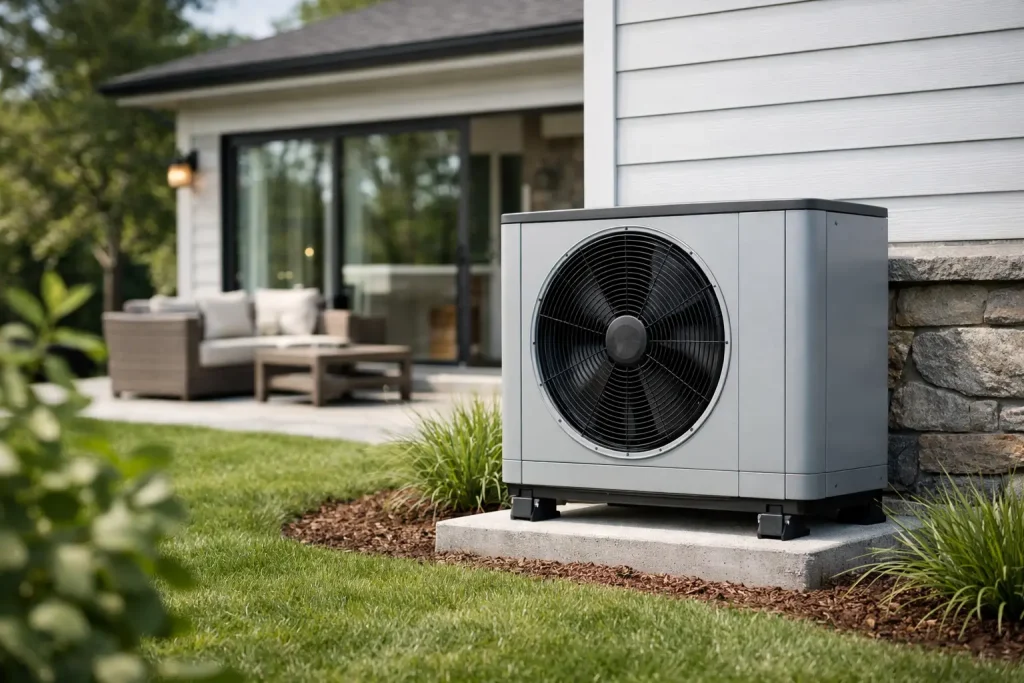
A gas boiler that is nearing the end of its life creates a decision most property owners would rather not make twice. Replacing it with an airsource heat pump can cut carbon emissions and provide dependable heating for years, but the best results come from choosing a system designed around the building, not simply fitting a new unit in the same place.
What an air source heat pump does
An air source heat pump takes heat from the outside air and transfers it indoors to warm your rooms and hot water. Even when the weather is cold, there is usable heat in the air. The system uses electricity to collect and raise that heat to a useful temperature, rather than generating all the heat by burning fuel.
This makes it a highly efficient alternative to conventional fossil-fuel heating. For every unit of electricity used, a well-designed system can typically deliver several units of heat to the property. The precise performance will vary with outdoor temperatures, insulation levels, heating controls and the temperature the system is asked to produce.
Unlike a boiler, which delivers very high water temperatures quickly, a heat pump works best by supplying steady, lower-temperature heat over longer periods. That is not a drawback when the system has been specified correctly. It simply changes how the home is heated: consistent comfort instead of short, intense bursts of heat.
Is your property suitable for an airsource heat pump?
Many UK homes can benefit from an air source heat pump, including older properties. The key question is not whether your house is new or old. It is whether heat loss can be reduced and the heating system can distribute warmth effectively.
Insulation should be considered first. Loft insulation, suitable wall insulation, draught reduction and good-quality glazing all help retain the heat your system produces. A heat pump can still be installed in a less efficient property, but it may need to work harder, require larger radiators and cost more to run than it would in a better insulated home.
Your existing radiators also matter. Because heat pumps usually operate at lower flow temperatures than gas boilers, some rooms may need larger radiators to maintain the same comfort level on cold days. Underfloor heating is an excellent match because its large surface area delivers heat efficiently at low temperatures. However, it is not essential. A carefully surveyed radiator system can work very well.
Most installations also include a hot water cylinder. This stores hot water for baths, showers and taps, allowing the system to heat it efficiently. If your current property has a combi boiler with no cylinder, space will need to be identified for one. An experienced installer will assess this at the start, along with pipework, electrical supply, radiator output and the best location for the outdoor unit.
The outdoor unit and planning considerations
The outdoor unit is usually positioned on an external wall, a solid base or a suitable flat roof area. It contains a fan, so it needs clear airflow and sensible placement away from bedroom windows, boundaries and places where noise could be amplified.
Modern units are designed to run quietly, particularly when correctly sized and installed. Still, noise should never be treated as an afterthought. The location needs to meet relevant requirements and respect both your household and neighbouring properties. In many cases, installation can fall within permitted development rules, but this depends on the property and site conditions. Listed buildings, flats, conservation areas and commercial sites may need additional checks.
A professional survey turns these considerations into a clear installation plan. It should not be based on a quick estimate of your current gas use alone. A proper heat-loss calculation looks at the construction and layout of each room, then sizes the heat pump and emitters to meet the property’s real demand.
How much can an airsource heat pump cost to run?
Running costs depend on electricity prices, the efficiency of the unit, the heat demand of the building and how the system is controlled. That means no responsible installer should promise the same saving for every home.
A well-designed heat pump can be particularly cost-effective where it replaces older, inefficient electric heating, oil, LPG or ageing boilers. Homes with solar panels can improve the value further by using more of their own generated electricity during daylight hours. Battery storage may help retain solar energy for later use, although the right combination depends on your household’s consumption pattern and budget.
The most useful measure of performance is the seasonal efficiency of the whole system, not a headline figure from a product brochure. System design has a major influence. Correct pipe sizing, suitable radiators, accurate controls and careful commissioning all affect how much electricity is needed across a full heating season.
Using a smart tariff can also make a difference. Some electricity tariffs offer lower rates at selected times, which may suit hot water heating or properties with battery storage. The controls must be set up intelligently so that lower-cost electricity supports comfort rather than creating unnecessary heating cycles.
Comfort, controls and everyday use
Heat pumps are designed to maintain an even indoor temperature. Rather than switching the heating off for long periods and asking it to recover rapidly, most homes benefit from gentle, continuous operation with modest temperature adjustments.
Weather compensation controls are especially valuable. They respond to outdoor temperatures and automatically adjust the heating water temperature, helping the system run efficiently while keeping rooms comfortable. Room controls and zoning can then provide additional control where it is genuinely useful, such as separating bedrooms from living spaces or managing different areas of a commercial property.
For hot water, the cylinder is generally heated to a planned schedule. Your installer should explain how to boost hot water when needed, how the legionella protection cycle works and which settings should be left alone. Straightforward handover matters. The technology should make life easier, not leave you second-guessing the controls.
Why installation quality matters
A heat pump is not a fit-and-forget appliance. It is part of a complete heating system, and poor design can undermine the benefits of even the best equipment. An undersized unit may struggle during colder spells. An oversized unit may cycle too frequently, reducing efficiency and increasing wear. Inadequate radiators, poor insulation assumptions and incorrect commissioning can create similar problems.
Look for an installer that carries out a detailed survey, explains the proposed design in plain English and specifies recognised equipment suited to UK conditions. MCS certification is an important indicator for domestic renewable heating installations and may be relevant where financial support schemes apply. It also provides reassurance that the design and installation process follows established standards.
At Airtech Renewables, heat pumps can be planned alongside solar PV, battery storage, underfloor heating, ventilation and air conditioning where appropriate. This joined-up approach helps avoid competing systems and gives property owners a clearer route to lower energy use across the whole building.
When a heat pump may need extra planning
There are situations where more preparation is needed. Very poorly insulated homes, properties with limited outdoor space, complex listed buildings and homes without room for a cylinder can all require a tailored approach. That does not automatically rule out low-carbon heating, but it may change the scope, cost or timing of the project.
A hybrid arrangement, fabric improvements completed first, or upgrades to radiators and hot water storage may be the sensible next step. For landlords and developers, considering heat pumps early in a refurbishment or new-build programme is often easier and more cost-effective than retrofitting them after finishes are complete.
The right starting point is a survey that looks beyond the heat pump itself. When the property, heating distribution and energy use are assessed together, you can make a confident decision that supports lower bills, reliable comfort and a more future-ready building.