
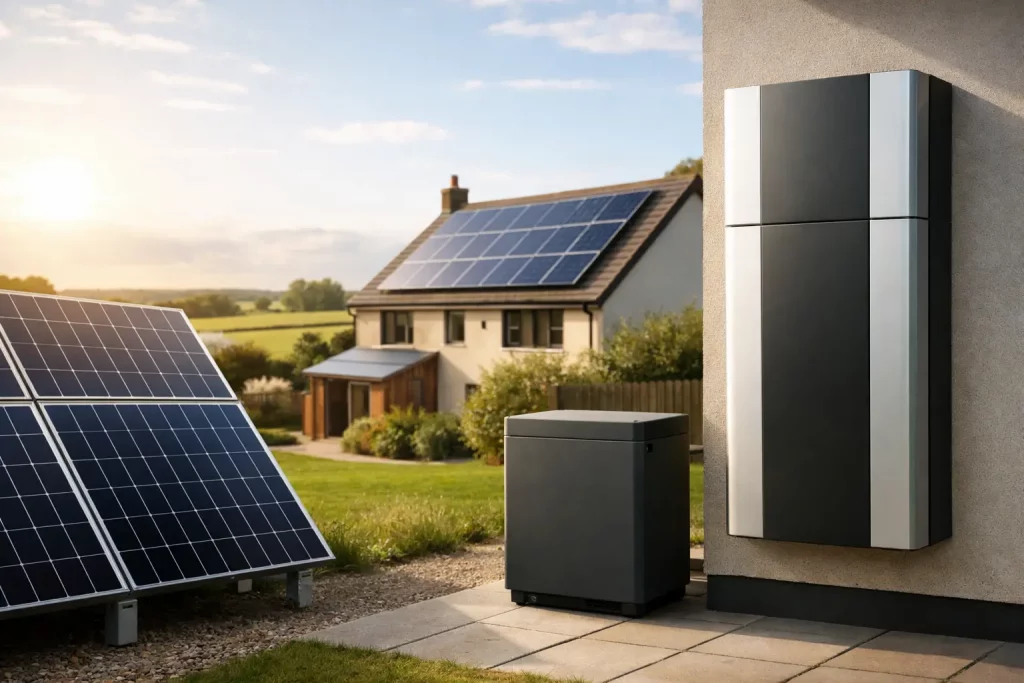
A solar battery can turn the electricity your panels produce at midday into power for the evening meal, the washing machine or an overnight EV charge. That is why choosing between the best solar battery brands is about far more than buying the largest battery available. The right system should suit your property, electricity use, solar array and plans for the future.
For most UK households, battery storage is a practical way to reduce reliance on grid electricity and make better use of self-generated solar power. For businesses, it can help control daytime and evening operating costs. Brand matters because it affects product quality, usable capacity, warranty cover, monitoring, compatibility and the support available after installation.
What makes a solar battery brand worth choosing?
A recognisable name is reassuring, but it should not be the only factor. A good battery brand offers a proven product range, clear warranties and an established UK support network. Just as importantly, its equipment needs to work properly with the inverter, solar panels and energy tariff selected for your property.
Capacity is one of the first figures people compare. It tells you how much electricity the battery can store, measured in kilowatt-hours (kWh). Yet usable capacity and output power are equally relevant. A battery with sufficient capacity but limited power may not comfortably support several high-demand appliances running together. Conversely, a very large battery may take too long to fill from a modest solar array and provide a weaker return on investment.
Look at whether the system can be expanded, whether it provides backup during a power cut if that is a priority, and how easy it is to monitor performance. Smart controls can also charge the battery during cheaper off-peak periods and reserve stored electricity for expensive peak-time use. This can be valuable even on darker winter days when solar generation is lower.
Best solar battery brands for UK properties
There is no single best option for every home or commercial site. The following brands are widely considered by UK property owners because they offer dependable battery storage solutions across different budgets and system designs.
GivEnergy
GivEnergy is a particularly strong choice for households seeking a UK-focused battery system with straightforward monitoring and tariff-led charging options. Its product range includes all-in-one batteries, hybrid inverters and larger modular storage options, making it suitable for both new solar installations and retrofit projects.
The appeal is practical: GivEnergy systems are designed around how many UK homes use electricity, especially those on time-of-use tariffs. The app gives owners visibility of solar generation, household demand, battery charge and grid import. This makes it easier to see where savings are coming from.
It is often a sensible option for homeowners who want a flexible, expandable system without paying solely for a global premium brand. As with any battery, selecting the right inverter and capacity remains essential.
Tesla Powerwall
Tesla Powerwall is one of the most recognised names in home battery storage. Its popularity comes from a compact design, high usable storage capacity and a well-known app experience. Powerwall systems are often considered by households with higher electricity consumption, electric vehicles or a desire to include backup capability as part of the design.
The latest Powerwall products can provide substantial output, which can be useful in larger homes where several appliances may operate at once. Tesla’s monitoring platform is also familiar to many customers and offers clear energy-flow information.
The trade-off is that Tesla is commonly positioned at the premium end of the market, and its suitability depends on the wider system design. It may be more battery capacity than a smaller household needs. A proper assessment should compare the expected savings against the initial cost rather than choosing on brand recognition alone.
Enphase IQ Battery
Enphase is well known for its microinverter technology, where each solar panel operates with its own inverter. Its IQ Battery range is a natural fit for homes with Enphase solar systems and can be especially useful where roofs have several orientations or partial shading.
Enphase systems are modular, so capacity can be built up over time. This can suit homeowners who want to begin with a smaller installation and add storage as electricity demand grows. The system also provides detailed monitoring of solar production and energy use.
For a new installation, Enphase can offer a high-quality integrated approach. It is not always the lowest-cost route, particularly where a conventional string inverter would be more appropriate. The benefits are strongest when the property and panel layout justify the microinverter design.
SolarEdge Home Battery
SolarEdge is another established name in solar technology, with battery storage designed to work closely with SolarEdge inverters and optimisers. It is a compelling option when installing a complete SolarEdge home energy system, particularly on roofs where shading, multiple roof faces or panel-level monitoring are important.
A matched SolarEdge system can provide one platform for solar generation, storage and energy monitoring. For property owners who value detailed performance data, this joined-up approach can be attractive.
However, compatibility is central. A SolarEdge battery is usually most appropriate alongside SolarEdge equipment rather than as a standalone choice for every existing solar system. An installer should confirm what can be retained and what needs replacing before a decision is made.
Fox ESS
Fox ESS has become a popular option for affordable solar battery storage in the UK. Its range covers hybrid inverters and modular battery units, giving installers flexibility to size a system around the property’s actual consumption.
For homeowners focused on value, Fox ESS can provide a cost-effective route into battery storage without compromising on the core benefits: storing surplus solar electricity, monitoring usage and reducing grid imports. Modular batteries can also be increased later, subject to the equipment configuration.
The best choice within the Fox ESS range will depend on the desired battery size, the existing inverter and whether backup power is required. Price should be balanced with warranty terms, monitoring features and installer support.
Sunsynk and compatible battery systems
Sunsynk is widely used in the UK for hybrid inverter systems and is often paired with compatible modular batteries. It is regularly considered for properties that need a flexible design, higher capacity or more advanced control over solar, battery and grid energy.
This route can work well for larger homes, properties with electric heating or EV charging, and commercial applications where energy demand is more varied. It can also support systems designed around backup power, although the exact level of backup depends on the installation and electrical layout.
Because Sunsynk installations can be configured in different ways, specification matters more than a simple brand comparison. The quality of the design, commissioning and aftercare is just as important as the hardware selected.
How much battery storage does your property need?
Many homes start by considering a battery between 5kWh and 10kWh, but the right size depends on the figures behind the meter. A household that uses most of its electricity in the evening may benefit from a larger battery than one with lower consumption or strong daytime demand.
Your solar array also matters. If you have a smaller system, installing an oversized battery may mean it rarely fills from solar during much of the year. If you have a large array and regularly export electricity, additional storage could help retain more of that energy for use later.
A battery should be assessed alongside your wider energy plans. Adding an EV charger, heat pump, hot water cylinder or air conditioning can change your electricity profile. In some cases, a battery that feels oversized today becomes a better fit once those systems are installed.
Questions to ask before selecting a battery
Before approving a quotation, ask how much usable battery capacity is included, what output power it can deliver and whether the system can be expanded. Check the product warranty, including any conditions around registration, installation and expected throughput.
It is also worth asking whether your existing solar inverter is compatible. Retrofitting a battery can be straightforward, but some systems require an AC-coupled battery while others work best with a replacement hybrid inverter. A matched system may cost more initially but can offer better control and simpler monitoring.
Finally, be clear about backup power. Not every solar battery keeps your whole property running during a grid outage. Some offer no backup as standard, some provide selected essential circuits, and others can be designed for broader backup. This must be planned at installation stage.
The best result comes from choosing a battery around your property, not simply choosing the biggest name. Airtech Renewables can assess your solar generation, usage patterns and future energy plans to specify a quality battery storage system that is built to reduce avoidable electricity costs for years to come.