
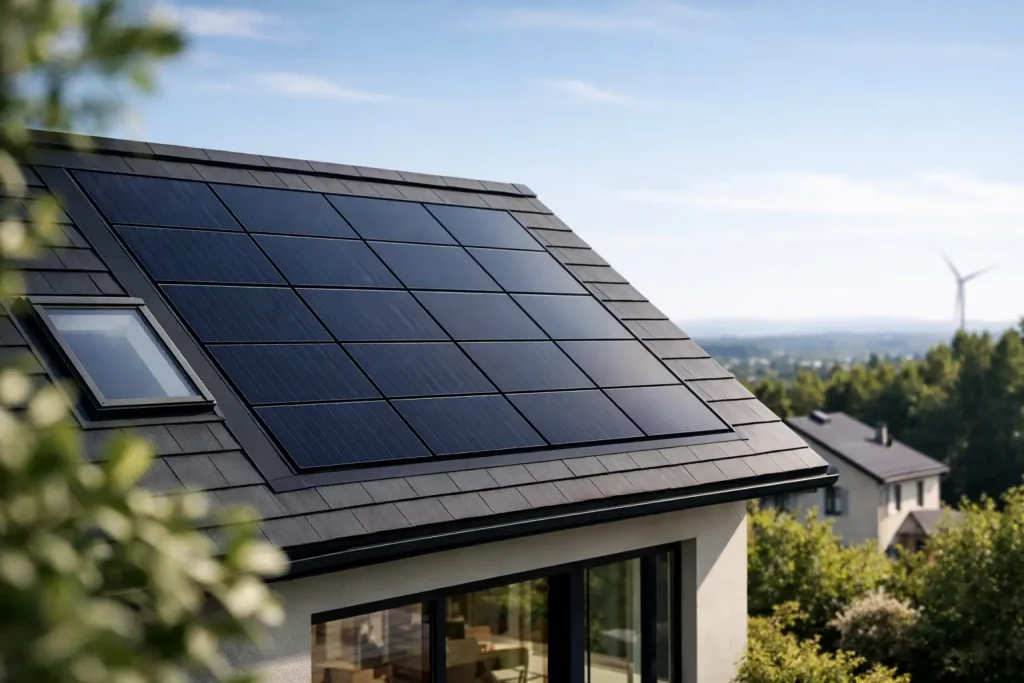
Replacing a tired roof is one of the best times to consider solar. Rather than fitting panels on top of new tiles, an in-roof system becomes part of the roof covering itself. This guide to in roof solar explains how the system works, where it delivers the best value and what to check before committing to an installation.
For many UK homeowners, landlords and developers, the appeal is simple: generate more of your own electricity while giving the property a cleaner, lower-profile finish. It can be an excellent long-term investment, but the right result depends on roof condition, layout, energy use and the quality of the installation.
What is an in-roof solar system?
In-roof solar panels, sometimes called integrated solar panels, sit flush with the surrounding roof tiles or slates. The installer removes a section of the existing roof covering and fits a purpose-designed mounting and weatherproofing system. Solar modules are then installed within that area, creating a neater appearance than conventional on-roof panels.
The panels still convert daylight into electricity in the same way as a standard solar PV system. Electricity produced during the day can power appliances, lighting, heat pumps, EV chargers and other electrical equipment. Any surplus may be sent to a battery for later use or exported to the grid, depending on the system design and your electricity tariff.
The main difference is architectural, not electrical. In-roof solar is chosen for its appearance and its ability to form part of a planned roof project.
Why choose in-roof solar panels?
The strongest reason to choose an integrated system is aesthetics. Because the panels sit lower and follow the line of the roof, they can look more considered on visible roof elevations, new builds and renovated properties. This is particularly valuable where a homeowner wants renewable technology without the raised profile of conventional panels.
It also makes practical sense when roofing work is already planned. If tiles or slates need replacing, incorporating solar at the same time can avoid paying for work twice. The roofer and solar installer can coordinate the layout, flashings and weatherproofing from the beginning rather than adapting a finished roof later.
In-roof solar can also support a wider low-carbon upgrade. A well-sized system can help reduce the cost of charging an electric vehicle, running a heat pump during daylight hours or powering cooling and ventilation equipment. Add battery storage and more of the electricity generated can be used after sunset, when household demand is often highest.
In-roof versus on-roof solar
Neither option is automatically better. On-roof solar is often the most cost-effective choice for an existing roof in good condition. It is generally quicker to install because the panels are mounted over the existing covering, and it may offer more flexibility if the system needs to be expanded later.
In-roof solar usually involves more roofing work and can therefore carry a higher upfront cost where no roof replacement is needed. It is not a reason to remove a perfectly sound roof solely for appearance. However, when a re-roof is already due, the additional cost can be much easier to justify.
Performance can be broadly comparable when systems are properly designed. Panel output is influenced more by roof orientation, pitch, shading, module specification and system size than by whether panels are in-roof or on-roof. Integrated panels may run slightly warmer because there is less airflow beneath them, which can affect output in hot conditions. In the UK climate, this should be considered in the design but is rarely the deciding factor.
Is your property suitable for in-roof solar?
A detailed survey is essential. The installer should assess the roof structure, covering, orientation, pitch, shading and available area before recommending a system size. A south-facing roof often offers the highest annual generation, but east- and west-facing arrays can be highly effective too. An east-west layout can spread generation more evenly across the morning and afternoon, which suits many households.
Shade deserves particular attention. Chimneys, dormers, trees, neighbouring buildings and roof-mounted equipment can reduce output. Modern systems can use optimisers or microinverters to limit the effect of shade on the rest of the array, but these are not a substitute for sensible panel positioning.
Roof condition matters just as much. The structure must be able to support the system, and the surrounding tiles, slates, battens and membrane should be checked carefully. In-roof solar changes part of the weatherproof layer of the roof, so the quality of the flashing and integration work is as important as the panels themselves.
Properties in conservation areas, listed buildings or locations with specific planning restrictions may need additional consideration. Solar is often permitted development in England, but rules and local requirements vary. A competent installer can identify when planning advice or consent may be required before work begins.
Designing a system around your energy use
The most useful solar system is not always the largest one that will fit on the roof. It should be designed around how and when the property uses electricity. A family working from home may consume a large share of solar generation during the day. A household that is empty until evening may benefit more from battery storage, smart controls or timed appliance use.
Start with recent electricity bills and identify major loads. An electric vehicle, immersion heater, air conditioning unit or heat pump can change the right system size considerably. For businesses, daytime consumption is often well aligned with solar generation, making PV especially attractive where offices, workshops, retail premises or equipment operate through daylight hours.
Battery storage is not compulsory, but it can increase self-consumption by storing unused daytime electricity for the evening. The financial case depends on your usage pattern, export payment, tariff and battery size. It should be sized carefully rather than added as a standard extra. An oversized battery may take longer to deliver value, while a smaller battery can still cover a meaningful portion of evening demand.
Costs, savings and long-term value
The price of an in-roof solar installation depends on the number of panels, roof complexity, access requirements, electrical work, scaffolding, inverter choice and whether battery storage is included. Re-roofing costs should be considered separately, while recognising that combining projects may reduce duplicated labour and disruption.
Savings come from using solar electricity instead of buying every unit from the grid. The more generation you use directly, the greater the value per unit is likely to be. Export payments can provide an additional return for unused electricity, but rates differ between suppliers and tariffs, so they should not be the only basis for a purchasing decision.
Solar can also improve a property’s future appeal. Buyers and tenants increasingly look for lower running costs and modern energy infrastructure. That said, property value should be treated as a potential added benefit, not a guaranteed figure. The primary case should remain lower electricity purchases, cleaner generation and a roof solution that suits the building.
What a good installation should include
An integrated solar project needs two kinds of expertise: solar electrical work and roofing integration. Choose an installer that can explain both sides clearly, including how the system will be weatherproofed, ventilated, connected and commissioned.
A professional proposal should set out the expected generation, panel layout, inverter specification, battery option where relevant, warranties and any assumptions about shading. It should also explain access arrangements, scaffolding, timescales and what happens if unexpected roof repairs are found once work starts.
For eligible installations, MCS certification is an important consideration. It provides recognised quality assurance and can be relevant to accessing export arrangements. Your installer should also ensure the system is notified and connected in line with the relevant Distribution Network Operator requirements.
At Airtech Renewables, integrated solar can be designed alongside battery storage, EV charging and heat pump systems, helping property owners create a more joined-up energy strategy rather than adding technologies in isolation.
Installation and aftercare
Once the design is agreed, installation usually starts with scaffolding and safe access. The selected roof area is stripped back, the integrated mounting and flashing system is fitted, and the solar panels are installed before the surrounding roof covering is finished neatly around them. Electrical cabling is routed to the inverter, which converts the panels’ direct current into usable alternating current for the property.
The system is then tested, commissioned and handed over with monitoring access. Monitoring is useful because it lets you see daily generation, household consumption and exported electricity. It can also help identify an unusual drop in performance early.
Solar panels require little maintenance, but they should not be ignored. Periodic visual checks, occasional monitoring reviews and prompt attention to damaged tiles, persistent shading or fault messages will help protect performance. Avoid paying for unnecessary routine cleaning unless there is clear, visible soiling that rain cannot remove.
A well-designed in-roof solar system should look like it belongs on the property, not like an afterthought. If your roof is approaching replacement or you are planning a new build, the best next step is a proper survey that considers the roof, your electricity use and the other energy upgrades you may make over the years ahead.