
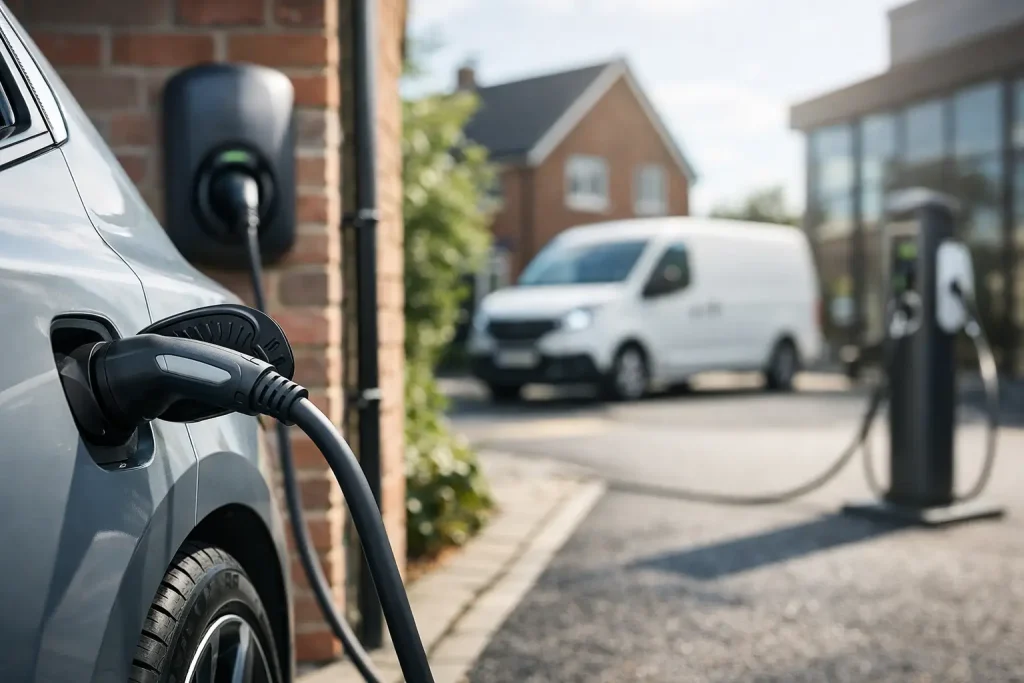
A home EV charger review should answer one practical question first: will the charger make owning and running your electric vehicle easier and cheaper? For most UK drivers, the answer is yes – provided the unit is correctly specified for the property, the vehicle and the way electricity is used at home.
Public charging has a place for longer journeys, but home charging is where everyday EV ownership becomes more convenient. You arrive home, plug in, and wake up with the range you need. More importantly, a smart charger can help you use lower overnight electricity rates and, where suitable, surplus solar generation.
Home EV Charger Review: What Matters Most
A good home charger is not simply the fastest option on the market. It is the one that safely matches your electrical supply, charges reliably when you need it, and gives you useful control over running costs without creating unnecessary complications.
For many homes, a 7kW charger is the sensible choice. It can typically add around 25 to 30 miles of range per hour, depending on the vehicle, and is considerably faster than charging from a standard three-pin socket. A 3.6kW unit may suit lower-mileage drivers or properties with supply limitations, while 22kW charging is generally only relevant where a three-phase supply and compatible vehicle are available.
The vehicle itself sets the real limit. Installing a 7kW charger will not make a car capable of accepting only 3.6kW charge any faster. Equally, a larger battery does not automatically mean you need the highest available charging rate. If the car is parked overnight for 10 or 12 hours, a well-managed 7kW charger will usually provide more than enough energy for normal daily use.
Smart charging delivers the biggest day-to-day benefit
The strongest feature in any home EV charger review is smart control. A connected charger allows you to schedule charging for off-peak tariff periods, monitor energy use and adjust charging sessions from an app. This can make a meaningful difference to the cost of driving, particularly for households covering regular mileage.
Smart charging should be straightforward rather than a distraction. Look for clear scheduling controls, reliable connectivity and the ability to set a charging limit. The app should help you understand how much electricity your vehicle uses, but it should not require constant attention just to complete a basic overnight charge.
Some chargers also support dynamic load balancing. This feature monitors household demand and reduces vehicle charging temporarily if the property is using significant power elsewhere. It is particularly valuable in homes with electric showers, induction hobs, air conditioning, electric heating or an air source heat pump. Rather than overloading the supply, the charger works around the rest of the home.
Solar Compatibility Is Worth Considering
If your property has solar panels, or you plan to install them later, choose an EV charger that can work with solar generation. Solar charging can direct surplus electricity towards the car instead of exporting it to the grid. This gives more value to the electricity generated on your roof and can reduce the amount of imported power needed for driving.
There is a trade-off. Solar surplus is often strongest during the day, when many vehicles are away from home. A solar-compatible charger is still a worthwhile option for home workers, retired households, second vehicles and drivers who can charge at weekends. It is also useful where a battery storage system is fitted, although settings should be configured carefully so the car does not drain the battery at the wrong time.
The best outcome usually comes from viewing the property as one energy system. Solar panels generate electricity, battery storage can hold it for later, and a smart EV charger uses it at the most cost-effective time. An experienced installer can assess these systems together rather than treating the charger as an isolated addition.
Tethered or socketed charger?
This is one of the simpler choices, but it affects daily convenience. A tethered charger has a charging cable permanently attached. It is quick to use, tidy when fitted with a proper cable holster, and ideal for drivers who use the same vehicle connection every day.
A socketed charger has no fixed cable. You use the cable supplied with the vehicle, which can be useful if you expect to change vehicles, have more than one EV, or prefer to store the cable out of sight. The downside is that plugging in involves an extra step and the cable needs to be kept in the car or garage.
Neither is automatically better. Tethered units tend to win on convenience, while socketed chargers offer more flexibility. For a busy family home, that small convenience can be worth having.
Installation Quality Matters as Much as the Charger
The advertised price of a charger is only part of the cost. A proper installation includes assessing the consumer unit, cable route, earthing arrangements, parking location, electrical load and any required notification to the distribution network operator.
A straightforward installation with a short cable run is usually more affordable. Costs can increase if the charger is a long distance from the consumer unit, the cable needs to run underground, the consumer unit requires upgrades, or the electrical supply needs additional work. Listed buildings, shared parking areas and leasehold properties can also require permissions before work begins.
It is worth asking what is included in the quotation. The charger, fitting, cable length, protective devices, testing and certification should all be clear. A low headline figure can become less attractive when essential electrical work is treated as an unexpected extra.
For landlords and businesses, usage access needs consideration too. Some chargers can control access through RFID cards or app permissions, which is helpful where electricity use needs to be monitored between tenants, employees or visitors. The right solution depends on whether charging is a private benefit, a staff incentive or a service provided to customers.
Charging Costs: The Figure That Really Counts
The cost of charging at home depends on the tariff, vehicle efficiency and time of charging. As a simple example, a car using 3 miles per kWh costs far less to run when charged on an off-peak tariff than when charged at a peak daytime rate. Scheduling can therefore matter as much as the charger’s purchase price over several years.
Do not judge costs by battery size alone. A larger battery costs more to fill, but it may also deliver greater range. The useful comparison is pence per mile, based on your actual electricity tariff and how efficiently the vehicle drives in real conditions.
Solar can improve the picture further, but it is not always free charging. If surplus solar could otherwise be exported for payment, there is still an opportunity cost. Even so, using your own generation often remains financially attractive, especially when export rates are lower than the price of importing electricity later.
What we would prioritise
For most homeowners, the best specification is a reliable 7kW smart charger with scheduled charging, app control, load balancing and solar compatibility where panels are installed or planned. Choose tethered for ease, socketed for flexibility, and do not pay for high-output capability that your supply or vehicle cannot use.
The charger should also be positioned for everyday life. A unit that is easy to reach from the normal parking space is more valuable than one installed in the cheapest possible location but awkward to use in rain, darkness or when carrying shopping.
Is a Home EV Charger a Good Investment?
For regular EV drivers, a professionally installed charger is usually a practical investment in convenience, running-cost control and property readiness. It removes dependence on public charge points for routine driving and gives you better use of lower-cost electricity at home.
The right unit is not necessarily the most expensive one. It is the charger that fits your parking arrangement, electrical capacity and future energy plans. Before choosing, have the property assessed with the same care you would give to solar panels, battery storage or a heat pump. A well-designed installation will keep charging simple now while leaving your home ready for the cleaner energy systems you may add next.