
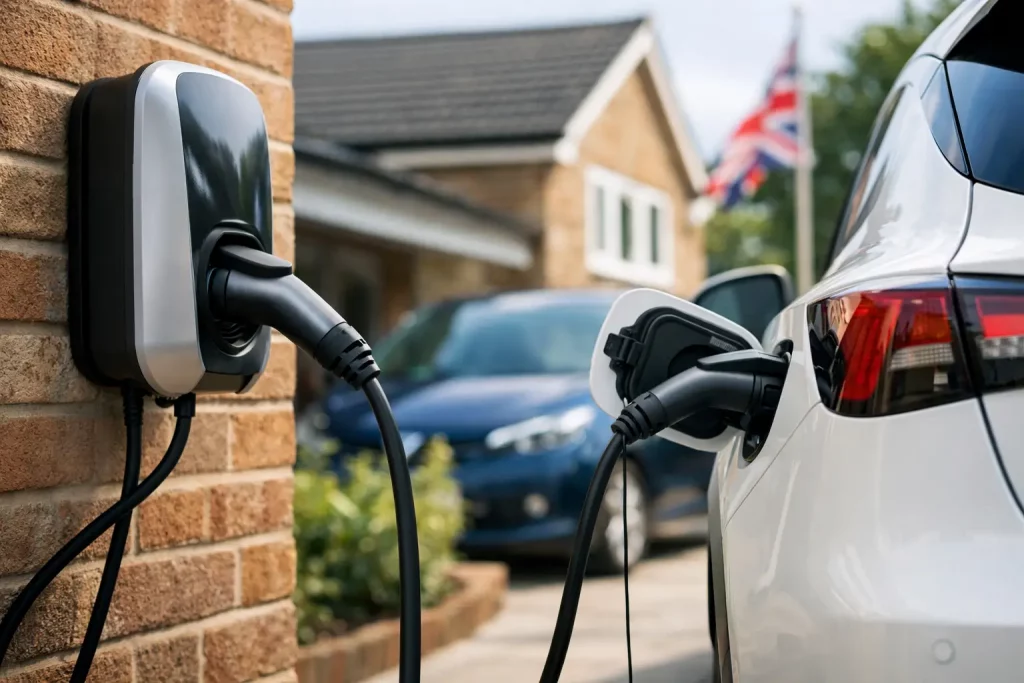
A home EV charger can make running an electric car far cheaper and more convenient than relying on public charging. But the right unit is not simply the fastest one on the market. To understand how to choose EV charger equipment that suits your property, start with the way you drive, the capacity of your electrical supply and the energy systems you already have or plan to add.
For many UK households, a properly installed smart charger lets the car charge overnight on a lower electricity tariff. If you have solar panels, it can also help you use more of the electricity generated on your own roof. Choosing well at the outset avoids paying for features you will never use or, just as importantly, installing a charger that limits your options later.
Start with your driving and charging routine
Think about when the vehicle is usually at home. A driver covering 20 to 40 miles a day and parking overnight will normally have ample time to recharge with a standard domestic charger. In this case, dependable overnight charging and smart tariff control matter more than maximum power.
A household with two EVs, frequent long journeys or irregular work patterns may need a more flexible setup. This could mean a charger with load balancing, a second charging point, or a unit that can schedule charging around changing electricity prices. Businesses should also consider how many vehicles may need charging at the same time, whether visitors require access and how charging costs will be managed.
Your car also has a say. Every EV has a maximum AC charging rate set by its onboard charger. Installing a higher-rated charge point will not make a car charge faster than its onboard system allows. Check the vehicle specification before deciding that a high-power unit is worth the additional installation cost.
How to choose EV charger power for your property
Most UK homes have a single-phase electricity supply. For these properties, a 7 kW charger is often the practical choice. It provides considerably faster charging than a standard three-pin socket and can replenish most everyday driving needs comfortably overnight.
A 3.6 kW charger may be appropriate where the property has limited electrical capacity, the car is parked for long periods or a lower-cost installation is the priority. It is slower, but it can still be a sensible and safe solution for low-mileage drivers.
Three-phase properties can support 11 kW or 22 kW charging, subject to the vehicle, supply and installation design. These higher-output chargers are more commonly relevant for commercial sites, developments and homes with a suitable three-phase connection. They can be useful, but they are not automatically better. The electrical upgrade and cabling requirements can significantly affect the overall project cost.
Rather than selecting a charger based on its headline kW figure, match it to the vehicle, the time available for charging and the power available at your premises. A qualified installer can assess the consumer unit, incoming supply, earthing arrangement and cable route before recommending the right capacity.
Choose between tethered and untethered charging
A tethered charger has a cable permanently attached to the unit. It is usually the easiest option for day-to-day home use: park up, plug in and charge. It is particularly convenient in poor weather, and there is no need to take the cable out of the boot each time.
An untethered charger has a socket instead. You use your own charging cable, which can be useful if you may change vehicles or want a neater-looking wall box when it is not in use. It can also suit communal or workplace settings where drivers use different cable types.
Neither option is universally best. A tethered unit tends to win on convenience, while an untethered unit offers flexibility and a more discreet finish. Consider where the charger will be mounted, whether a cable could create a trip hazard and how exposed the location is to weather and passing traffic.
Make smart charging a priority
A smart charger connects to the internet and can respond to schedules, electricity tariffs and, in some cases, solar generation. For most new installations, smart functionality is a worthwhile investment because it gives you more control over when electricity is used.
The most useful feature for many households is scheduled charging. If your tariff offers lower overnight rates, you can set the car to charge during those hours rather than immediately when it is plugged in. This can reduce the cost of motoring without changing your routine.
Look for a charger with an app that is clear and reliable rather than overloaded with features. You should be able to view charging status, set a schedule, adjust the current if needed and understand how much energy the vehicle has used. For business owners and landlords, access control and reporting may be equally important, particularly where charging needs to be assigned to individual drivers or tenants.
A charger should also receive software updates securely. EV technology and electricity tariffs continue to change, so a unit that can adapt is generally a better long-term purchase than a basic model with no smart controls.
Consider solar panels and battery storage
If you have solar panels, or expect to install them in future, choose an EV charger that can work with solar generation. Solar-aware charging can direct surplus electricity to the car when your home demand is low. This increases self-consumption, reducing the amount of electricity exported to the grid and helping you get more value from your solar system.
There is a trade-off. Solar output changes with the weather, season and time of day, while your car may need a predictable charge for the following morning. Many homeowners prefer a mixed approach: use surplus solar whenever available, then top up overnight on a lower-cost tariff if necessary.
Battery storage adds another consideration. It may be possible to coordinate the charger, battery and solar system so the property uses energy in the most cost-effective order. The best arrangement depends on your tariff, household demand, battery capacity and driving pattern. Designing these systems together is often more effective than adding each technology separately.
Check the installation details before comparing prices
The charger itself is only part of the cost. Installation can vary considerably depending on the distance from the consumer unit, the route for the cable, wall construction, parking position and whether any electrical upgrades are required.
A straightforward installation with a short cable run is usually quicker and more affordable. A detached garage, a parking bay some distance from the house, difficult access or the need to cross a public footpath can make the project more complex. Never run a charging cable across a pavement or public path as a routine solution. It creates a safety risk and may not be permitted.
Your installer should assess whether the property needs load balancing. This feature monitors overall electricity demand and automatically reduces charging power when the home is using a lot of electricity elsewhere. It helps protect the supply from overload, which can be particularly valuable in all-electric homes with an air source heat pump, electric shower, induction hob or battery storage.
For commercial projects, the design should allow for growth. Installing suitable containment, distribution capacity and infrastructure at the beginning can make it far easier to add charge points later.
Balance upfront cost with future value
The cheapest charger is not always the most affordable over its working life. A lower-priced unit may be suitable for a simple installation and a driver with predictable needs. However, paying slightly more for smart scheduling, solar compatibility, dynamic load management and a trusted warranty can provide better value where energy use is more complex.
Avoid paying for power your vehicle and electrical supply cannot use. Equally, avoid choosing a unit so limited that it needs replacing when you add solar panels, change tariff or buy a second EV. The right charger should fit your requirements now while leaving reasonable room for the next stage of your energy plans.
Ask for a clear quotation that separates the charger, standard installation work and any additional electrical work. You should also confirm the warranty period, app subscription costs if applicable, ongoing support and the qualifications of the installer. Quality installation matters as much as product selection for safe, dependable charging.
Choose an installer who understands the whole property
An EV charger does not operate in isolation. It affects, and is affected by, your household electricity demand, solar generation, battery storage and future heating plans. An installer who can assess the wider system can recommend a charging solution that supports lower bills rather than simply fitting a wall box.
Airtech Renewables can help homeowners and businesses plan EV charging alongside solar, battery storage and other low-carbon upgrades, creating a practical setup designed around the way the property is used. The best next step is a site assessment that turns your parking arrangement, vehicle needs and energy goals into a charger choice you can rely on every day.