
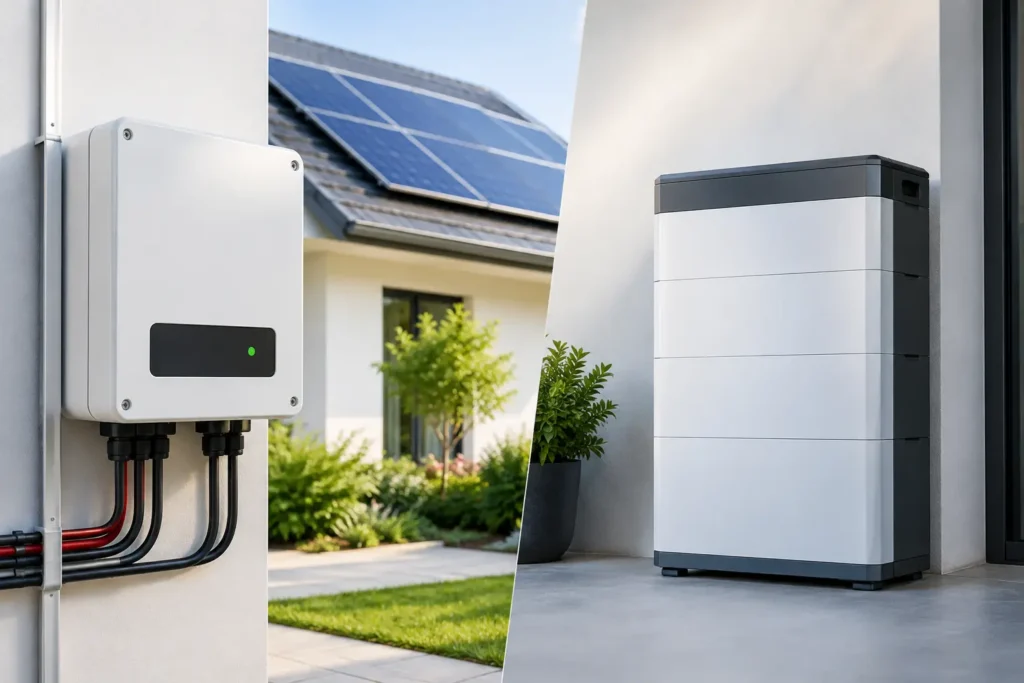
When your solar panels are producing more electricity than your property is using, you have a valuable choice to make. A solar diverter versus battery comparison is really about where that surplus energy delivers the best return: heating your hot water now or storing electricity for later.
Both options can reduce reliance on imported grid electricity, but they work in very different ways. The right choice depends on your hot water system, daily electricity use, export tariff and plans for technologies such as an air source heat pump or EV charger.
What does a solar diverter do?
A solar diverter sends spare solar generation to an immersion heater in your hot water cylinder. Rather than exporting unused electricity to the grid, it uses that energy to heat water for showers, baths, taps and, in some properties, part of the heating system.
The diverter continuously monitors energy flowing in and out of the property. When your panels are generating more than your appliances need, it directs the excess to the immersion heater. If a cloud passes over or household demand rises, it reduces the power sent to the cylinder, helping to avoid buying electricity from the grid simply to heat water.
This makes a diverter a straightforward option for homes with a suitable hot water cylinder. It is particularly effective in spring and summer, when solar generation is high and household electricity use during the day may be relatively low.
A diverter does not store electricity. It stores the value of that electricity as heat in water. That distinction matters. You cannot use the energy in your hot water cylinder to power lights, cooking appliances, a home office or an EV charger in the evening.
How solar battery storage works
A solar battery stores surplus electricity as electricity. Your property can then use that stored power later, often during the evening and overnight when solar production falls. Depending on the system design and battery capacity, stored energy can supply everyday loads such as lighting, refrigeration, television, appliances and selected larger demands.
Battery storage can also work with an off-peak electricity tariff. The battery may charge when grid electricity is cheaper and discharge when rates are higher, subject to the controls, tariff and system settings. For many households, this increases the value of storage beyond the summer months.
The useful figure is not only a battery’s headline capacity. Its usable capacity, discharge rate and inverter capability all affect what it can achieve. A battery that stores plenty of energy but cannot provide sufficient power for simultaneous household loads may not perform as expected at busy times.
Unlike a diverter, a battery can support a wider range of electrical consumption. It does not replace the need for hot water, but it gives your solar generation more flexibility across the home.
Solar diverter versus battery: the key differences
The central difference is simple. A solar diverter turns surplus generation into hot water, while a battery preserves it as usable electricity.
A diverter is usually the lower-cost addition where a compatible cylinder and immersion heater are already in place. It has fewer major components and can be a sensible way to reduce the cost of producing domestic hot water. For a household that regularly exports power in the daytime and currently heats water with a gas boiler, electric immersion or other paid-for source, the savings can be meaningful.
A battery normally requires a higher initial investment, but its potential benefit is broader. It can increase solar self-consumption, reduce evening grid imports and make better use of time-of-use electricity tariffs. It may also be a stronger fit for properties with high electricity demand, EV charging, electric cooking, air conditioning or heat pump systems.
Export payments also influence the decision. If your export tariff pays a good rate for excess solar, automatically diverting every spare unit into hot water may not always be the best financial choice. The comparison should be between the export income you would receive and the fuel cost you avoid by heating water with solar. A properly configured system can take these priorities into account.
When a solar diverter is the better choice
A diverter often makes sense when hot water is your clearest opportunity. If you have a hot water cylinder with an immersion heater, use plenty of hot water and generate regular daytime surplus, the system can put otherwise exported electricity to work without the cost of a battery.
It is also a practical option for homes where a battery budget is not currently available. You can improve solar self-use now, then consider battery storage later if your electricity habits change. This can be a sensible staged approach during a wider home energy upgrade.
However, cylinder size matters. Once the water is hot, the diverter has nowhere useful to send further surplus power. It will also offer less value in a property without a cylinder, or where solar generation is low during the periods when hot water demand is greatest.
Homes with a heat pump need particularly careful planning. A heat pump is generally a more efficient way to heat water than a standard immersion heater, so the controls and cylinder strategy should be designed around the full system rather than adding a diverter in isolation.
A diverter may suit you if
You have a compatible hot water cylinder, export a noticeable amount of daytime solar and want a cost-effective way to reduce water-heating costs. It can be especially attractive where the property uses hot water consistently through the day.
When a battery is the better choice
A battery is usually the stronger choice for households that use most of their electricity in the morning and evening. Solar panels may be working well at midday while the house is quiet, then electricity demand rises after work, school or during meal preparation. Storage moves more of that solar value into those higher-demand hours.
It can also suit a property preparing for an electric future. An EV charger, heat pump, electric underfloor heating and air conditioning can all increase electricity demand. Although a battery will not necessarily run every large load for long, it can play an important part in a well-designed system that reduces costly imports.
Businesses with predictable late-afternoon or evening consumption may also benefit from battery storage. The correct system size should be based on interval usage data and generation estimates, not simply the largest battery available.
Battery storage is not automatically the best answer for every solar home. If your daytime consumption is already high, perhaps because someone works from home or the business operates during daylight hours, you may naturally use much of your solar generation as it is produced. In that case, a smaller battery or a diverter could provide better value.
A battery may suit you if
You want to use solar electricity after sunset, have significant evening demand, intend to use a smart tariff or are adding other electric technologies to the property. It is the more flexible option, but it should be sized carefully to justify the investment.
Can you install both?
Yes. A solar diverter and battery can work together, provided the system is designed with clear priorities. For example, the battery may be set to retain enough energy for evening household use, while remaining surplus generation heats the hot water cylinder. Alternatively, tariff pricing and seasonal demand may lead to a different control strategy.
The best arrangement is not always to fill the battery first or heat the cylinder first. In summer, diverting more power to hot water may be useful. In winter, preserving solar electricity for household loads could be more valuable, particularly if the cylinder is heated efficiently by a heat pump. Smart controls and an installer who understands the whole property are essential here.
Choose based on your property, not the headline price
The most reliable way to decide is to look at how your building actually uses energy. Your solar generation profile, electricity bills, export rate, hot water demand, cylinder capacity and future plans all matter. A system that looks inexpensive can underperform if it does not match the way you live or operate.
For many properties, a diverter is an affordable route to solar-heated water. For others, battery storage delivers greater long-term flexibility and higher electricity self-consumption. Airtech Renewables can assess the wider energy picture, including solar, hot water and future electrification, so the recommendation is built around practical savings rather than a one-size-fits-all product.
The useful next step is to review a full year’s electricity use and consider what your property will need in the next five to ten years. That gives you a far better basis for choosing technology that keeps working for you as energy prices and household habits change.